 Frenchie
Pickup day through the twelve-week mark is all this page handles, while outings, classes and cue lessons stay with the guides built for them. For a Frenchie puppy, much of the first month comes down to a settled house, a few predictable habits and short, friendly contact. That is a manageable job, and it starts before the car leaves the driveway.
The first days are for arrival rather than lessons. Spend them learning the puppy's own rhythm: when they wake, when they need out, what makes them settle. Everything you learn in those days makes the routines that follow easier to build, and short kind contact now gives later lessons something solid to stand on.
Settle These Before Your New Puppy Rides Home
Pickup day moves fast, and these decisions are far easier to make at a kitchen table than in a parking lot. Work through them now, and the drive home only has to be a drive.
When should the first vet visit happen?
Humane World for Animals says to take a new dog to the veterinarian within a week for a general health check, vaccinations and a preventative flea/tick medicine. Book it while you are still planning pickup. The same visit is the place to ask when outings are safe, and regular vet visits stay on the calendar through puppyhood.
This is general information, not medical advice. Check with your veterinarian about vaccinations and when your puppy can safely go out.
How does a puppy ask politely?
Best Friends Animal Society notes that puppies can start learning at a young age how to interact politely with humans, and that training puppies to sit on cue when they want something is very easy to do and teaches them how to work with people to get what they want.
Put that to work once the puppy has settled in: when the puppy sits while you hold the bowl, the leash or the next bit of attention, the sit opens the door, and a treat or the thing itself is the payment. Each try takes a second, so nothing needs drilling.
Who should come along for pickup?
Two people is ideal, one driving and one riding beside the puppy's carrier or crate with a calm voice. The rest of the household can wait at home. A smaller first meeting keeps the ride and the first minutes simple for a small dog who has never seen any of you before.
What should ride in the car?
The puppy rides in a secured carrier or crate, not loose on a seat or in a lap. Fasten the carrier or crate in place so it cannot slide or tip. Beyond that, a pouch of small soft treats is enough, so the first thing the puppy learns about you is that good things happen when you are around. Toys and chews can wait for the house.
French Bulldog Puppy Changes Between 8 and 12 Weeks
Eight to twelve weeks is when a puppy lands in a house with no old routines to fall back on, so every sound, floor and face is new information. That makes this a good moment to be deliberate about what they meet first.
This point is general to puppies, not a Frenchie trait. UC Davis describes the critical social development period for dogs as approximately between 3 and 14 weeks, the age when puppies are most accepting, less cautious and very curious about their environment. It adds that socialization can occur at any age, but it will be a slower process for an older dog than for a puppy under 14 weeks of age.
At home, that translates into short, friendly contact with one new thing at a time. Our French Bulldog socializing guide covers who to meet and how, and the French Bulldog puppy timeline maps the months after this one.
The First Hour With a French Bulldog Puppy at 8 Weeks
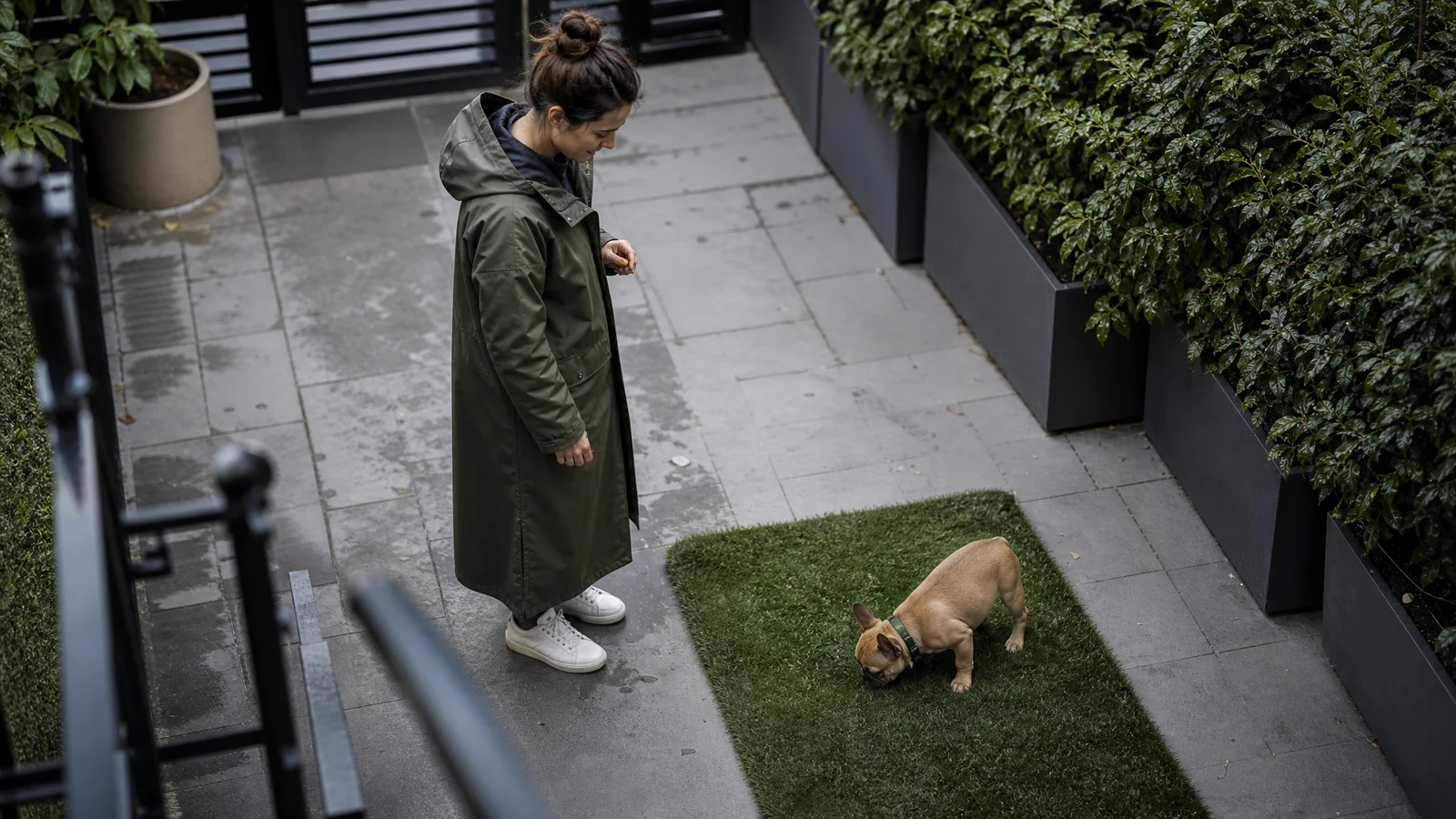
Carry the puppy straight to the spot you want them to use, stand still, and reward right where they finish. A gate or a closed door that shrinks the available space makes the rest of the first hour easier to manage, and the French Bulldog potty training guide holds the method from there.
PDSA recommends taking the puppy to their toilet area first, with lots of praise or even a treat for going in the right place. Next, try to take them to their own space, where you show the bed and bowls and introduce each room slowly, with everyone staying calm. It also advises against giving access to the whole house on day one, and says it is probably best to avoid visitors for a few days.
Night Routines for a French Bulldog Puppy in the First Weeks
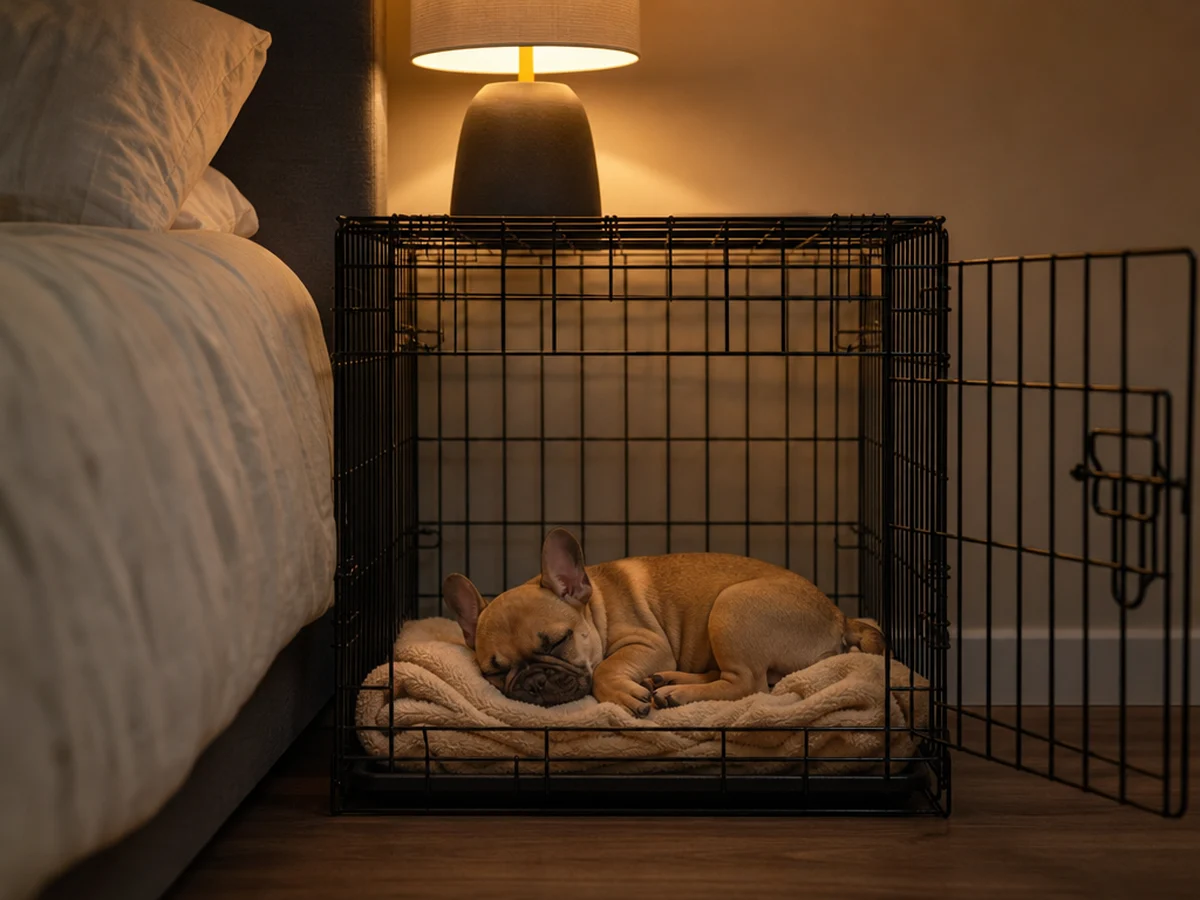
An evening that ends the same way each time does more than any clever trick: a last trip to the toilet spot, a short settle, then bed. Dull is the goal. The French Bulldog crate training guide covers building the crate habit itself.
Battersea says not to worry if a puppy cries a bit, since they have just left everything they know behind and are a bit scared rather than naughty. It suggests giving comfort when they need it while trying to avoid picking them up too much, and offering calm reassurance with verbal praise and light strokes. Set the crate or bed close to where you want them to sleep, and expect and plan to be up every 3 to 4 hours.
Four Small Habits to Start in the First Month Home
A handful of habits started now are worth more than a long list of lessons. Each of these takes seconds, and each fits inside the day you already have. None needs equipment beyond what most households own, and all of them can start once the puppy has settled in.
- Settled gets attention. A puppy resting quietly nearby earns a soft word or a scratch, so quiet becomes the way to get company.
- Treats from your hand. Give a few treats straight from your fingers during the day, so hands mean good things before teeth ever meet them.
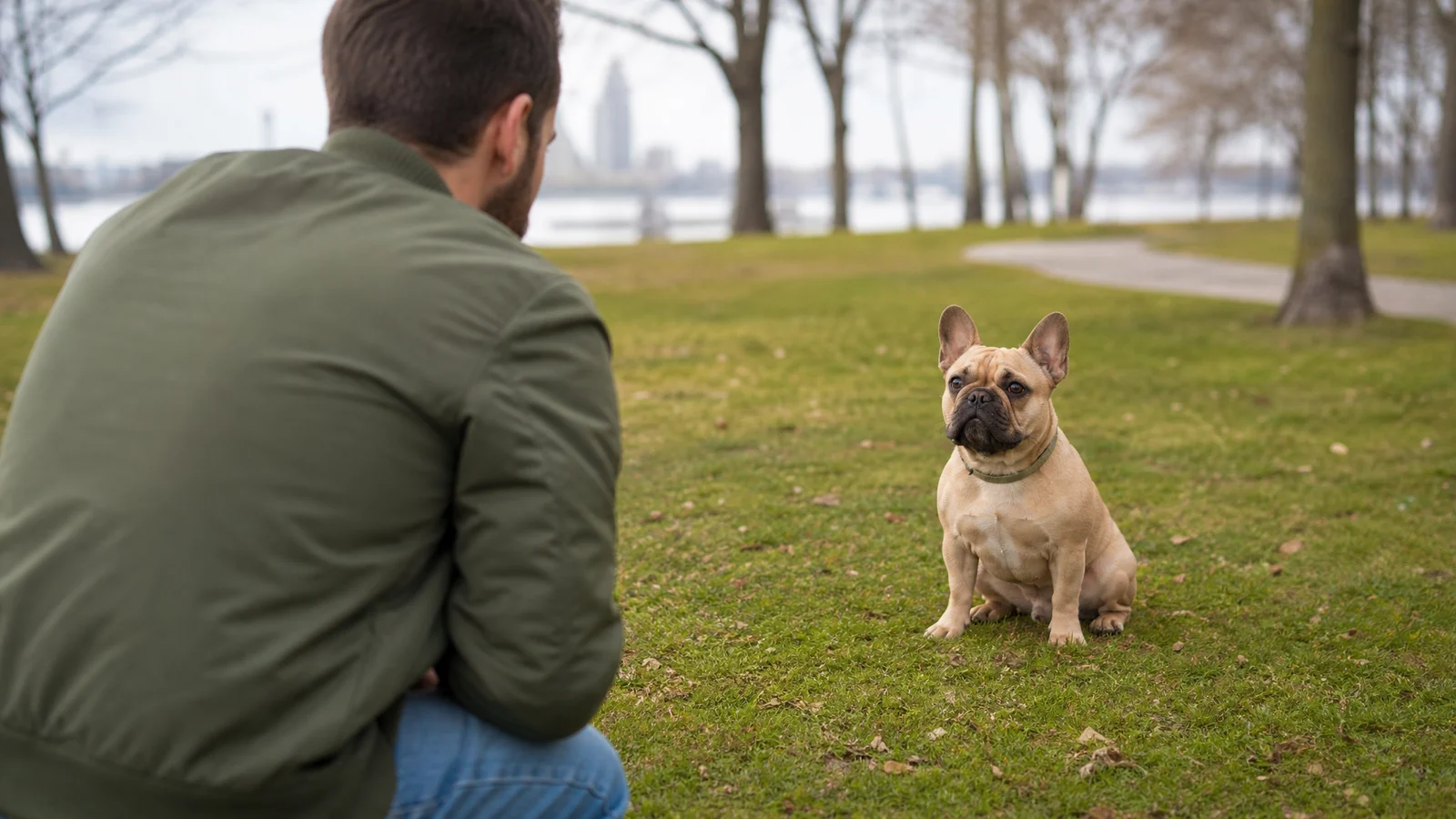
- Let them come to you. Crouch and wait for the puppy to walk over instead of reaching in, so meeting people feels like the puppy's own idea.
- Mouth on toys. When teeth land on a hand, offer a toy and praise the switch. The French Bulldog puppy biting guide covers teething and when it eases.
What Can Wait Until the Puppy Is Older
Plenty of things can wait without costing the puppy anything. Long outings, crowds and busy streets wait until the vet says the puppy is ready, and the French Bulldog exercise guide picks up from there.
Tricks, long stays and leash walking each have a guide of their own, so they can wait for it. A puppy who has settled in, knows the toilet spot and has a bed to rest on is ready for those later.
Strangers who ask to hold the puppy get a polite no. Offer a seat on the floor instead, with one person at a time letting the puppy come to them. A puppy passed around a room has no say in it, and a clear, friendly boundary now is easier to keep than a new one later.
 BehaviorFrench Bulldog Leash Reactivity: What Helps
 BehaviorHow to Stop a French Bulldog Pulling on the Leash
 Training basicsHow to Teach a French Bulldog to Stay