 Frenchie
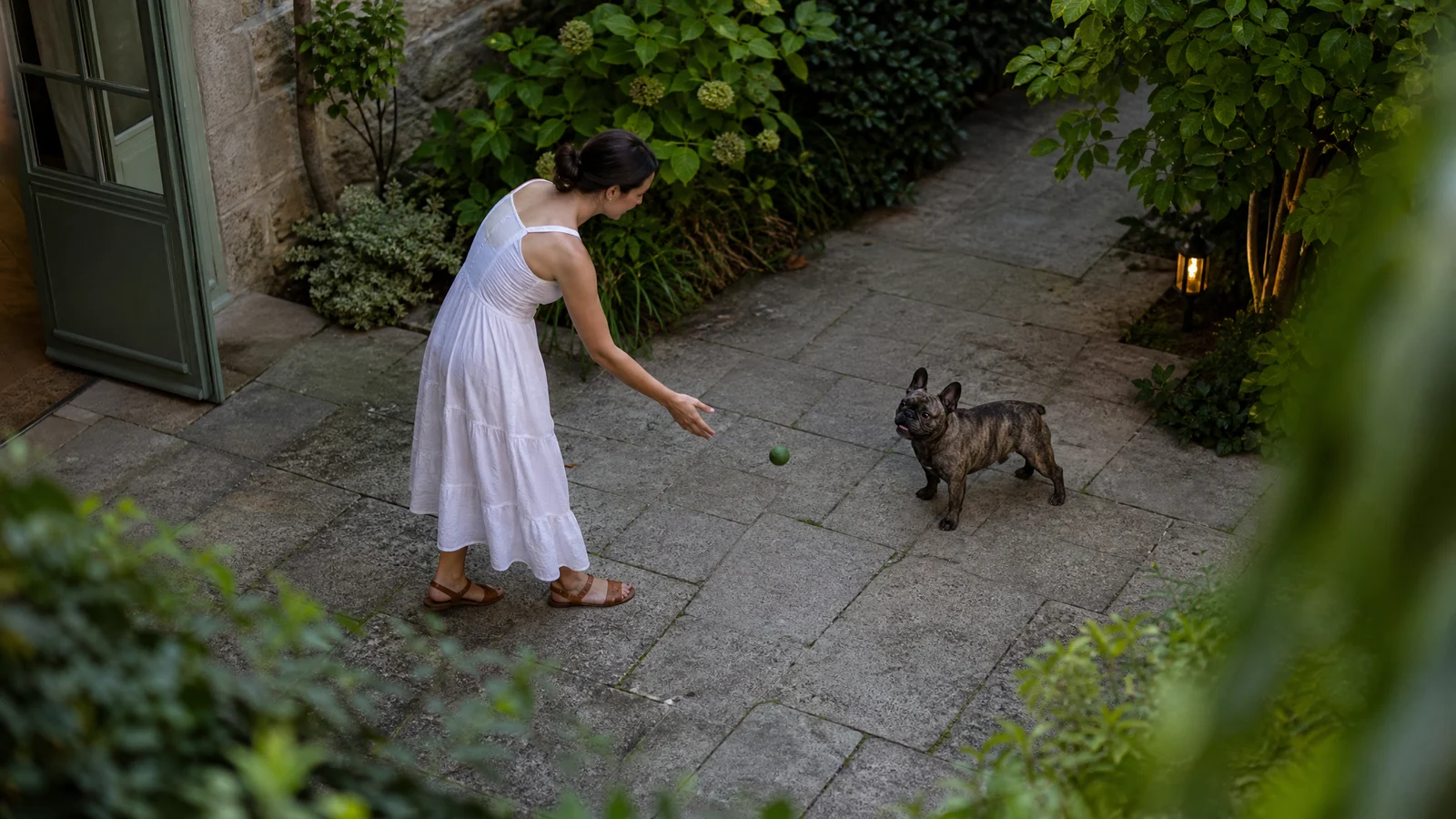
Picture the yard at six in the evening. The ball keeps coming back, the tail is a blur, and the breathing has gone from busy to loud, yet the dog is begging for one more throw. Owners describe this scene again and again, and it holds the central fact about French Bulldog exercise: they will not call time, so you have to.
Behind that scene sits a short face that makes cooling and breathing harder work than it is in long-nosed breeds. Handled badly, that means heat trouble and a dog who never learns to settle. Handled well, it gives you a sturdy, cheerful companion who sleeps hard after a modest day.
This article looks at exercise from pickup day to the senior years, along with the heat limits and brain games that go with it. Read on to learn how to size up the airway early, pace the first weeks, build walks through year one, plan around humidity, use nose work, and what to expect long term.
Exercise Starts With a French Bulldog's Airway
Drop the idea of one standard amount first. Owners report very different totals as enough: some dogs thrive on a 10-minute loop, many walk 3 miles or more, a few manage 4 to 7 miles or full hikes, and a minority compete in agility and sprint trials or run beside a bike. We reviewed 1,329 French Bulldog owners.
What sets your dog's ceiling is the airway, not their enthusiasm. The short face makes breathing less efficient, which leaves Frenchies less tolerant of heat and strenuous exercise than most breeds. Some breathe quietly and easily. Others have narrow nostrils or extra soft tissue in the throat, and you cannot tell which you have by looking.
The only daily figure we can point to is the UK breed listing of up to 1 hour per day. We read that as a ceiling to spread over several cool outings, not a target. Moderate, regular movement still matters for a healthy weight, and the parent club says most Frenchies can do it safely once a vet has examined muscles and joints.
Here we push back on a popular line, that a tired dog is a good dog. In this breed, tired and panting hard means the stopping point went by a while ago. Aim for a content dog who still has breath to spare.
A few jobs are worth finishing before the dog comes home:
- Ask the breeder how the parents breathe at rest and after moderate exercise in mild weather. Quiet, easy breathers are the answer you want.
- Book a first visit with a vet who sees other short-faced dogs, since airway questions come up early and anesthesia is a bigger decision in this breed.
- Choose the cool room now. Once the air passes about 70°F and turns humid, air conditioning in the house and car is a must, so know which space will be the retreat.
Exercise Bursts and Crashes in the First Weeks
Energy in a young Frenchie arrives in bursts. Owners often describe around 5 to 15 minutes of hard play or zoomies, then a deep crash into sleep, repeated through the day. Let the crash happen. Waking a sleeping puppy for another round turns a natural rhythm into overwork, and the cost shows up later as a dog who cannot wind down.
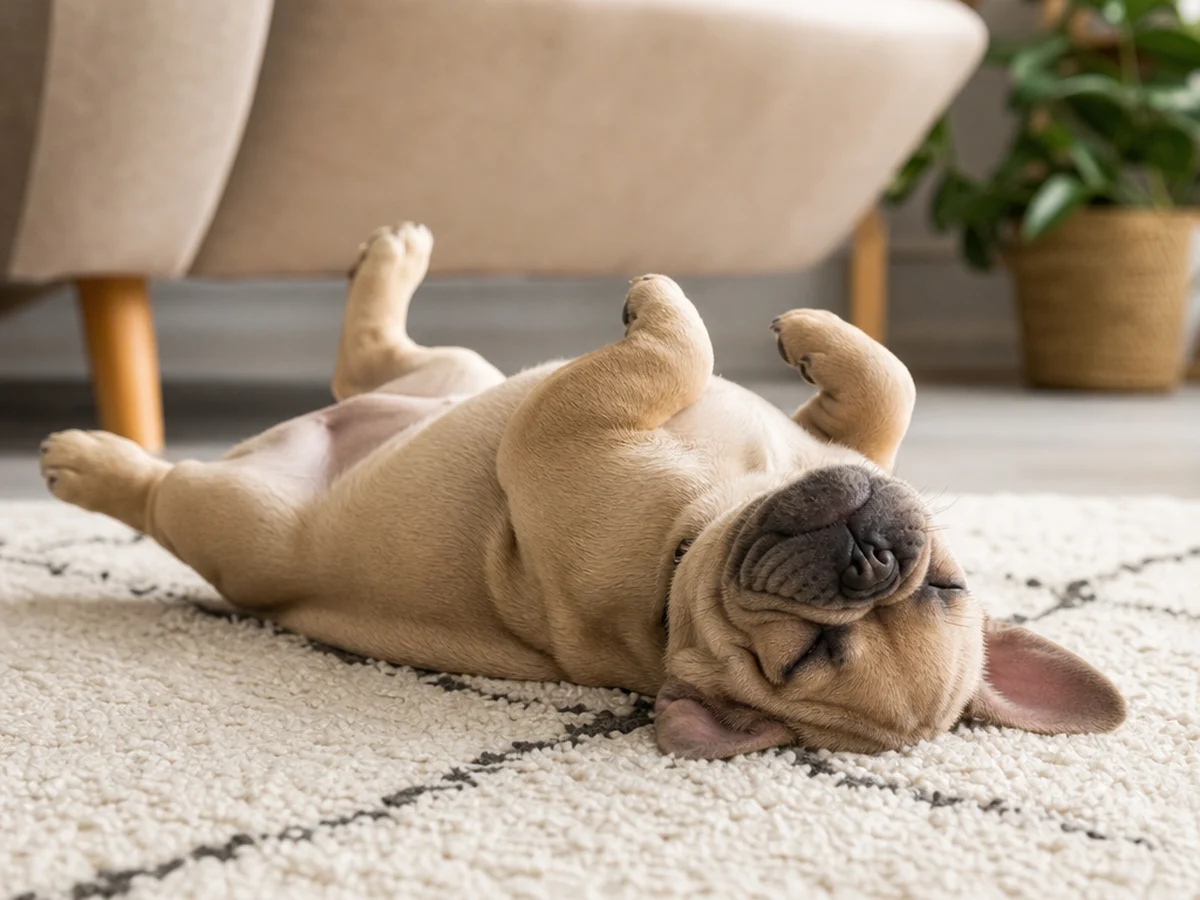
Pacing is your job, because a puppy has no idea how. Owners who manage it well build small off-switches into the day: a break in a basket, a calm reset in the crate with a treat, a wind-down routine at night, or a short cue that means the game is over. All of them end play while the dog is still keen, then offer something quiet.
Zoomies often come at set times, such as after dinner, late at night, or at the same spot on the way home. Once you know the schedule, clear a safe indoor space with non-slip footing and let them burn it off there.
Early walks are about exposure, not distance. Some puppies put the brakes on and refuse to move. Owners who got past it describe treats every few steps, luring, patience, and quiet hours with fewer distractions. Carrying a puppy a few steps toward home costs nothing and teaches nothing bad.
Start watching breathing now. A puppy who breathes quietly today can change as they grow, so note how quickly the breathing settles after play, and mention strained snorting, gagging or foamy spit-up to your vet. For the wild evenings, our piece on when French Bulldogs calm down sets realistic expectations.
Building Walking Exercise for a Young French Bulldog
The first year is when habit and distance get built together, and slow is the right speed. Owners whose adult dogs now cover hours and miles describe adding a little at a time and keeping outings to the cool parts of the day. Add a second short walk before you stretch the first one, because several short outings cost the airway far less than one long one.
Expect your own dog to disagree with the averages. Some young Frenchies walk surprisingly far with ease, while others are finished after 20 to 30 minutes or about a mile and prefer several short strolls. Some walk a few feet and sniff. Owners with more than one Frenchie often see very different stamina under the same roof, so plan for the dog you have.
When Your Frenchie Sits Down
Sitting, freezing or lying down to end a walk is common. It can mean the dog wants another direction, is tired, or is simply too warm. Pause, give a moment to sniff, then move off with a cheerful cue and a treat. If they are truly done, carry them home or use a stroller or backpack. Plenty of dogs also refuse to go out in the cold, so shorten or skip outings on freezing days.
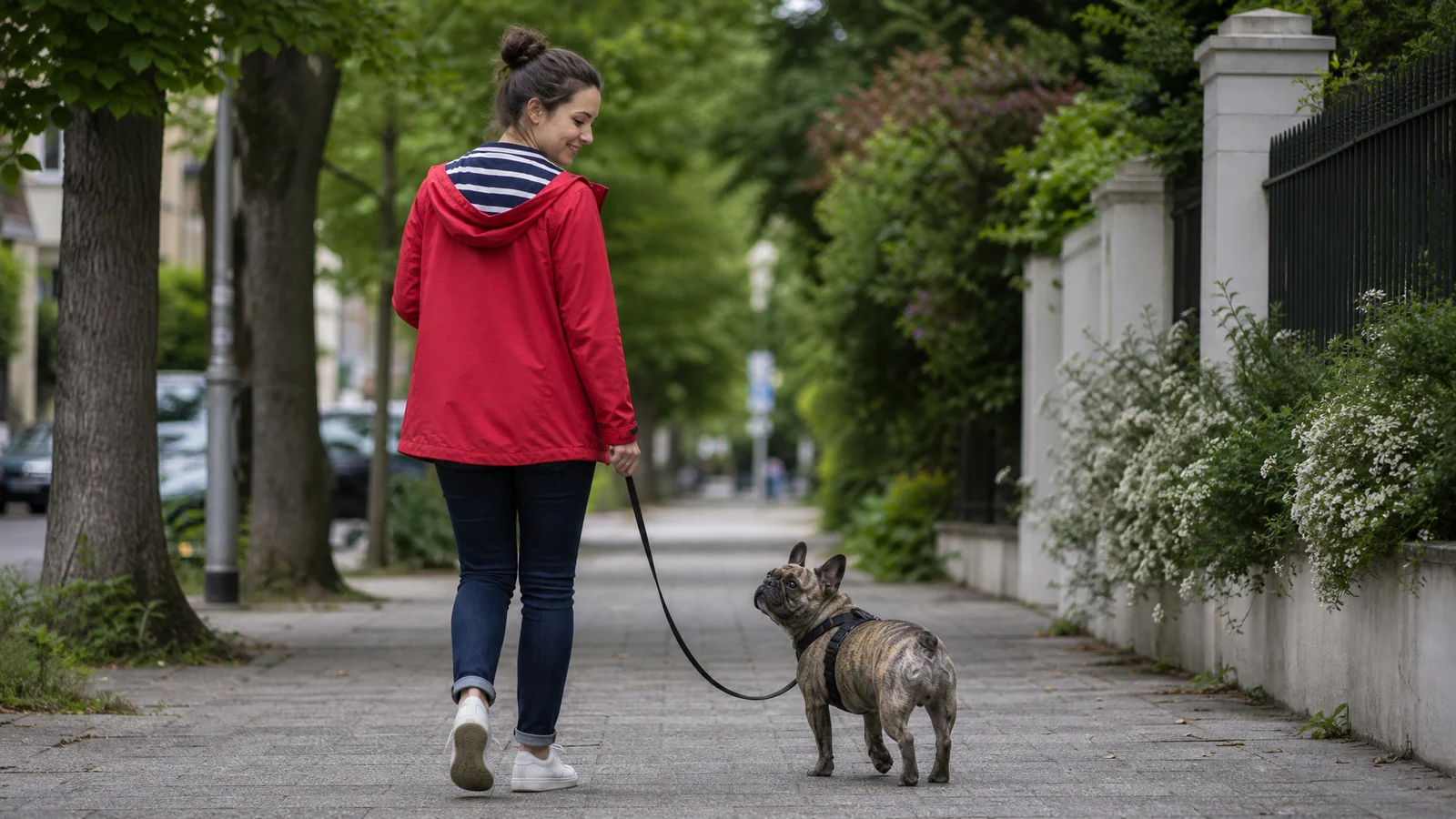
Hard pulling is the other big complaint, and a well-fitted harness over the shoulders is a sensible place to start. Our guide to French Bulldog harness and leash training walks through loose-leash practice step by step.
When Treats Stop Working Outside
A minority of owners find that ordinary treats lose their pull once the door opens. The dog ignores even high-value food, and "leave it" practice falls apart. Those owners say cheese is the one reward that still works outdoors, including the squeezy tube kind. Try it before deciding the dog is untrainable, and keep portions tiny, as you would with any reward.
Heat and Humidity Set Exercise Limits
Dogs shed heat mostly by panting, and flat-faced dogs have smaller airways, narrow nostrils, throat folds and larger tongues that make panting less effective. Humid air makes it worse, because evaporation works poorly in wet air. That is why a mild, muggy morning can be as hard on a Frenchie as a hot afternoon, so check humidity along with temperature. These rules apply to every Frenchie, however well they breathe on an ordinary day.
Owners confirm this. They describe dogs who tire and pant on warm days that are not even hot, or come in from the yard already overheated. Some owners cut summer walks to half a mile or less and use cooling vests, ice packs, strollers or backpacks. On warm days, move the exercise indoors, where a cool hallway makes a fine practice space for rally, obedience and ball games.
Your role is to be the brake. Owners say their Frenchie will not stop on their own, even on a day that is only warm, so they end the game or turn for home when heavy panting starts. Learn what normal panting looks like at rest and after a short game. Panting beyond that, or visible extra effort to breathe, means stop and cool off. Strenuous panting can swell the lining of the airway and worsen the blockage, so the time to stop is before it gets heavy.
Know the signs of real trouble, because heatstroke can threaten a flat-faced dog's life within an hour:
- Excessive panting, continuous drooling or visible difficulty breathing.
- A fast heartbeat, or a tongue and gums that look dark or bright red, or dry.
- Red, warm skin inside the ears, or a dog who is unsteady on their feet.
- Sudden anxiousness or hyperactivity on a warm day. Read this as a possible heat sign, not a training problem.
If you see any of them, stop everything. Wet the dog with cool, not cold, water, set them somewhere quiet with a fan moving cool air, and call your vet.
This is general information, not a diagnosis. Noisy breathing, gagging or bringing up foam after play is not normal Frenchie noise, so mention it to your veterinarian, who can check the airway and advise on exercise and cooling for your dog.
Nose Games for French Bulldog Exercise Indoors
Mental work is the safest way to fill a warm day, and for this breed we lean on it heavily. Sniffing, indoors or on a walk, is stimulating and calming, and it tires the brain without taxing the lungs. Almost any dog can try nose work, which helps energetic dogs learn to focus.
Build the games in order, and move up a step only when the dog is winning:
- Scatter a few treats on a towel or in short grass and let the dog search.
- Hide treats around one room while the dog waits, then release them with a cheerful cue.
- Move to a snuffle mat or puzzle feeder, using part of the daily meal so calories stay in check.
- Hide treats under cups, in boxes or behind furniture, then in another room.
- On a cool day, turn the walk into a sniff walk where the dog picks the pace.
Keep sessions short and quiet. A keen, food-motivated Frenchie will keep working in warm air, so the same rule holds as for walks: you end the session, not the dog. This matters most for the dogs who seem lazy until play starts and then cannot quit.
The Adult French Bulldog's Exercise Week, Weather First
By adulthood you know which kind of Frenchie you live with. Some are true couch potatoes who sleep most of the day and are spent after a short walk. Others still have energy after a long one, with zoomies and wrestling at home. Both are normal. The table below lets weather, not habit, decide the day.
| Conditions | Movement | Brain work |
|---|---|---|
| Cool, dry morning | Main walk, or a longer outing if the dog enjoys it | Sniff walk, short training |
| Mild but humid | Short walks near home, then indoors | Scatter feeding, puzzle feeder |
| Warm or hot | Indoor play in the cool room only | Find-it games, settling on a mat |
| Freezing | Brief potty trips, indoor play | Hide-and-seek treats |
Some owners swap part of the walking for short rally or agility sessions. Fit, conditioned dogs can handle brief, fast sports in cool conditions, but distance work is not the model for this breed. Our overview of sports and jobs for French Bulldogs shows what suits them.
Rough, mouthy wrestling with bigger dogs often looks alarming and is plain play. Step in when one dog stops enjoying it, or when your Frenchie is hurting themselves chasing a ball they cannot stop chasing. End the game with a calm pause and a reward. Near water, never leave them unattended, and read our French Bulldog water safety guide first.
Once a season, run one simple check. A brisk 3-minute walk in mild weather should not leave the dog breathing with effort. If it does, see the vet before planning anything else.
What Years With a French Bulldog Usually Look Like
Energy will change, but not on a timetable. Owners of 2- to 4-year-olds are split: a few see mellowing start near 3, while others describe dogs still very energetic at 3 and 4 who never settle and need hours of walking. Plan for the second group, and enjoy it if you get the first.
Breathing is the more reliable trend. Airway problems tend to get worse as a dog ages, so a dog who coped with last summer may struggle with this one. Re-check how your dog handles heat each year, and treat heavy breathing at rest or excessive panting in an older dog as a reason to call the vet, since it can also signal pain. Regular vet visits keep these changes from sneaking up on you.
The takeaway for the long run is steady and modest. Give your Frenchie moderate, regular movement in short, cool segments, fill the rest of the day with nose work and puzzles, and be the one who ends the game. Dogs who live this way rarely go looking for trouble, and you protect the airway that every other plan depends on.
 Training basicsHow to Potty Train a French Bulldog Puppy
 Training basicsHow to Train a French Bulldog: The Complete Guide
 Training basicsHarness and Leash Training a French Bulldog