 Frenchie
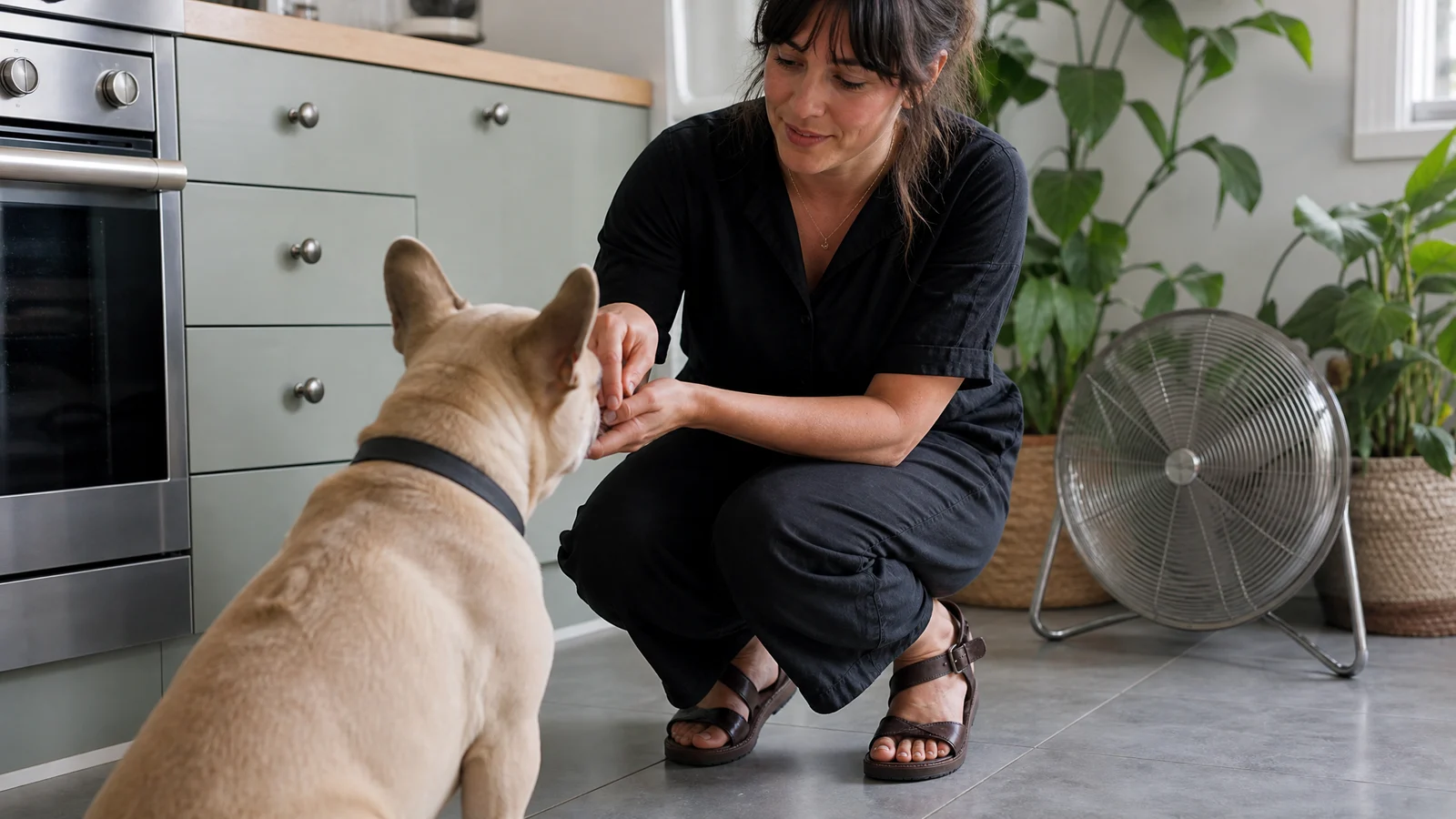
A French Bulldog trains with ordinary positive methods, adjusted for heat, breathing limits and an independent streak. Food, games and a steady routine do most of the teaching. A flat face, a back that dislikes leaping and a big personality mean you plan each session differently than you would for a long-nosed breed.
Those adjustments matter because the mistakes cost more here. Push a keen Frenchie through a warm session and the airway pays for it. Call a sore dog stubborn and you miss the pain. Get it right and you have a clown who wants to work beside you. We have trained this breed for many years, and the same few points come up again and again.
This guide covers what you need to know about training a Frenchie, from the facts that set the breed apart and its heat and breathing limits to rewards, housetraining, socializing and a plan for your first two weeks.
What Changes When You Train a French Bulldog
Most of what works for any puppy works for a Frenchie: reward what you like, keep sessions fun and stay consistent. The parts that change are narrower than people assume, and they come from the breed itself. Frenchies want to please and are also very independent thinkers, and individuals range from total clown to headstrong. Plan for both halves instead of assuming an easy dog or a stubborn one.
Budget more training than the dog's size suggests. Frenchies have a big personality that needs an adequate amount of training to make a civilized companion, and they love being the center of attention. Our page on how easy Frenchies are to train weighs the reputation in detail. Trainable, yes, but on their terms and with good pay.
Keep your own cues clean, because a keen Frenchie reacts so fast to your movement that a slight hand gesture can become an extra jump or spin. And be persistent instead of forceful: repeat the easy, well-paid version of a skill until the dog chooses it every time.
What Changes for This Breed
These are the places where a Frenchie's body and temperament bend the usual advice, and each one gets more room later in the guide.
- Jumping needs managing early. Owners describe Frenchies who leap on and off couches and beds constantly, puppies with little fear of heights, and pet stairs that become one more launch pad. After a back episode, owners end the jumping altogether and teach ramps, so teach the ramp first, with treats.
- Grooming is where an easygoing Frenchie objects most. Many fight ear cleaning, and a nail trim is the one moment some gentle dogs give a warning growl. Owners got through it with a treat in one hand, very short sessions and daily handling of paws or pretend clips from the first weeks at home. Our handling guide shows how.
- Check the body before you label the attitude. Refusing to walk, not turning the head for a cue, not lowering the head to a treat on the floor, slow or lopsided sits and balking at stairs or the sofa can all be pain, so ruling out health problems with your vet comes first when behavior changes.
- A dog who keeps breaking position to scratch, lick the feet or scoot may need the vet for allergies, ears or anal glands, not more repetition. Squinting mid-session is a reason to look at the eye, not a sign of distraction.
- Sudden growling or snapping when picked up or touched along the back needs a vet check before any behavior work.
What Stays Ordinary
Name games, sit, come and a settled crate all run the usual way, and our French Bulldog puppy training timeline lays them out by age. Around 4–6 months, 28 baby teeth fall out and 42 adult teeth come in over about two months, so offer allowed chews. Around 6–8 months hormones can shift activity and temperament. Strenuous running and jumping should wait until at least eight months and up to a year, while the joints develop.
Ears are the other ordinary surprise. Owners report them standing anywhere from about 10 to 16 weeks, often one ear first, then drooping again during teething or curling back before they finally settle. That is not a training problem, so do not let it worry you.
Train Within a French Bulldog's Heat Limits
Short-faced dogs breathe less well than longer-muzzled dogs even in the best conditions, so they tolerate heat less and struggle to meet the extra oxygen demands of exercise and stress. Strenuous panting then inflames and swells the airway lining, which narrows the passage further. Every session with a Frenchie is planned around that airway, and the fix is a cool room, a low-pressure mood and an early finish.
Session Length
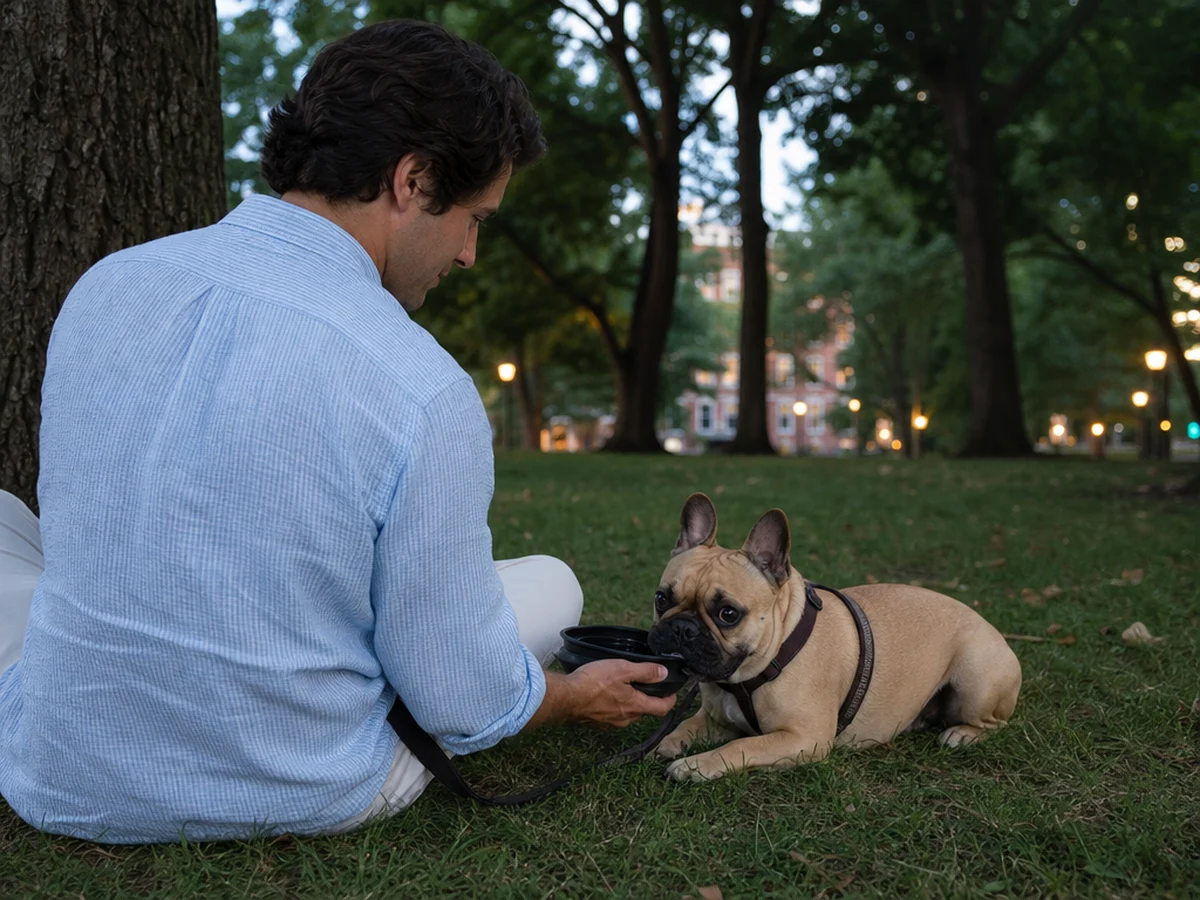
Common advice says to keep drilling until the dog gets it right. With this breed, stop while they are still keen and breathing easily. Several short sessions through the day beat one long one, and a food-motivated Frenchie will happily keep working while overheating, so the limit has to come from you. Stop before heavy panting sets in, not after.
Cool rooms favor brain work over movement. A few repetitions of a new cue, a find-it game or a settle on a mat tires a Frenchie out without taxing the airway. It also keeps a big personality busy, and Frenchies without activities tend to invent their own.
Weather Rules
In warm or humid places above about 70°F, the national breed club says air conditioning is a must in the house and car, so train indoors on those days. Check humidity as well as temperature, because a humid, mild morning can be as hard on a Frenchie as a hot one. These rules apply to every Frenchie, however well they breathe on an ordinary day.
Extra weight makes it worse, since fat insulates and traps heat. Never leave a Frenchie in a closed car or alone outside, and keep fresh cool water close. In summer, chilled or frozen rewards suit outdoor sessions and give the dog something cooling to work for.
Warning Signs to Watch
Learn your dog's normal panting at rest and after play, because that baseline is what makes changes obvious. On a warm day, read these as possible heat signs, not training problems.
Watch for panting that goes beyond their usual, or breathing that looks like harder work than normal. Anxiousness, unsteadiness or sudden hyperactivity can also be early signs of overheating. So can skin inside the ears that turns red and warm, heavy drooling or bright red gums.
If you see them, stop, wet the dog with cool (not cold) water, move them somewhere quiet such as a crate with a fan blowing cool air, and call your veterinarian. Noisy breathing, gagging or bringing up frothy foam after play is not normal Frenchie noise either. A Frenchie who cannot play without becoming stressed should have their airway checked by a vet experienced with flat-faced breeds.
Reward Choices When You Train
Food is the default lever for this breed, with games and attention as the second currency. Turn training into a game paid in food and most Frenchies join in with their whole body. Many owners find treats did what praise could not. Others have the opposite dog, one who was never very food motivated and responds to praise, love and excitement. Let your dog's own preference choose the pay, and keep the other as a bonus.
Whichever you pick, only reward-based methods belong in training, and the logic is simple: giving the dog something they really like, whether food, a toy or praise, makes the behavior more likely again. Frenchies who are paid well offer behaviors because training is fun, which is exactly the dog you want.
Treat Size and Weight
Frenchies are prone to obesity, and extra weight raises their risk for several breed health problems, traps heat and adds to the load on a short airway. So count every treat in the day's food. Cut rewards into tiny pieces, or take part of the daily meal and use it for training. Keep table scraps out of the training pouch entirely.
If a dog who loves food suddenly ignores it, they may be unwell, not stubborn, so check with your vet. A senior who struggles with crunchy treats can switch to soft ones.
Fading the Food
Once a cue is reliable, pay for it less often and unpredictably, and let life rewards carry more of the load. Frenchies are creatures of habit, so rituals work well as pay: a sit before the door opens, before the bowl goes down and before the harness goes on. Keep the best treats for hard moments, such as calling a dog away from something exciting.
This is general information, not veterinary advice. Ask your veterinarian how much your dog should eat each day and what a healthy weight looks like. If your vet starts a food trial for itchy skin, make sure the training treats fit the trial.
Housetraining a French Bulldog Puppy
Routine does the teaching here, and the breed's ritualistic nature is on your side. Frenchies are creatures of habit, so a fixed schedule that everyone at home sticks to gets results faster than clever technique. Start the day the puppy arrives, and do not teach one set of rules and change it later. Owners' timelines vary widely, with some puppies easy to potty train and others simply taking longer.
The Daily Schedule
Owners who describe what worked kept a fixed rhythm of out, play, eat, out, nap, and took the puppy outside very often. Young puppies sleep a lot and are active in short spurts, so the cycle is tiring to keep up at first. Reward right where you want them to go. Our guide to the first week home with a Frenchie puppy covers the early days in more detail.
Crate Habits
A crate-trained puppy is easier to housebreak, because dogs treat the crate as a den, and a contented crate habit pays off later for travel and for any rest your vet orders. Many owners say puppies settled at night when they could see, hear or smell them. A crate beside the bed, a worn shirt or a warm bottle wrapped in a T-shirt helped. Some puppies settle within about a week, while others need the crate nearby for months.
Practice short, boring separations early, since owners link that to how the dog copes later. A Frenchie who shadows the household and was never left alone can struggle for a long time. In warm areas, put a cooling pad and fresh water in the crate.
Handling Accidents
Clean accidents quietly and make the next trip outside more rewarding. Puppies chew or swallow whatever they can reach, from cardboard to slippers, so puppy-proof the home before arrival and supervise closely, because life with these puppies resembles life with a toddler. Around 6–8 months a house-trained adolescent may have accidents that are hormonal, so mention continuing ones to your vet.
Socializing a French Bulldog
Early, calm exposure to people, dogs and places matters more than any trick. Puppies go home at about 12 weeks, so socialization starts with the breeder: ask whether the litter has met other pets, children and household noise. Most Frenchies are very fond of people, which makes the work feel easy. Aim for confidence anyway, so that a stranger, a vacuum or a busy street is just another thing that pays treats.
Puppy Classes
A reward-based class teaches walking nicely on a leash, sit, stay and come, and it teaches you how to communicate with the dog. Your vet decides when the puppy has enough immunity to start classes and meet other dogs. Until then, owners carried puppies outside, held off on walks and used the time to get them comfortable in a collar and harness. See our guide to Frenchies with kids, cats and daily life for home introductions.
Wariness and Rough Play
If your puppy freezes, backs away or hides, increase the distance, reward a calm look and end on something easy. In a flat-faced breed, panting can signal heat or breathing trouble as well as stress, so do not read it as stress alone. Owners also describe a rough, full-contact play style, with shoulder-barging and littermates playing so hard their owners worry. Interrupt calmly, give a short break and reward a return to gentle play.
When a puppy joins an older Frenchie, owners report a range, from months of grumpiness before the pair become inseparable to an older male who nipped. Give the older dog breaks and plenty of space.
Common French Bulldog Training Problems
Several problems come up again and again with Frenchies, and each deserves a page of its own. For any of them, the first question is whether the body is comfortable, and the second is what the dog is being paid for.
- Leash pulling, planting and wheezing at the end of the leash belong to our walking pages, which start from a harness and cool weather.
- Growling when touched or handled needs a vet check first, then gentle handling practice, and our handling guide is the place to start.
- Possessiveness over toys or bickering when a second dog joins the household has its own page, because the answer depends on the dogs and people in your home.
- The stubborn label gets a full look in our article on Frenchie trainability.
A Two-Week French Bulldog Training Plan
This plan turns the principles above into practice. The first week builds routine indoors in a cool room, and the second adds cues and short outings. Go at your dog's pace, and drop back a step whenever they seem tired, hot or unsure.
- Fix a daily schedule for meals, potty trips, play and naps, and write down the household rules for the sofa, bed and doors.
- Take the day's treats out of the meals, in tiny pieces, and keep scraps out of the pouch.
- Use the crate for meals and naps, with water close and a cool spot.
- Reward every correct potty trip right where it happens.
- Begin daily handling of paws, ears and wrinkles with a treat in one hand.
- Add cues one at a time: name, sit and come, in short sessions that end on a success.
- Teach a ramp to the sofa with treats, so jumping is never the only way up.
- Take short outings in a harness during the coolest part of the day, and head home at the first sign of heavier panting.
- Book a vet check, ask about vaccinations and class timing, and mention any signs from this guide. Regular vet visits belong in your routine from here on.
What these two weeks give a big-personality, flat-faced, back-sensitive little dog is a household that behaves predictably and a body that stays comfortable. Meet those needs and the energy goes into cues and cuddles instead of trouble. Keep sessions short, treats counted, the room cool and the rules the same for everyone, and your Frenchie's wish to please will do the rest.
 Training basicsHarness and Leash Training a French Bulldog
 HealthFrench Bulldog Heat Stroke: Signs, Prevention and Hot Walks
 BehaviorDo French Bulldogs Bark a Lot? Barking, Crying and 'Screaming'