 Frenchie
What do you pay a dog for when the whole job is not moving? If your French Bulldog has spent the day earning treats for doing things, a reward for staying put can feel backwards at first. It is not, because you pay the stillness itself, and you bring the treat to the dog instead of asking them to come and collect it.
In practice, we start from a position they already hold on cue, add one short word, and let a raised hand do half the talking. Read on for the timing and the release that decide whether your Frenchie understands the job or just waits for the treat to fall.
Staying put is the one job in your dog's day where doing nothing is exactly the right answer. That gives your dog a clear, winnable task, and it gives you a way to reward calm without asking for anything more.
Picking the Position and the Words for a French Bulldog Stay
Your answer to that backwards-feeling question starts before any treat leaves your hand. Begin with a sit or a down that your dog already does reliably on cue, because a stay only asks them to keep doing what they have just done.
Choose a stay word and a separate release word that sound different from each other and from your dog's name, so a casual "good dog" can never be mistaken for permission to move. If you have not set up a marker word and a treat routine yet, our complete French Bulldog training guide covers both, and a stay depends on the dog knowing which sound means a treat is coming.
How the First French Bulldog Stay Lesson Runs
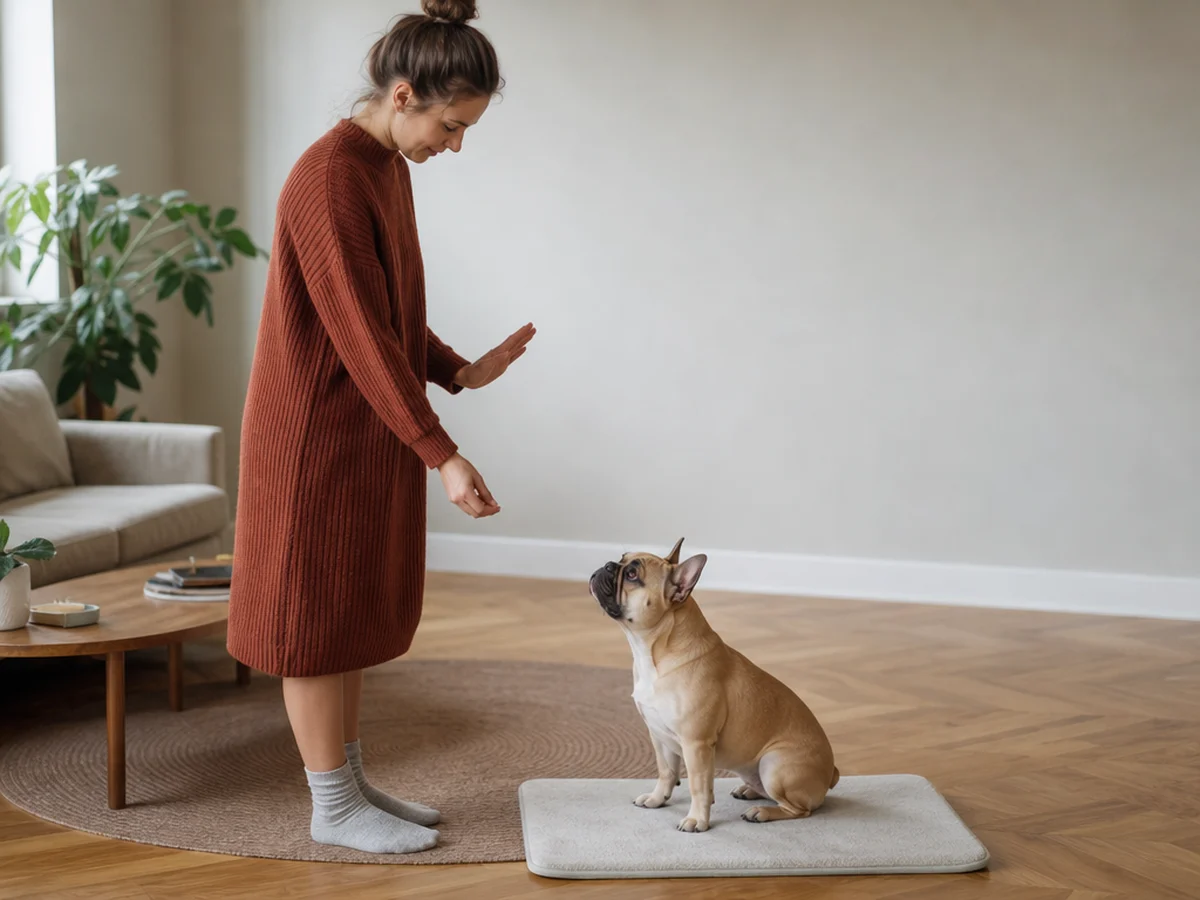
Now the question is what your hand, voice and treat do, and in what order. Each step below does one job, so you can practice them in sequence while you stay right beside your dog.
The Hand and the Word
Ask for the position, then give the stay word in a long, low tone with one hand raised, palm toward your dog and a treat waiting in the other, the same form of the cue the San Francisco SPCA uses. The slow voice keeps the word from sounding like the start of a game, and if your Frenchie lunges for the treat, pulling that hand back and starting over shows them the treat only comes with stillness.
Pay While They Are Still
Mark the stillness, then bring the treat low and close to their mouth so they never have to lift their body or step toward you to get it. Pay early on a short hold rather than late on a long one, because a treat that arrives after the wobble has already started rewards the wrong moment.
Lengthening the Wait Before You Pay
Once a moment of stillness is reliable, wait a beat longer before the treat, and pay before you see the first sign of wobble: a shifting paw, a lean toward your hand, a first shuffle toward getting up. A dog who gets up has simply been asked to wait longer than they could, so go back to a length they managed and pay there. Distance can wait until the hold looks comfortable and easy.
What the Release Word Tells Them
The release word closes each rep and means the job is over and moving is welcome again. Say it brighter than the cue and use it every time, even after the shortest hold, so your dog never has to guess whether a wobble counts as the end.
When Stays Get Muddled
A stay lesson can look right on paper and still leave a dog unsure what is being paid. These answers separate what you asked for from what your dog happened to do.
What if they lie down from a sit-stay?
Pay only the position you asked for, so a dog who drops into a down gets no treat for it. Ask for the sit again and reward the moment they are back in it, with the treat coming a little sooner so it lands before the urge to lie down does.
What if they keep leaving the spot?
Look at your own setup first. Regular vet visits matter here too, since a dog who cannot settle in any position may be uncomfortable, and your vet is the right person to look into that. Before the next rep, check three things:
- The treat arrived late, after they had already started to shift.
- The spot was too busy, with something more interesting than your treat in view.
- The ask was bigger than the last one, with a longer hold or more going on than they have handled so far.
Fix whichever one fits and try again. The next treat then reaches a dog who is still there, and the rep ends on something you can pay for instead of on a scramble to get back into place.
Does my Frenchie have to look at me?
No. Pay the stillness, wherever the eyes are going: a dog who stares at you while shifting has not stayed, and one who glances around but holds still has, so that glance still earns the treat. Asking for eye contact as well gives them a second job in a lesson that only needs one.
Distance and Outdoor Practice for a French Bulldog Stay
Distance and busier places are where a solid hold gets tested again. If the struggle seems to come from somewhere bigger than the exercise itself, our French Bulldog behavior problems guide covers the larger picture of what else may be going on.
Adding Distance Once They Hold
Adding steps away is a separate change from adding time, and Cornell orders it that way: when your dog is able to hold the position for several seconds, you can start adding distance by asking for the stay, taking one step back, then returning to praise and reward. From there you gradually increase how far you go before coming back, and if your Frenchie breaks the stay and gets up, you calmly lead them back to where they were supposed to be and try again.
Going back to the dog to pay and to release keeps both the reward and the end of the exercise happening beside them, instead of across the room where a dog might decide to meet you halfway.
Out on Walks
Moving outdoors raises the difficulty all at once. The Animal Humane Society suggests lower value rewards for low distraction environments, like inside your home, and high value rewards for high distraction environments, like on walks outside. For a stay, that is a reason to carry the treat your dog loves best. Separately, we keep the first outdoor holds shorter than the ones that work indoors, because a new place already asks a lot of them.
The Stay You Barely Notice
Most cues show up as an event: a sit lands, a spin finishes. A good stay is closer to an absence, which is exactly why it is easy to overlook and easy to forget to pay. The quiet half second before they would have moved is where the reward belongs, and your eyes on your dog are what catch it.
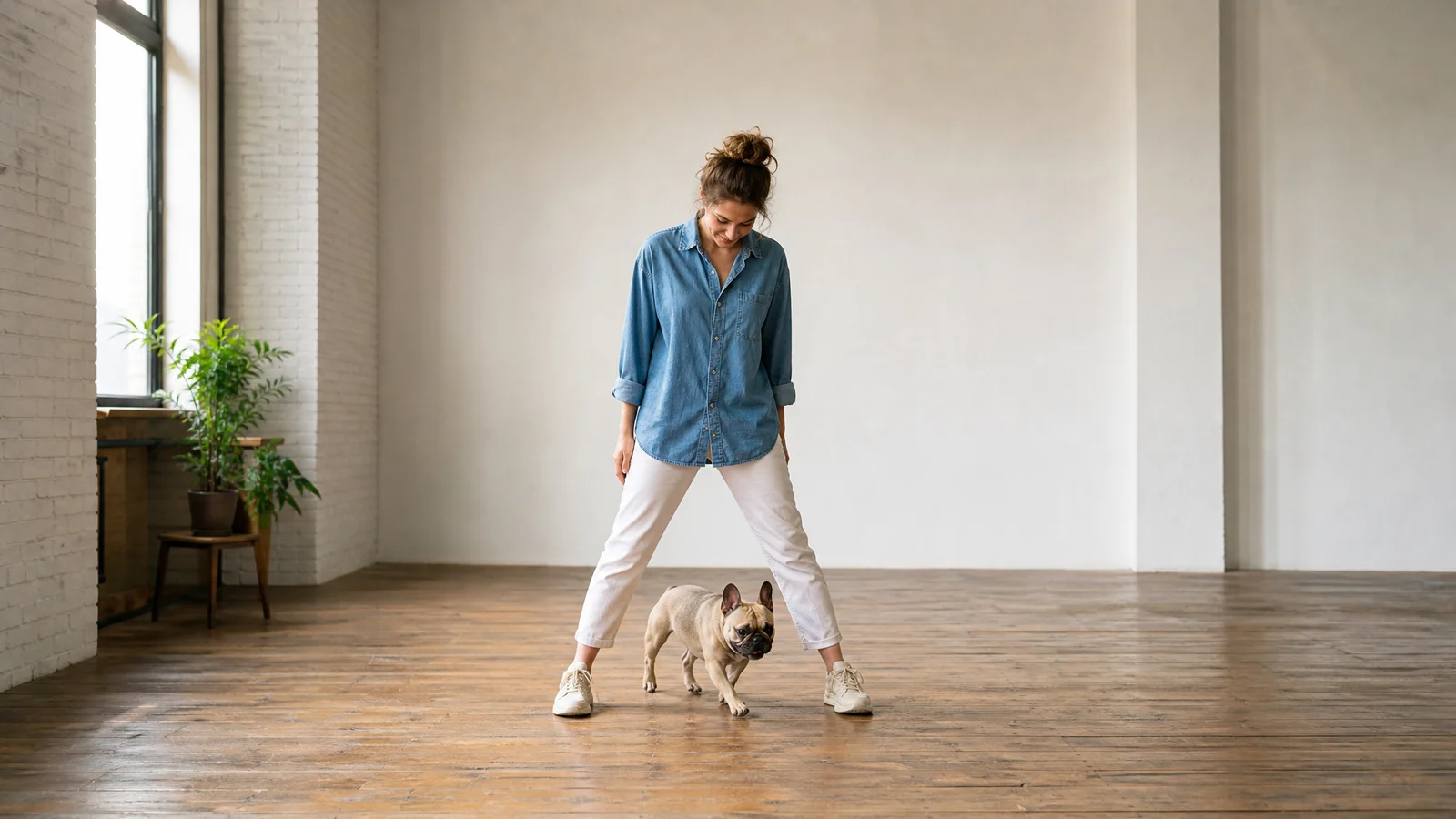 Exercise and jobsHow to Teach a French Bulldog to Weave Through Your Legs
 Puppy trainingFrench Bulldog Puppy: What to Expect and How to Start Training
 Puppy trainingFrench Bulldog Puppy at 4 to 6 Months: What Changes