 Frenchie
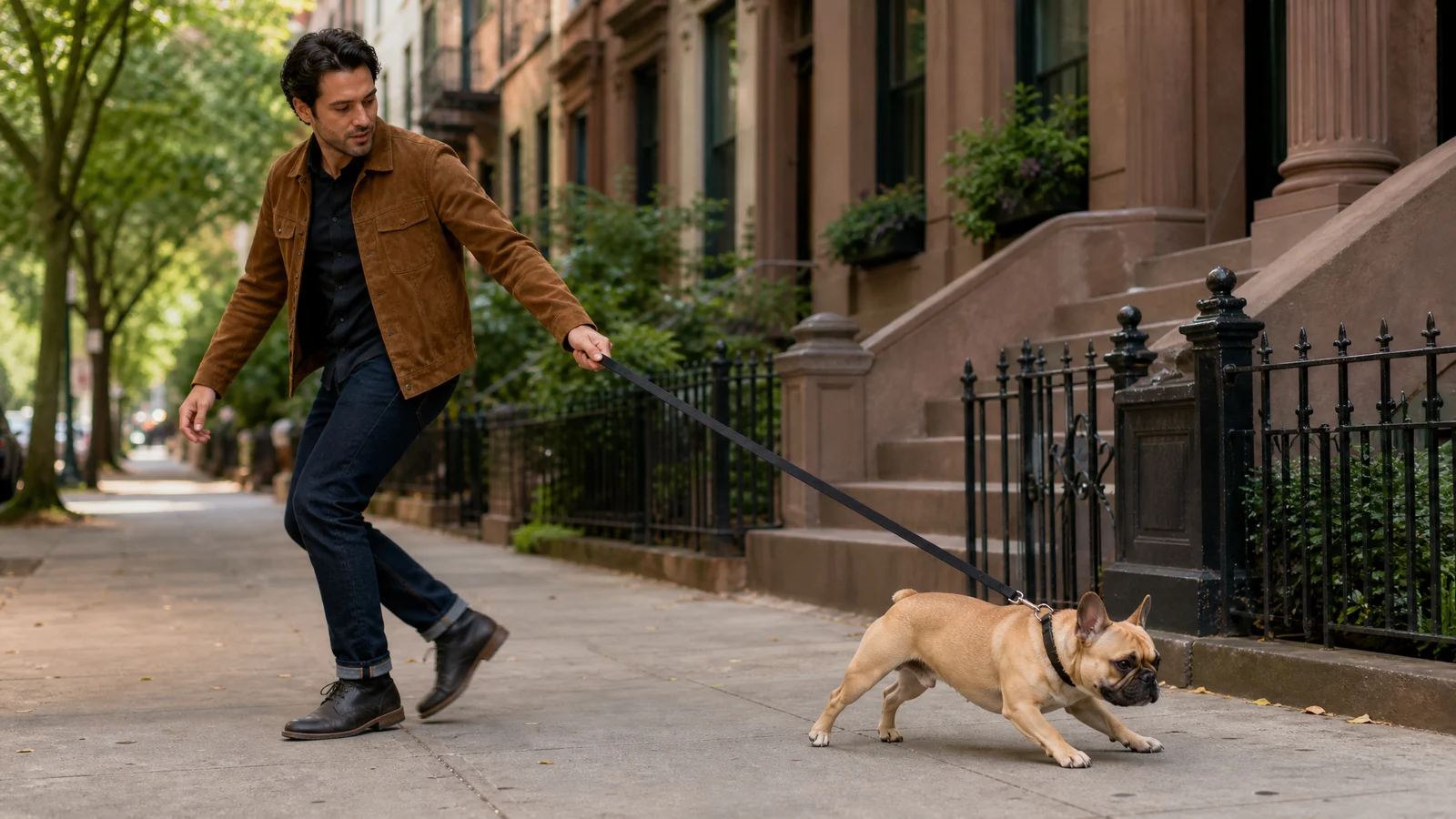
You already stop when your French Bulldog hits the end of the leash, so it is fair to wonder why the pulling hasn't faded. Often the stopping happens nearly every time, and a dog keeps careful track of the times it doesn't. That is a more fixable problem than it sounds.
Below, we look at where those exceptions tend to hide and what closes them. We also cover the days when training has to wait for another walk, because every household has a few.
The encouraging part is that a dog who has learned that pulling sometimes works can learn, on the very same everyday walks, that it no longer does. Your Frenchie doesn't need a new routine so much as a steadier one.
Why Stopping Most of the Time Doesn't Settle French Bulldog Pulling
Stopping is the right instinct, so the real question is how many of your stops actually happen. Best Friends Animal Society notes that stopping "four out of five times (rather than every time)" teaches a dog that pulling "can still result in the intended reward," and that a leash-pulling habit "might take them a while to stop pulling forward, even if you are stopped."
Exceptions rarely feel like decisions. They are the moment your attention drifts and you walk on with a tight line, or the "just this once" near the end of a long day. To your dog, each one is information about what pulling can still do.
Before adding anything new, notice which parts of your day contain those exceptions. A walk where the leash tightens and your Frenchie still arrives where they were headed, even once, has taught the old lesson again.
Answering French Bulldog Pulling the Same Way Every Time
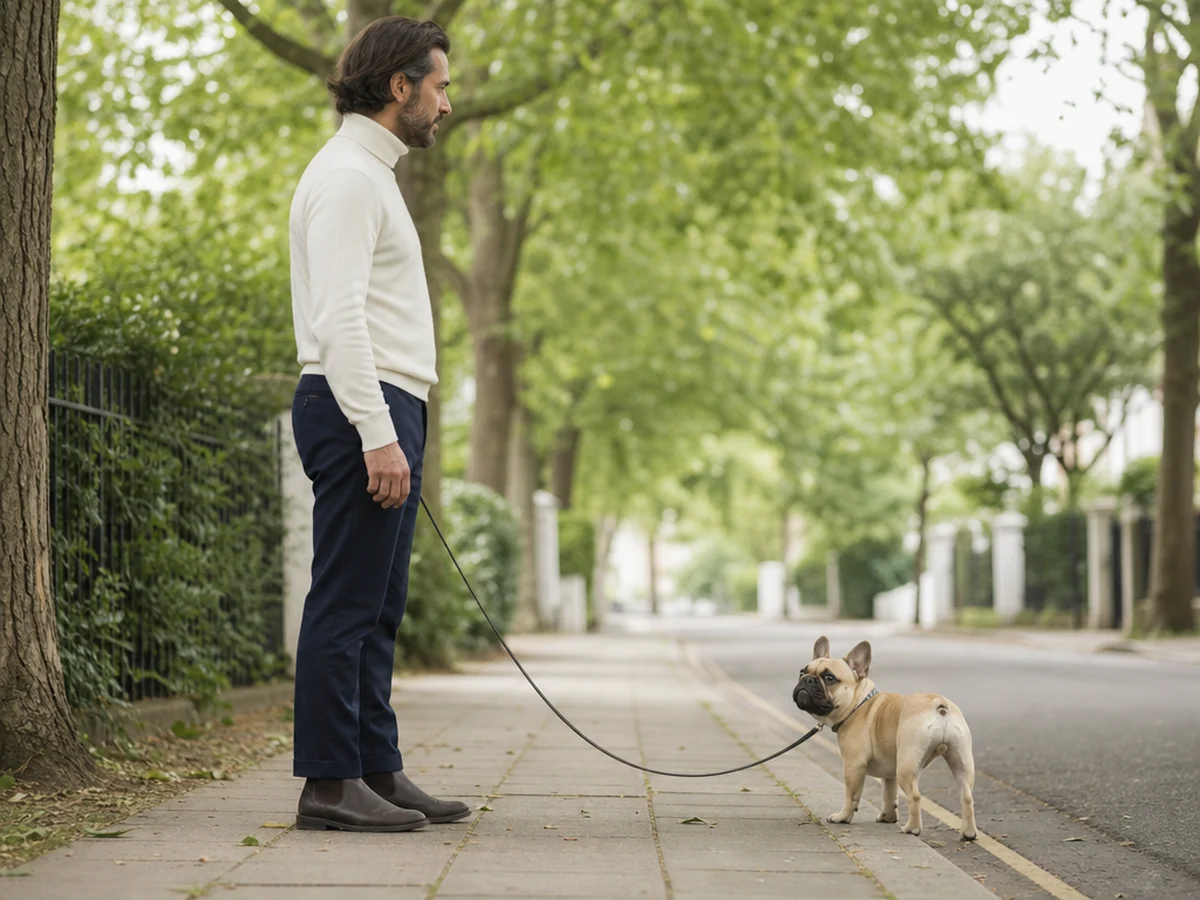
If exceptions are the leak, the fix lives in your own hands: how you answer slack and how you answer a tight line, every walk. The Animal Humane Society reminds walkers that "Being consistent with your praise will teach them they’re doing the right thing."
For pulling, that gives you something concrete to hold steady. Pick one short loose-leash word and one warm tone, and use them only while the line hangs in a curve, so the word comes to mean "this is the walk we are after."
When the line does go tight, turn calmly and walk the other way, with no tug back and no scolding. The turn takes the forward motion away from the pull, and it gives the leash a chance to go slack again for your praise to find. Our French Bulldog leash guide has the stop steps in order, so we won't repeat them here.
Before You Clip On the Leash for French Bulldog Pulling Practice
A rule is easier to keep when the first stretch of the walk is set up to let it work. Settle these four choices before you leave, and the rule has a fair start.
- The easy stretch first. Start where your Frenchie has the least reason to hurry, such as the quiet block nearest your door, and save busier routes for after the rule holds there.
- A route you can predict. Walking the same short loop for a while lets you see trouble coming and decide in advance where your praise will go, instead of improvising at every corner.
- Your word, said early. Use your loose-leash word at the door and again in the first quiet steps, while the line is still easy to keep slack, so it is already in the air before the first pull of the day.
- A relaxed hand. Hold the leash loosely at your side rather than wrapped around your hand, so you can feel the instant it tightens and give the line back before it becomes a tug.
None of this takes extra time on the walk itself, only a minute of deciding beforehand, and that minute is what keeps the rule from bending the first time the street gets busy.
The Walks Where French Bulldog Pulling Training Has to Wait
That setup assumes you have the time, and some days you don't. On those days the better plan is to keep a rushed walk from paying the pull, not to squeeze training in.
The American Kennel Club suggests that until you can get "more than a few feet at a time," your dog does their business in the yard or at the curb, and you save the walking for when you have time to train. A short relief trip is not a failure of the plan, because it spares you one more tight-leash walk that teaches the old lesson.
Short trips also give you a quick look at how your dog moves. A steady puller who suddenly walks differently is worth a mention at their regular vet visits before you assume it is a training problem, and our behavior problems guide helps sort out which. Either way, the short trip does its job and your next full walk gets your whole attention.
Where French Bulldog Pulling Slips Back Into the Walk
Even with the rule steady, a few moments pull harder than the rest. Each one needs its own kind of pay, and the three below come up most.
The Way Home
A dog who senses the walk is ending often speeds up, because speed feels like the finish. Slow the last block to the pace of a slack leash and use your praise word along the way, so arriving at the door comes as a result of calm walking and never as a reward for hurrying.
A Familiar Route
On a route your Frenchie knows by heart, the pull often starts well before the favorite spot. Pay the approach, not the arrival: a treat and your word while the line is still loose, a few steps before the corner they are leaning toward, and then the walk continues at a slack pace.
Someone Else's Hand on the Leash
A new handler holds the leash differently, and a dog notices at once. Give them treats of their own and walk beside them for the first stretch so your dog has something familiar beside them. Hand the leash over on the easy route from the list above, not on the busiest block of the day.
Setups the Pulling Plan Leaves Open
The plan above takes a few things for granted, such as the position your dog walks in and the kind of leash in your hand. These two questions test those assumptions.
Does my French Bulldog need to heel first?
No. Heel asks your dog to walk in one exact spot at your side, which is a separate skill, while this plan only needs the line between you to stay loose. A Frenchie who wanders a step ahead or behind and keeps the leash slack is already doing what we want.
Does a retractable leash change the plan?
It does, and mostly in the wrong direction. A retractable leash lets out more line every time your dog leans, so leaning keeps earning distance and there is never a clear moment when slack begins to pay. Practice on a leash that stays one length, and save the retractable for days when you aren't training.
What Your French Bulldog Has Been Learning From the Leash
A French Bulldog who pulls is not being stubborn or slow. They have read the leash accurately: for as long as a tight line sometimes got them where they were going, pulling was a sensible bet.
That is the useful part, because the same quick reading works in your favor once a tight line stops paying. What the leash earns your dog is the one piece of this you decide, and you decide it a few steps at a time, on ordinary walks.
 Training basicsHow to Teach a French Bulldog to Stay
 Exercise and jobsHow to Teach a French Bulldog to Weave Through Your Legs
 Puppy trainingFrench Bulldog Puppy: What to Expect and How to Start Training