 Frenchie
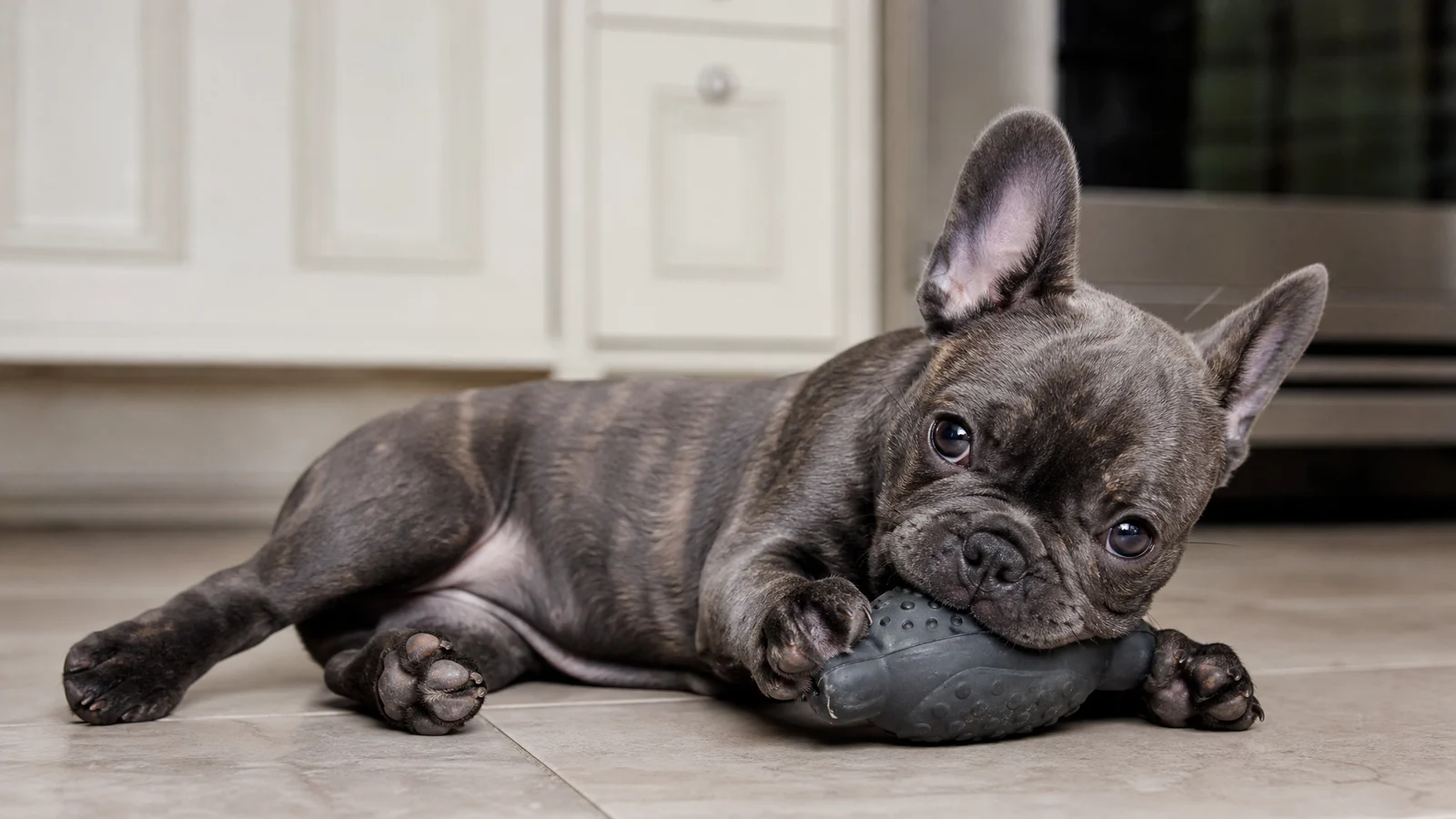
The breed standard calls the French Bulldog a companion who is playful but not unduly boisterous, and the usual puppy advice is to hand over a toy and wait it out. Owners describe something sharper. Their puppies go after hands, feet, sleeves and hair with needle teeth, the worst of it lands around 4 to 6 months, and it flares at the front door and during evening zoomies.
Handled badly, a mouth-first puppy with bulldog jaws learns that teeth buy attention, and your ankles pay the bill. Handled well, you get a dog who greets you with a wiggle and a soft mouth. We have trained this breed for many years, and what you're living with is almost always play and sore gums.
We'll walk you through how to tell play and teething from real aggression, then why hands become the target and what to put there instead, then how rough play, tiredness and warm rooms feed the habit, and last the one chew to have ready tonight.
Puppy Biting Is Play and Teething, Not Aggression
Before you fix anything, work out what you're looking at. The diagnosis decides the plan, and for a mouthy Frenchie puppy it is usually boring: they're young, their gums hurt, and you are the most interesting thing in the room.
What Play Biting Looks Like
Play biting has a look. The puppy is loose and wiggly, the targets are hands, fingers, feet, toes, clothing and hair, and they come straight back for more the moment you pause. Owners call it relentless, and some puppies latch on or break skin, which hurts and is still play. Most Frenchies are very fond of people, and a mouth is the only tool a puppy has for saying so.
Puppies mouth to explore, to play, because their gums hurt, and to get away from handling they dislike. Many mouth more when they're over-stimulated, tired or struggling to cope. That's why the worst of it tends to arrive at the hour you're least equipped for it, usually while you're carrying hot food.
Where Real Aggression Differs
Aggression is a different animal, and fear sits behind most of it. Fearful dogs try to avoid the threat but may bite when they can't escape, for example when cornered, held or leashed. If you see that pattern, get veterinary help early rather than wait and see.
Compare that with the noise Frenchies make. Owners describe growls, puffs, grumpy squeals and a high-pitched gremlin trill as the breed's way of complaining, and say those warnings rarely or never turn into bites. Several have dogs who have never bitten in anger. Our guide to common French Bulldog behavior problems covers growling and guarding in full. Regular vet visits are worth keeping up either way, and a sore mouth deserves a look.
Teething Pushes a French Bulldog Puppy to Chew
The one piece of timing we can pin to a breed expert is teething, and it explains more about chewing than about biting.
What Teething Explains
At 4 to 6 months it's all about teething, and the teething timeline says to expect 28 baby teeth to fall out and 42 adult teeth to come in over about two months. That's a lot of loose, itchy hardware packed into a short face.
Teething is uncomfortable, and relief often comes from chewing on everything. The expert advice is to provide appropriate things to chew and keep the puppy busy, which protects the puppy and your furniture. Owners confirm the menu: baseboards, shoes, cushions, remotes and chair legs, and for some dogs the wood habit continues well past teething.
What It Doesn't Prove
Owners who see nipping in the same 4 to 6 month stretch often blame teething for that too. It's a reasonable guess, and the timing fits, but treat it as a likely contributor and not a proven cause. The link between teething and chewing is solid. The link between teething and hand-biting is circumstantial, though a puppy with sore gums and your fingers in easy reach is a bad combination either way.
Teething is one stage in a longer story, which our French Bulldog puppy training timeline lays out. For now, plan for heavy chewing and offer the right things before the wrong ones get chosen.
Why Does My French Bulldog Puppy Bite Hands?
Because hands are the closest, most interesting and most reactive thing in the room. They wiggle, they smell like dinner, and they answer every bite with attention, which to a puppy is the best payment going. In a breed that adores people, attention is worth even more.
Owners tie the worst nipping to a short list of moments, and spotting yours is half the fix:
- The puppy needs to potty or is hungry, so check those first. A schedule that heads off the urgent ones is in our guide to potty training a French Bulldog puppy.
- You walk in the door, and the whole day's excitement lands on your ankles and sleeves.
- Evening zoomies arrive, the daily burst of clowning most Frenchies deliver right on schedule.
- The puppy isn't getting your full attention, usually while you're cooking or on a call.
- Children are around, moving fast and squealing, and the excitement goes straight to the mouth.
Feet get their own category. A smaller group of owners describe chewing aimed at toes, crocs and shoes, especially when someone is barefoot. Same logic: it moves, it sits at mouth height and it gets a reaction.
Greet the puppy calmly, and ask visitors to do the same. Excitement that causes panting puts extra load on a short-faced airway, so a calm hello is a welfare skill and not only manners.
The usual advice says to yelp like a littermate and walk off. Owners report mixed results. Some found that yelping, saying ow, turning away or leaving the room had not stopped the biting at 4 and 5 months. Others say ending the game works, whether they stood up, turned their back or walked away from it. It's mild and worth a try, but don't expect your voice to do the work a chew should be doing.
Swap the Hand for a Frozen Chew When Biting Starts
The principle is simple. A puppy's mouth will be busy, so you decide what's in it. Whenever teeth head for skin, a better target should be nearer than your hand, and the version of the swap depends on what's driving the moment.
For Sore Gums
When the puppy gnaws at anything and everything, treat it as a comfort need and offer a chew before the hands become the answer. Bulldog jaws destroy soft and stuffed toys quickly, so indestructible toys are best, and rawhide-type chews are out because softened rawhide can lodge in a Frenchie's throat. Owners of heavy chewers say most ordinary toys are shredded within minutes to a day, so don't spend much on the fluffy ones.
Chilling or freezing a chew is a sensible add-on for sore gums, and some owners freeze dinner inside a food puzzle so mealtime becomes a long, absorbing job. A few puppies gulp instead of chewing, swallowing treats, kibble and chew pieces whole, so watch the first sessions and trade a shrinking chew for a treat.
This is general information, not medical advice. Check with your veterinarian before freezing meals or choosing chews, especially for a puppy who gulps, has allergies or eats a special diet.
For Play-Biting Moments
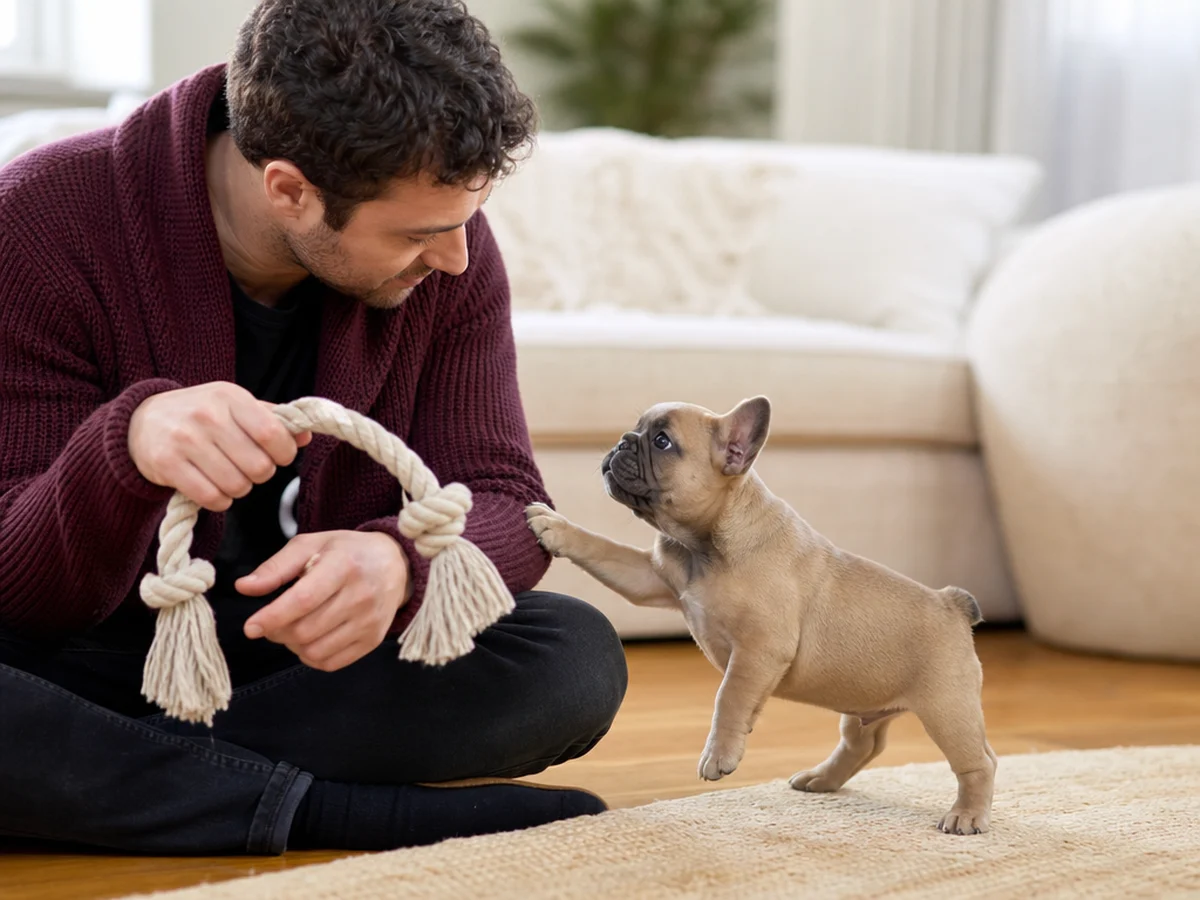
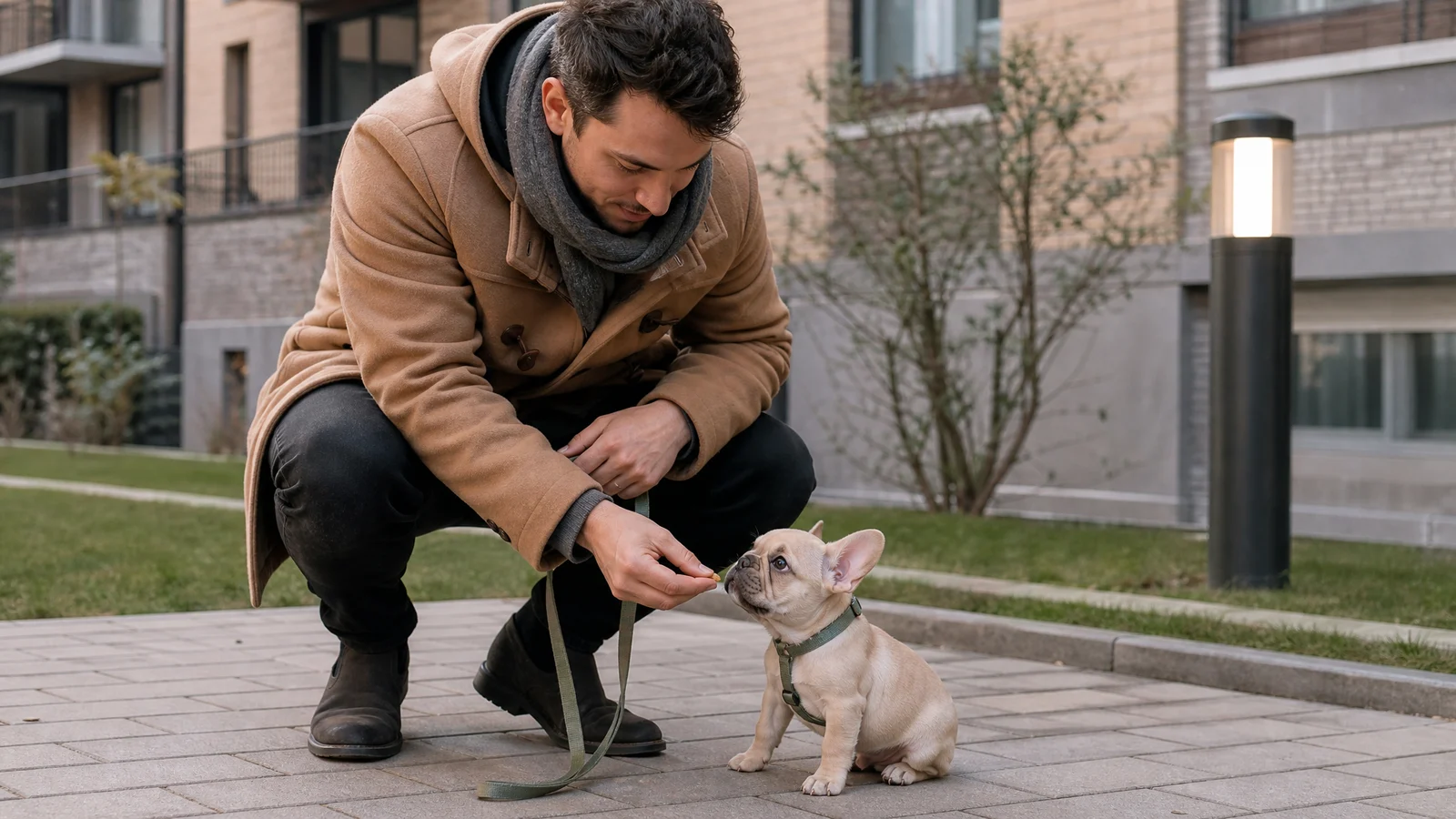
Redirecting to a toy is the method owners credit most, and the usual twist is a cue word, often just the word toy, with a toy always within reach. Say it, offer it, and praise the instant their mouth closes on it. Some owners drape a big furry toy over their hands, and some teach the puppy to pick up a toy before play begins.
It doesn't work for everyone. Some owners find a toy holds the puppy's interest only briefly, and the toy box gets ignored in favor of shoes. Keep several options ready and keep trying until one holds.
For the Hours You Can't Watch
Owners who got household chewing under control did it with management: never leaving the dog alone in a room with anything chewable, blocking off rooms, crating when out, and rotating toys between two boxes so old ones feel new. Our guide to crate training a French Bulldog explains how to make that spot a happy one.
Is Rough Play Making Puppy Biting Worse?
It can, if the game is hands against mouth. Wrestling with your fingers teaches a mouth-first puppy that teeth are a fine way to start the fun, and a Frenchie holds on to whatever they grab. That doesn't mean banning play. These dogs are playful and people-loving, and you want that enthusiasm intact. You're only changing the equipment.
Tug is the best example. It suits the breed's strong hold, so expect a vigorous game, but play it with a toy and not a sleeve. Teach a drop-it by trading for a treat, because pulling things out of a dog's mouth can lead to guarding or running off just when you need the item back.
These rules keep the fun and lose the teeth:
- Keep a toy in the hand nearest the puppy's mouth, so there's always a legal target between teeth and skin.
- Keep games short with a clear end. Zoomies and clowning are daily events, so channel them into brief bursts instead of one long, exciting session.
- If teeth land on skin, end the game by standing up, turning your back or walking away, then start again once the puppy settles.
- Teach an all-done cue for chase and fetch and reward it calmly, because some Frenchies won't quit however hot they get.
- Finish with a rewarded settle on a mat, so the end of play always looks the same.
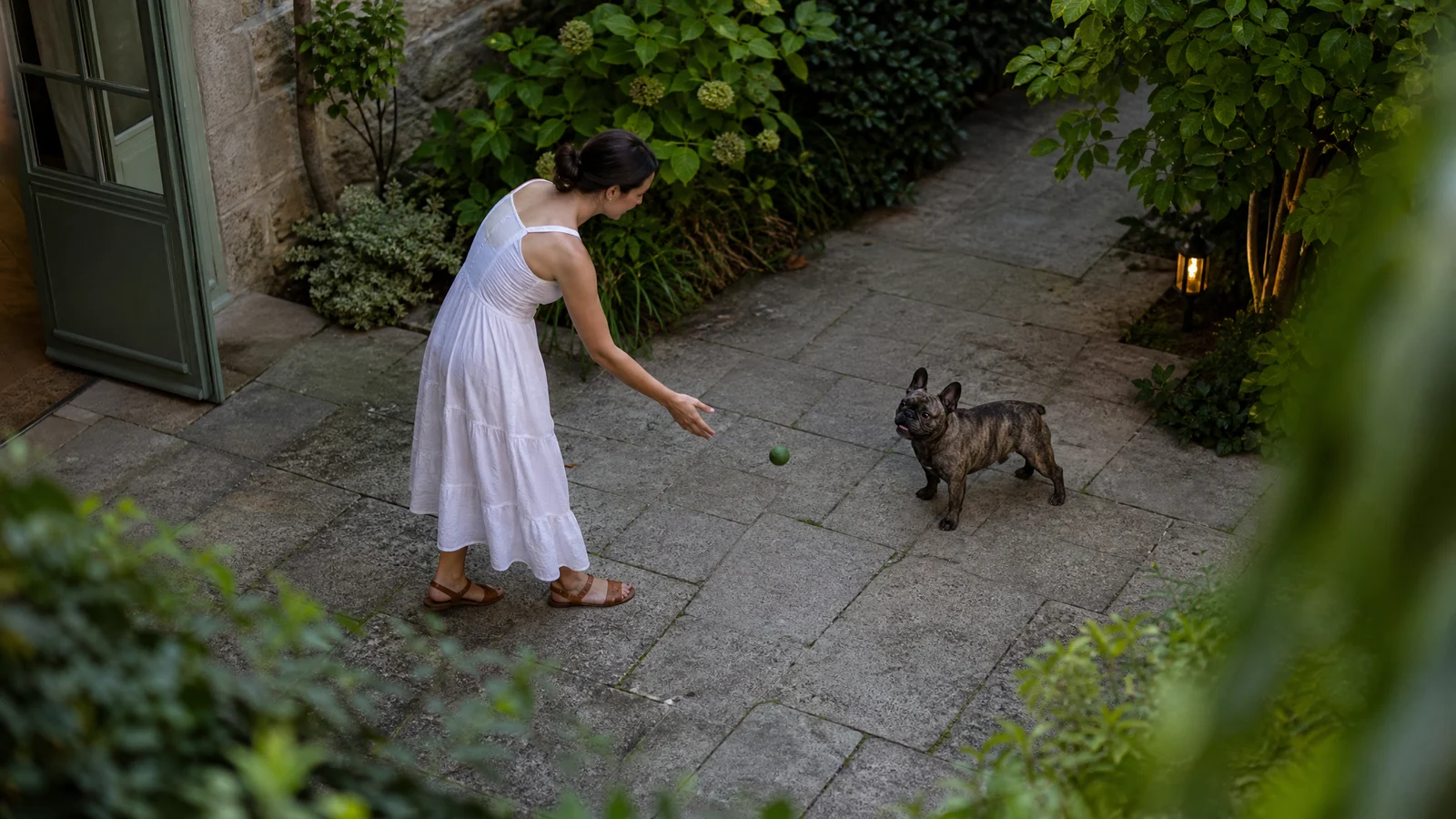
Plenty of owners call fetch the most effective redirect, with a play-and-fetch routine three times a day plus walks. Others describe a puppy who's always a ball of energy, so don't judge the plan after one evening.
Overtired French Bulldog Puppies Bite More in Warm Rooms
Here's the unglamorous truth about the evening nip-fest: many puppies mouth more when overtired or over-stimulated. The puppy climbing the walls at dusk may be exhausted and not energetic, and another round of excitement is the wrong answer.
Exercise Helps Only so Far
More exercise is the usual fix, and it's only a partial one. Some owners find two walks a day with a ball settles a nippy puppy, while others describe a puppy who still bites hard in the evening zoomies after a 30-minute walk. For a flat-faced dog there's also a ceiling. Anything that makes them breathe harder stresses their airways, including overheating, excitement that causes panting, and exercise itself.
Why Warm Rooms Make It Worse
A warm room stacks the deck. A puppy who's hot, panting and wound up is already working hard before you add another round of chasing. Keep the evening play area cool, leave fresh water down, and stop games early. Outdoors, choose morning or after sunset and give complete shade. Some owners also say their dog is touchier in the heat, so a grumpy mouth in a stuffy room deserves a cool-down first.
Short Play, Then Rest
The fix is short play followed by rest, scheduled before the puppy tips over and not after. Teach a mat or settle cue, reward it in the shade, and use it to put breaks into play with other dogs and children, where overheating is easy to miss. Frenchies are creatures of habit, and the expert advice is to set a schedule and stick to it. The same order every evening teaches them what comes next.
Today, Hand Your Biting Puppy One Chew
Biting in the puppy months is play and sore gums in a breed built to grab and hold, so the job isn't to stamp it out. It's to give those jaws somewhere legal to land, again and again, until the habit changes.
Be patient with the calendar. Owners who watched the biting end report anywhere from about 8 months to around a year, and some describe a gradual fade. Owners of dogs at 1.5 to 2 years often say their Frenchie still mouths hands and feet, mostly playfully or in greeting and not hard. That's a manners project, not aggression.
Tonight's job is small. Pick one indestructible chew, chill or freeze it, and put it within reach before the hour your puppy usually turns into a land shark. The moment the nipping begins, hand it over, praise the instant their teeth switch targets, and let them work on it. Repeat at the same time tomorrow, and have every person in the household follow the same routine, because a Frenchie who loves habit keeps the rules they learn early.
 Puppy trainingFrench Bulldog Puppy Training Timeline: 8 Weeks to 2 Years
 Exercise and jobsHow Much Exercise Does a French Bulldog Need? Plus Brain Games
 Training basicsHow to Potty Train a French Bulldog Puppy