 Frenchie
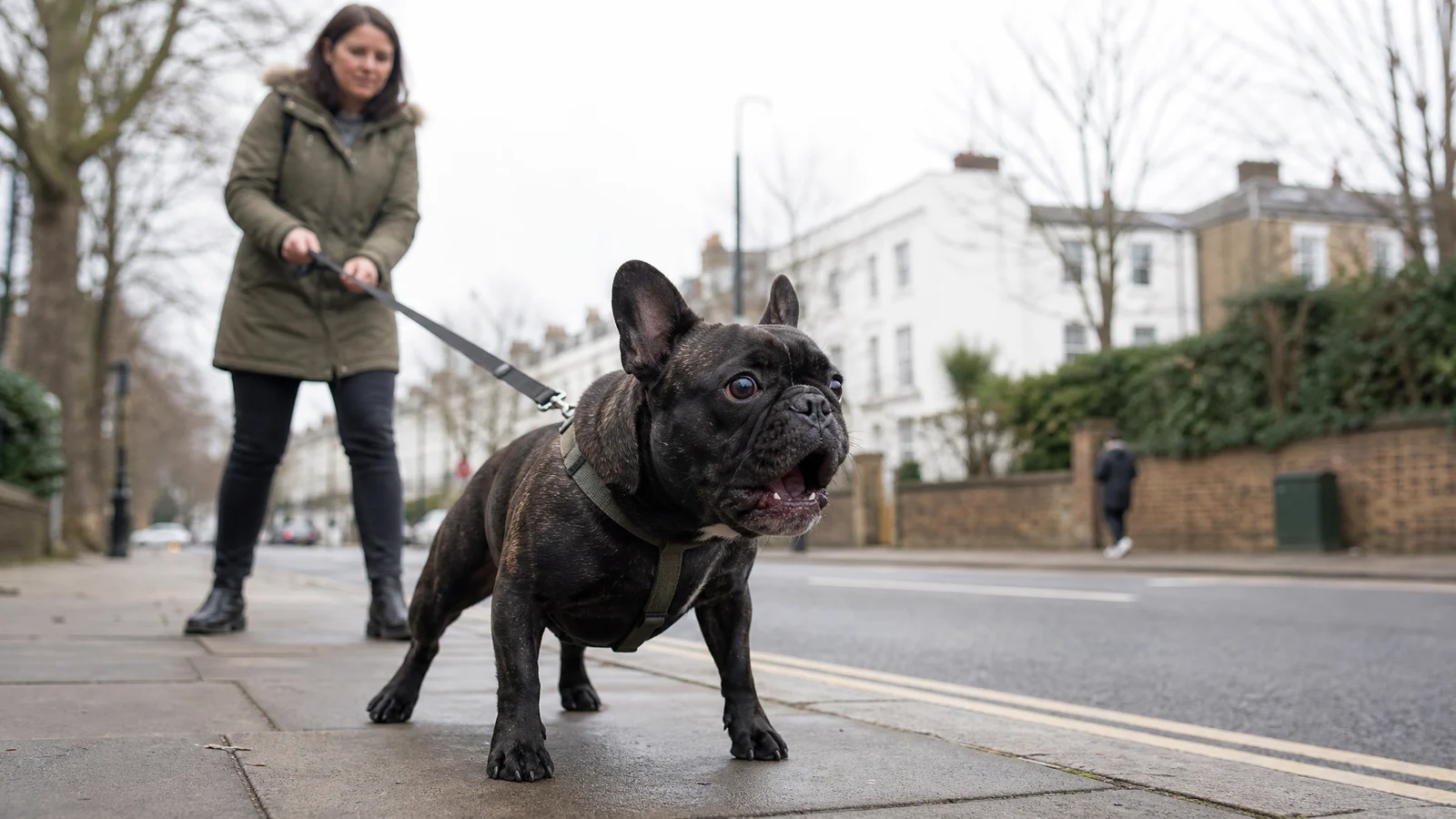
If walks with your Frenchie have turned into something you brace for, the barking and lunging at passing dogs is probably the reason. That moment lasts seconds, but much of what changes it happens before the other dog appears and in how you handle the first sighting.
Our approach rests on food, planning and patience, and it works with your dog's feelings instead of arguing with them. Some steps will feel backwards at first, like skipping hellos even with dogs who look friendly.
Reactive Frenchies can get better, and the improvement shows up as quieter sightings and shorter recoveries rather than overnight change. Down the page you'll find a walking plan, a practice routine and answers to the odd questions that come up along the way.
Why Hellos Will Not Fix a Reactive French Bulldog
The first change is the quietest one: you stop asking your Frenchie to say hello. Leash reactivity means barking, lunging or growling at a dog, person or bike your dog sees while on leash, and while your dog is still reacting, on-leash greetings are best skipped. Planned hellos can come back later, once your dog stays calm at a distance where they can still take food.
A greeting asks a dog to cope with something up close, which is the opposite of what a reactive dog needs. Fear Free Happy Homes notes that "Leash reactivity can arise from a variety of causes, although most seem to be rooted in fear," and cautions that "Trying to force social interactions with a leash-reactive dog will create more anxiety," so skipping the hello protects your Frenchie.
Leash reactivity is also a different problem from growling at housemates or guarding, which our French Bulldog aggression guide covers. Exposure work, meaning how a dog gets used to new dogs and people, lives in our French Bulldog socialization guide.
How Much Room Your Frenchie Needs From Other Dogs
With hellos off the list, the question that matters is how much space your Frenchie needs when another dog shows up. That space is not a fixed number: it can shrink on easy days and stretch on hard ones, and it differs by trigger, so a Frenchie who can watch a calm dog trot past may need far more room for a bike.
Wisconsin Humane Society defines a dog's threshold as "the distance at which they begin to react to their trigger and are unable to take food," and starts counter-conditioning well outside it. The moment the dog sees the trigger, before they react, the feeding begins, and it continues until the trigger is out of sight or the dog is moved farther away.
Treats are your gauge: a dog who takes food willingly and glances back at you is outside the line, and a dog who spits it out, freezes or fixates is inside it, so add room.
Shaping Walks for a Reactive French Bulldog
A line you find on a practice day still has to survive the neighborhood, so your route and your hours do half the work before you reach for a treat. Two choices matter most: where and when you walk, and what you do on the days a walk is not worth it.
Routes and Hours
Look at your usual loop the way your dog meets it and ask where another dog could appear without warning. Corners, driveways, gates and the gaps between parked cars all put a dog in front of yours within a few strides, while wide streets and long views give you time to change direction. Pick the times and places your own walks have shown to be quieter, since you know your street's rhythm best.
Keep a second loop in mind, and a place to step aside along each one. That way a surprise never leaves you with nowhere to go.
Days Without a Walk
A reactive dog's day does not need a loop around the block to be a good one. Sniffing games indoors, a frozen stuffed toy, a short training session or a few minutes in a dog-free yard can fill the time, and our French Bulldog exercise guide has indoor games to build from.
A skipped walk is also a fair answer to a rough encounter. Let the rest of that day be quiet, and start practice fresh on another one. Walking a reactive dog takes steady attention, so the day off helps you as much as your dog.
Practice Sessions for a French Bulldog Who Reacts
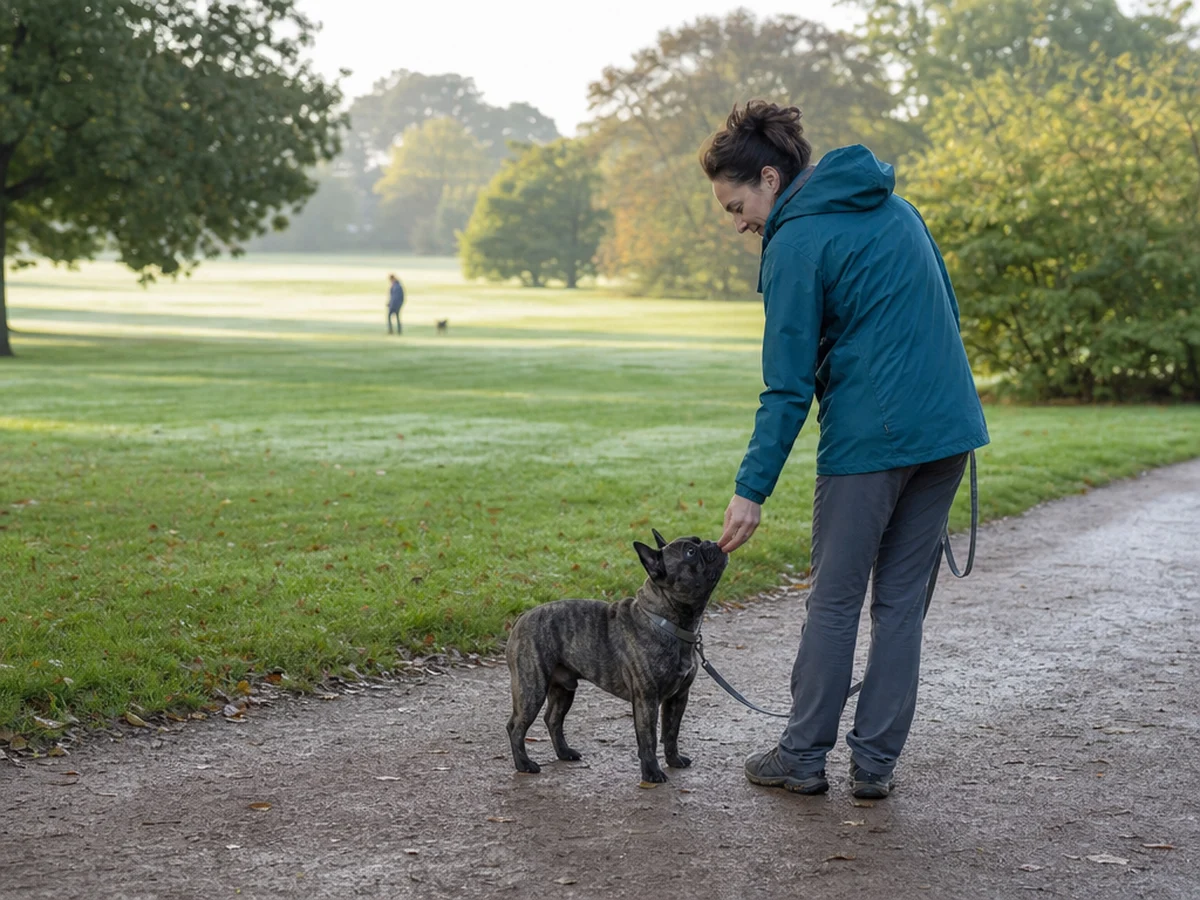
The quiet days make room for something better than another loop: a short session built around one spot, one trigger and a pocket of treats. The feeding loop is above and in our French Bulldog leash training guide, so this list covers where to set up, when to ask for more and when to stop.
- Choose one spot and keep using it. You want a clear view of where dogs show up and a steady time of day, so each session looks a lot like the last.
- Arrive with treats in reach and your exit decided. If your Frenchie is stiff or distracted before you even start, skip today.
- Ask for more only after several easy sessions, and change one thing at a time: the distance, the kind of dog or the location.
- Finish while it is still going well, and if things slip, add room and wrap up.
Aim for sessions you could repeat tomorrow without any drama. A little dull is the goal.
A friend can make practice easier, because someone else controls the other dog's distance. For dogs who react to other dogs, Cornell suggests you "ask a friend with a calm dog to walk across the street from where you and your dog are working." If "your dog remains quiet and focused on you," the friend steps a little closer, and if your dog "starts to get stressed," the friend goes farther away.
Sidewalk Encounters With a Reactive French Bulldog
Sooner or later a dog turns up closer than any practice spot would have allowed, and a few habits make that moment smaller. Start with the geometry: a curve in the path gives you more room than a straight line toward the other dog, so bend your route early instead of waiting until the other dog is a few strides away. Keep yourself on the side that puts you between your Frenchie and the passing dog.
Turning away is easier on a bad day if it was easy on good ones. Slip a few about-faces into calm walks as a little game, pay for each, and leaving starts to feel routine.
A loose dog heading your way is the hardest case. Keep your voice calm, turn and walk away at a steady pace, and scatter treats behind you if your dog will eat them. Stay with your dog and let the other owner worry about theirs.
Odd Cases That Stretch Your Frenchie's Plan
Each of these puts one choice in front of you: risk what your Frenchie has already learned for something that can wait, or carry the plan into new ground a little at a time.
Can they still go to the dog park?
Not for now. A dog park puts many dogs close to yours with no way to control the distance, so it hands your Frenchie the hardest version of the problem and leaves you nothing to adjust. Park visits can wait until your dog stays calm at long range on an ordinary street.
Do bikes and people need the same plan?
What changes is how fast you have to act. Bikes, scooters and runners cover ground quickly and quietly, so your window is short. Step toward the edge of the path as soon as you notice one, and have a treat in your hand before it reaches you.
People walking toward you give you more notice, but some will want to greet your dog. A short, friendly sentence saying your dog needs space today is enough, and you never owe anyone a longer explanation.
What if one spot sets them off daily?
A repeat spot is easier to work with than a surprise because you know where it is. Pass it at the far edge, with treats already out, or cross before you reach it. Another option is to practice at a comfortable distance somewhere else first and return when that feels easy.
Will they grow out of it?
We would not count on it fading by itself, so plan on working with it. Nobody can promise a timeline, but steady practice is how the change shows up.
Getting Help When Your Frenchie Keeps Reacting
A plan can stall even when you follow it well, and a stall is a good reason to bring in a second opinion. Start with your vet if the reactions seem out of proportion or have changed lately. Regular vet visits belong in every Frenchie's year anyway, and a reactive dog's visits are a good moment to mention how walks are going. When you bring in a trainer, choose one who works with rewards only.
We start at the vet because pain can sit behind the barking, and PetMD notes that "In some cases, leash reactivity may be due to an underlying medical condition such as pain, discomfort, or illness." It also puts the work in perspective: managing it "entails behavior therapy and requires patience, consistency, and the assistance of a professional dog trainer or board-certified veterinary behaviorist," so a trainer belongs on your team from early on.
Walking as Your Frenchie's Lookout
Every reactive walk has two watchers, and only one of them can see the whole street. That is you. Your Frenchie sees the dog, while you see the corner, the gate, the bike lane and the open path behind you, and you can use all of it before your dog has to face the moment alone.
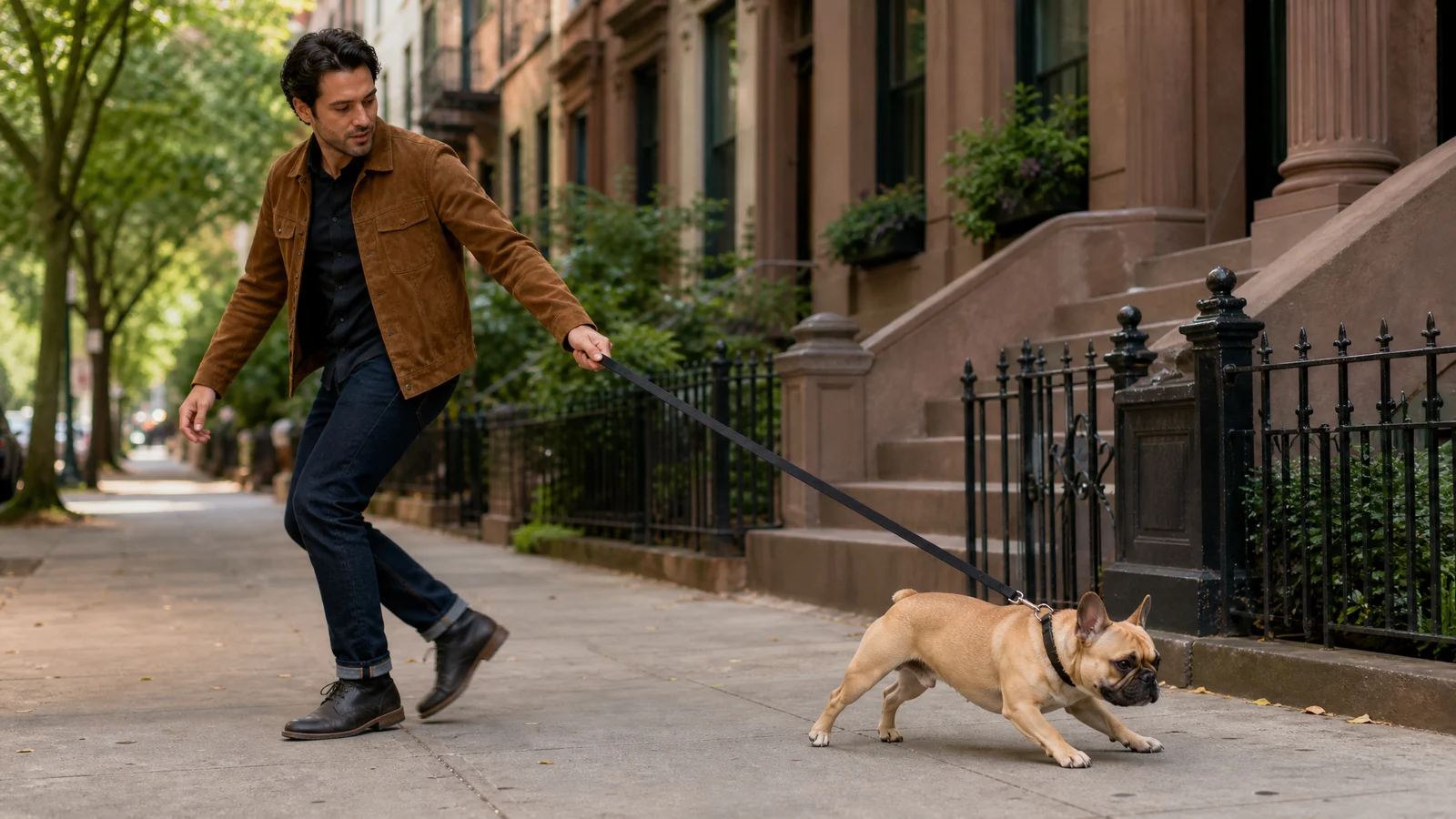 BehaviorHow to Stop a French Bulldog Pulling on the Leash
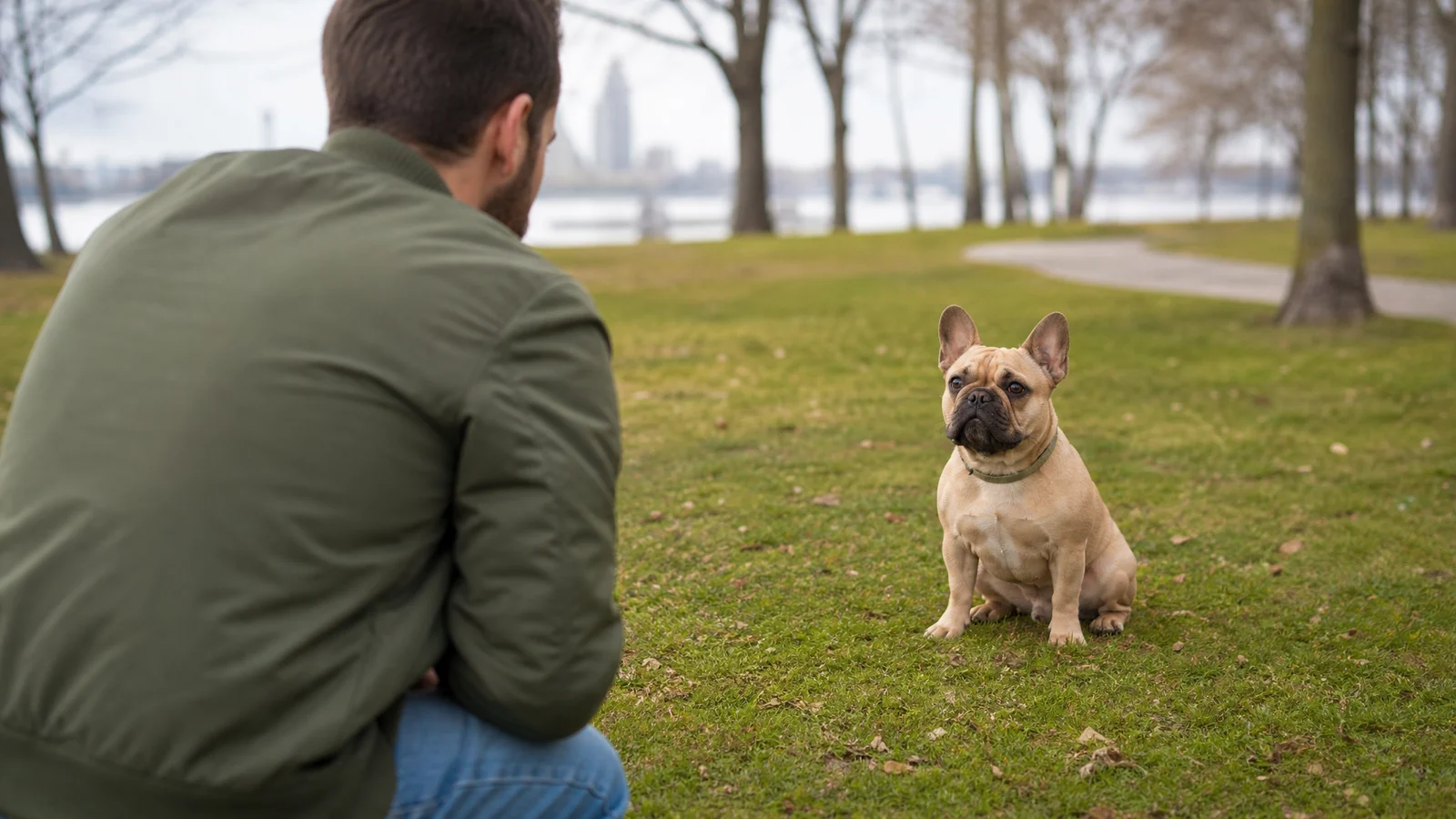 Training basicsHow to Teach a French Bulldog to Stay
 Exercise and jobsHow to Teach a French Bulldog to Weave Through Your Legs