 Frenchie
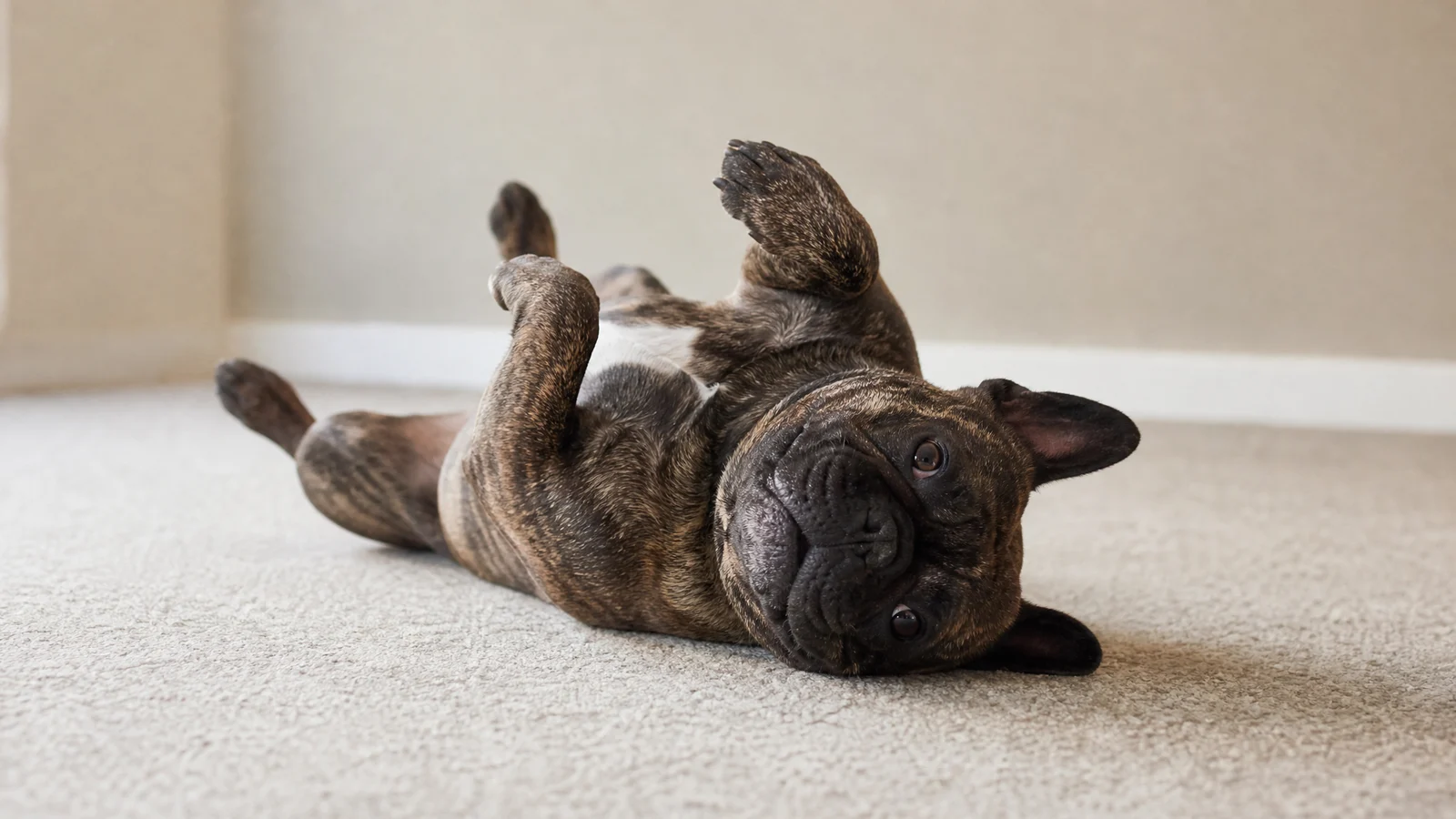
Watching your French Bulldog go belly-up with all four paws in the air is a joy, but it only happens when your dog is truly at ease with their back on the floor. That is why we teach roll over with a treat the dog follows and never by turning the dog ourselves, so every step is one a Frenchie can walk away from.
You need a dog who already lies down on cue, a handful of soft treats, a spot with some give underfoot and a few unhurried minutes. From there the treat does the teaching, and your Frenchie decides how far each session goes. Ahead, you'll get the setup choices, the lure itself and a way to give it a name.
Telling Ease From Unease in a French Bulldog Roll Over
Before any treat moves, your dog's body will say whether the idea is welcome, so it helps to know the signs. A relaxed Frenchie has loose legs, a soft face and stays lying down after the treat is gone, while an uneasy one stiffens, tucks their legs, turns their head away or keeps scrambling up.
Those signs are reasons to end the session on an easy repetition, not to coax further. A rug or folded blanket gives the back some give and makes lying there more pleasant. Regular vet visits are the right moment to ask whether lying back suits your particular dog, and a stiff or reluctant dog belongs on the list of things to mention there.
On a day when your dog would rather not, a few of our French Bulldog brain games use the same treats and keep the session pleasant. Nothing about the roll is lost by waiting for a better day.
Frenchie Roll Over Choices to Settle First
Once you can read your dog's comfort, the practical decisions are small ones: which direction to favor, where to start and what your treat hand is doing. Each one changes how the turn feels to a dog, so they are worth settling before the first repetition.
Which direction should we practice first?
Either works for the trick. Your dog may tip toward one side more easily, so use that side until the turn is smooth. Teaching the other direction is optional and can wait.
Can we start from a sit instead?
You can, but it adds a step, because your dog has to lie down before anything else happens. Starting from a down keeps the first arc short and lets the treat do all its work on the turn itself, which is why the steps below begin there.
What if my Frenchie lunges at the treat?
A dog who pops up or snatches wants the treat faster than the turn allows, so bring it closer to the nose, lower and slower, and keep your hand loosely closed around it so they nuzzle rather than grab. If they stand up, reset in a down and pay for staying low. Pay the side-lying part and ask for a little less on the next try, and the full turn will follow when it is ready.
Which hand should hold the treat?
Whichever hand lets the treat sweep toward the shoulder you are aiming at. The other hand stays relaxed at your side.
Luring a French Bulldog Into a Roll Over
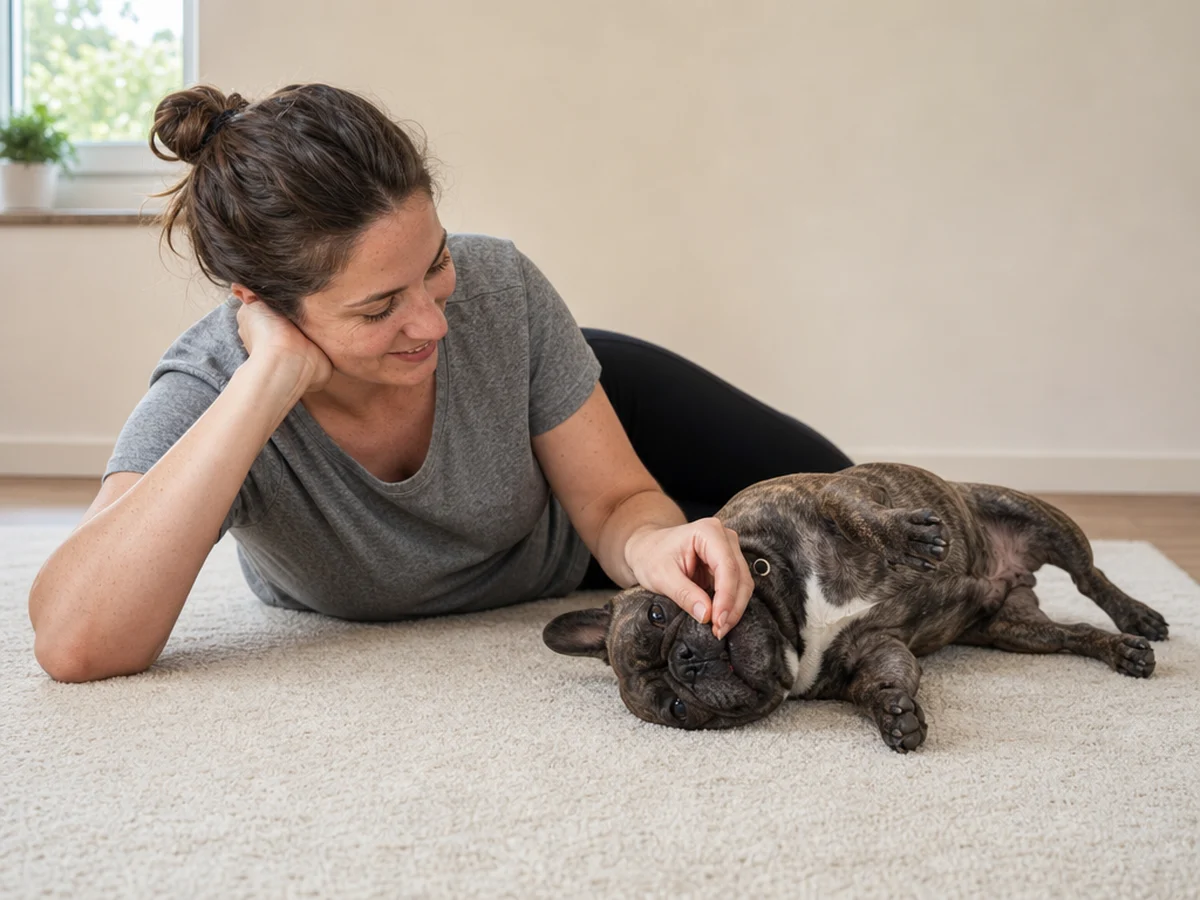
With those choices made, the lure comes down to four small steps, and the first is the starting position. Beginning in a down keeps the body low, so the turn is a short trip rather than a scramble. For a related trick, the American Kennel Club says in its play dead lesson that a dog “needs to know the DOWN cue before you start teaching this cute trick.”
Tiny, soft treats keep the motion flowing, and our French Bulldog complete training guide covers treat size. Each step is a place your dog may stop for the day.
- Ask for a down, kneel in front of your dog and hold a treat beside their nose.
- Move the treat slowly toward their shoulder so their head turns and their hip tips to one side, then pay the moment they are lying on that side.
- Repeat until lying on the side comes easily, then pay a beat later each time so they learn to stay there for a moment.
- Draw the treat on over their back toward the far shoulder, pay once they are over, then let them stand and reset in a down.
The third step is the one to pay generously, because it asks your dog to keep lying on their side rather than chase the treat. Calm, frequent payment there makes the last step feel like a small extension.
Once the second step is easy, you can start naming it: say your word just before the treat moves toward the shoulder, then pay. When that is reliable, let the word lead into the next stretch of the turn, so the sound starts to mean the motion.
Shrinking the Frenchie Roll Over to a Curl of the Wrist
With the word doing the asking, your hand can do less, and the big sweep over your dog's back can shrink a little at a time into a small curl of the wrist. The San Francisco SPCA describes a similar point for a different cue, saying you can lessen the exaggeration of your movements as the dog begins to understand.
Pay each smaller version while your Frenchie still completes the turn. The down that starts every roll can stay exactly as clear as it was on day one, because it is the one piece of this trick that never needs to shrink.
 BehaviorFrench Bulldog at 1 Year and Up: When Do They Calm Down?
 BehaviorAre Frenchies Aggressive? French Bulldog Growling, Guarding
 Training basicsAre French Bulldogs Easy to Train?