 Frenchie
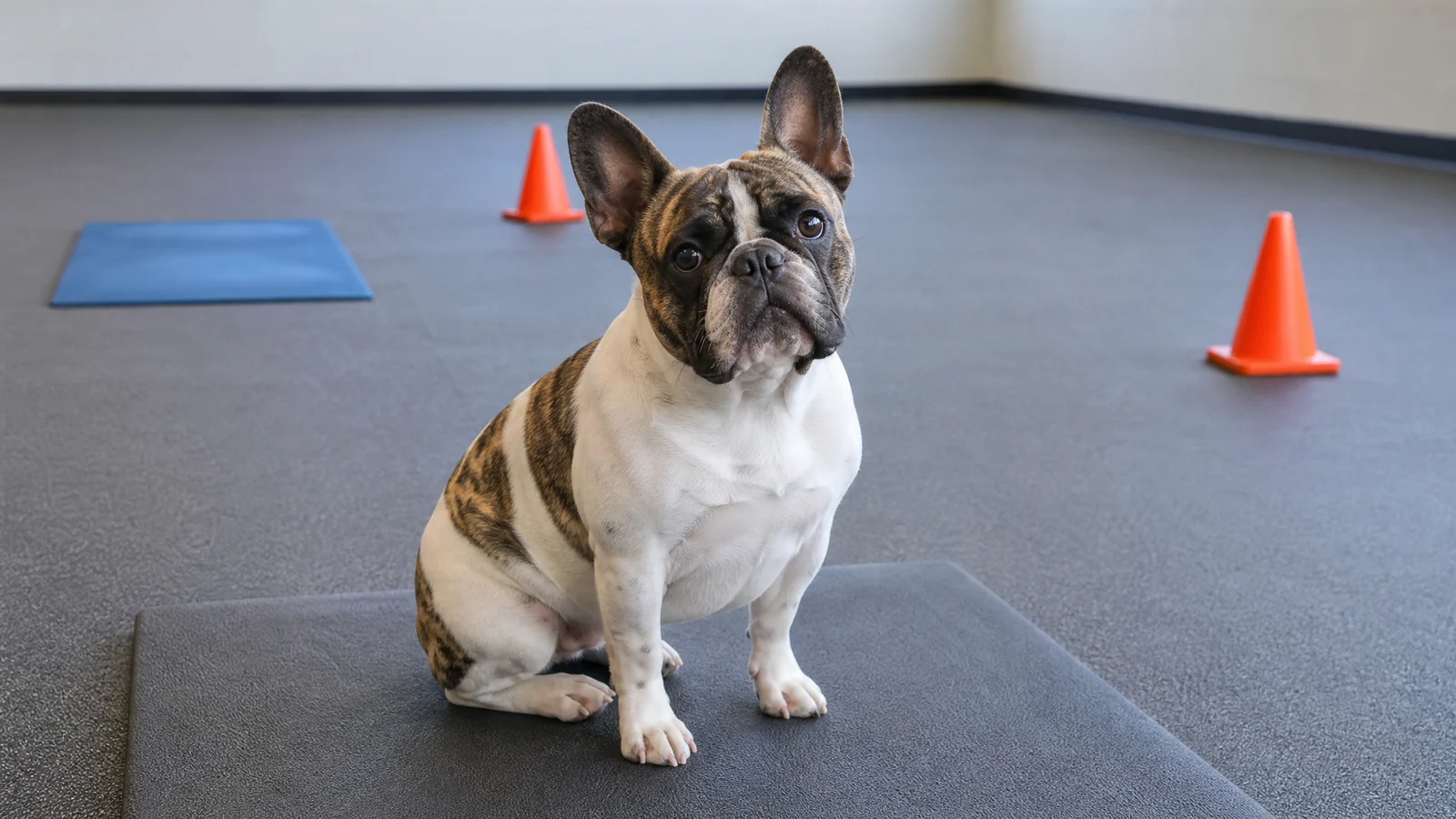
You know your French Bulldog better than any trainer will on a first day, and that is the best tool you have for choosing one. When two people both sound friendly and both promise results, the one worth hiring is the one who wants to hear about your dog before offering a plan, and lets you compare them with each other instead of with a promise.
This article sticks to the checks you can make yourself, one phone call or one visit at a time. The teaching itself lives in our French Bulldog training guide, so everything here is about choosing the person who will help you with it and about getting a fair look at how they work before any money changes hands.
Four Kinds of Training Help for a French Bulldog
Before judging any trainer, decide which kind of help you are shopping for, because each one is judged a little differently. Whether you need help at all is a short question: if your own lessons are moving along, you may not need anyone yet, and our page asking are French Bulldogs easy to train shows what steady progress looks like.
If your Frenchie's behavior changed overnight, take that to your vet before you take it to anyone else. Otherwise, the options sort most easily by where your dog is while the teaching happens:
- Among other dogs. A group class has one trainer teaching a room of owners, so the lesson is shared and the practice happens at home, which suits manners and skills your dog already half knows.
- At home with you. A private lesson puts the trainer in your own rooms with your own dog, so the plan is built around the trouble where it actually happens.
- Away from you. Board and train means a trainer keeps your dog and works with them on-site, and it carries a question of its own that gets its own section at the end.
- With a specialist. This is for fear, aggression or a stubborn problem that steady work has not moved, and our French Bulldog behavior problems guide covers what that looks like.
We would start with the smallest kind that fits the job, because a first session shows whether it does and another kind can always be added later. Booking the biggest thing on offer on day one leaves you less room to adjust once you see how your dog responds.
Sitting In on a French Bulldog Trainer's Session
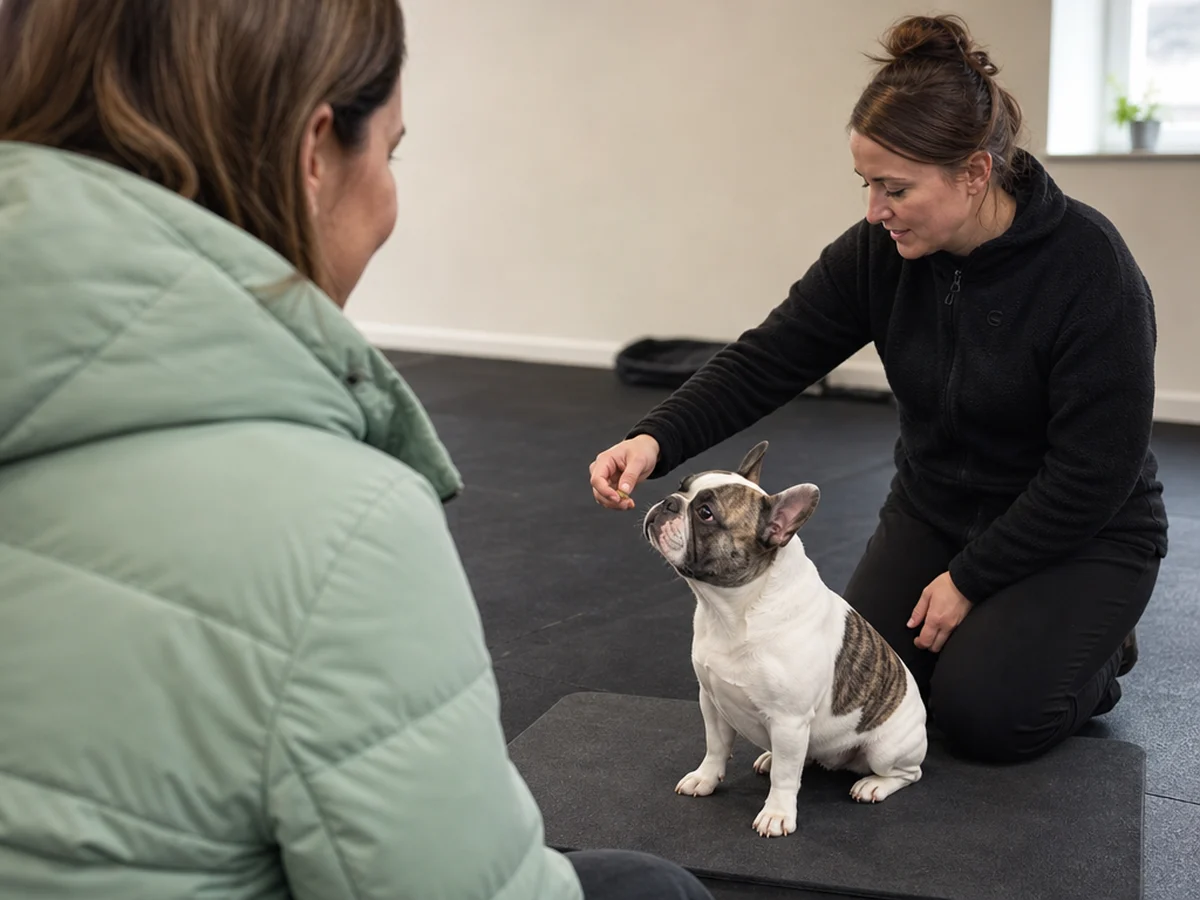
Whichever kind you pick, the person matters more than the label on the booking page, and the quickest way to meet the person is to watch them work. Ask whether you can sit in on a lesson before you commit.
AAHA describes dog training as an unregulated industry, meaning anyone can call themselves a dog trainer. Titles are one thing you can check, and sitting in lets you check another: AAHA suggests you watch potential trainers in action and note how they interact with dogs and handlers.
Three things are worth noticing that no phone call can show. One is how the trainer greets a dog they have not met: waiting for the dog to come to them is a better sign than reaching in. Another is how they talk to the person at the other end of the leash when something goes wrong, since you will hear that tone every week.
The last is whether their instructions are short enough that you could repeat them the next morning. Sitting in also shows the place itself, from how many dogs and people share the room to how loud it gets, so you can ask how they would arrange a lesson if your Frenchie would struggle there.
Putting Two Trainers Side by Side
Once you have seen one trainer work, put the same questions to a second person: how they would begin with your dog, what they pay with, and what they change when a dog gets stuck. A useful test question is what they would do the first time your dog stops taking treats in the middle of a lesson, and a vague answer there says something about the plan. Differences that stay invisible in one conversation show up fast across two.
Two answers give each other context, and the ASPCA advises contacting more than one professional in your area so that you can compare their methods, credentials and experience before making a choice, without hiring anyone before thoroughly interviewing them and asking for a couple of references from former clients or veterinarians.
When you listen back, favor the answer with a concrete example over a slogan. A trainer who asks about your dog before pitching a plan is already doing part of the job, and one who guarantees results sight unseen has skipped it.
Telling a Trainer What Your Vet Said
Whichever trainer you choose, they can only plan around what they know, so pass on anything your vet has told you about your dog. That might be a limit on activity, a reminder about warm days or a habit to keep an eye on, and it belongs in the trainer's notes before the first lesson instead of arriving halfway through one.
A routine check-up with your vet is a convenient time to ask which details are worth passing along. Warm-weather limits are covered in our French Bulldog heat-stroke guide, so a lesson never has to be your first conversation about them.
Board and Train Has Its Own First Question
One kind of help from the first list needs a question before any of the checking above. Board and train means a trainer keeps your dog and works with them on-site, and the advice from MSPCA-Angell works as a clean screen: if a board and train service does not feature rewards-based training only, give it a skip.
Ask that before you ask about price or schedule, and keep talking only to services that answer with a plain yes. A yes is the entry ticket and nothing more, because from there the service is judged like any other trainer, by what you can learn about how they work and how their answers compare. Ask to see the place where your dog would stay and how the day divides between teaching and rest, since those details are easy to describe and just as easy to check.
 Puppy trainingFrench Bulldog at 6 to 12 Months: Adolescence Begins
 Training basicsFrench Bulldog Temperament: What It Means for Training
 Puppy trainingFrench Bulldog Puppy at 3 to 4 Months: Teething and Mouthing