 Frenchie
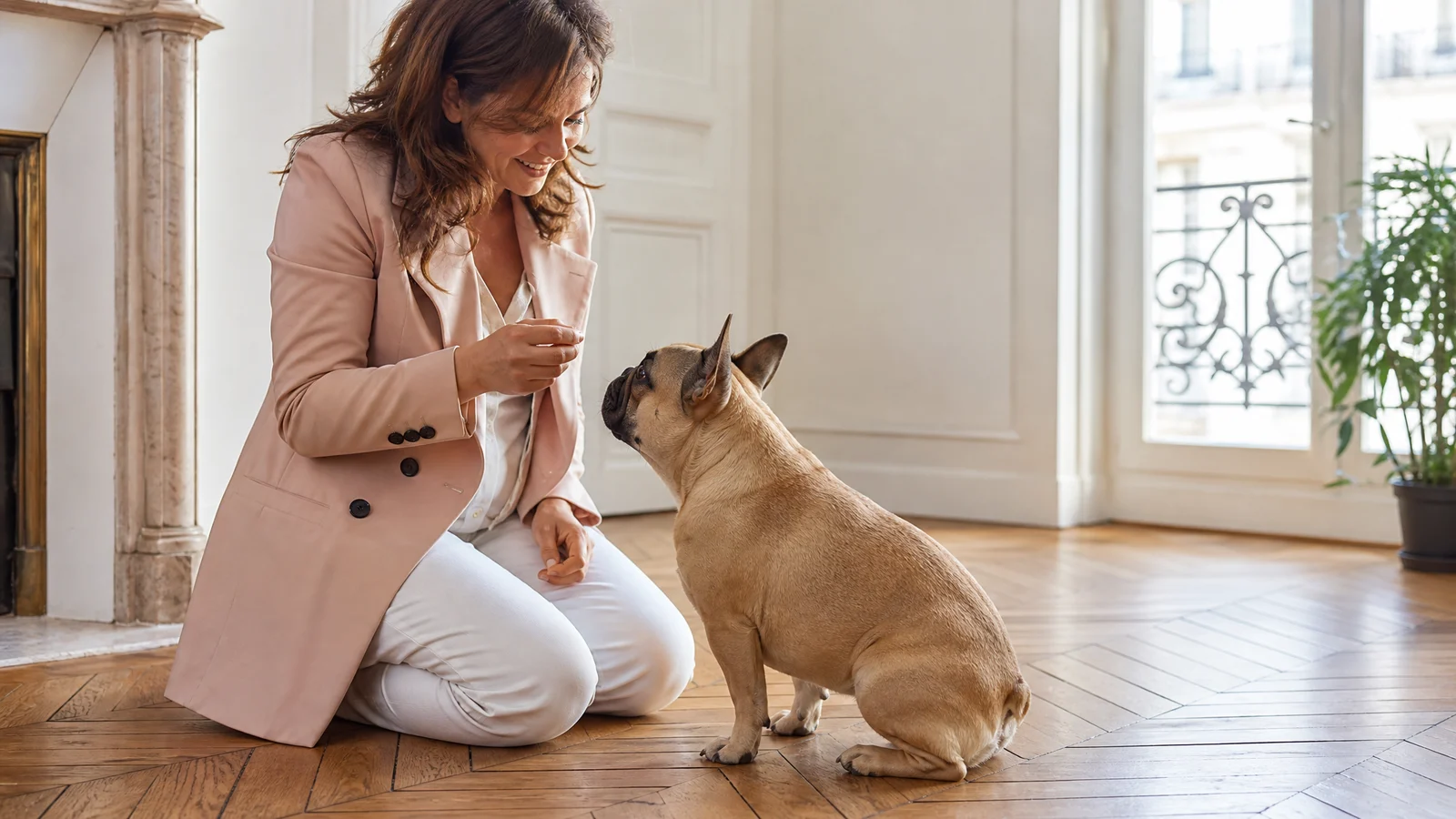
A cue that worked beautifully last night gets a blank look this morning, and the word “stubborn” arrives before anyone has asked what changed. It is an easy label to reach for, and it rarely tells you what to do in the next session.
Temperament words earn their place when they point at something you can adjust: how you handle a miss, which reward you offer, where you practice, who asks for the behavior. Mood, rewards, new places, a few real puzzles, household rules and class choice each get their turn, and you'll find a change to try in every one. A temperament description also stays a description of dogs in general, and your own dog's responses are the better guide.
Whether Frenchies are easy or hard to train is a separate question that depends on many things, and our French Bulldog trainability guide takes it on directly. The question here is narrower: given the dog you have, what should you change next?
French Bulldog Temperament and What a Mistake Costs
The American Kennel Club describes French Bulldogs as sensitive, adding that a scolded Frenchie is likely to take it to heart and may mope around the house for a while. It also says you will not win a battle of wills, but that positive, patient and consistent training, especially with food rewards, is effective. Even after they learn a trick or behavior, they may do their own interpretation of it.
Make the Next Try Easier
If your dog seems to deflate after a miss, the fix is on your side of the leash. Keep your voice even and friendly, step back to a version of the cue they can nail, and pay for it. Shrinking the ask, moving closer or going to a quieter room all count. Finish on something easy, so the last thing that happens in a session is a reward and not a failure.
Watch for signs that the session has become too much. Best Friends Animal Society says that when a dog is stressed, they might show displacement behaviors, also known as calming signals. For example, a dog might start self-grooming to calm down when they are afraid and faced with the decision to fight or run away. Typical displacement behaviors it lists include:
- Yawning in new or emotional situations
- Lifting a front paw as someone walks toward them
- Licking their lips even though they have not been eating or drinking
- Scratching even though they are not itchy
- Looking away as a person or another animal walks toward them
If you notice a few of these during practice, treat it as a reason to make the next ask easier or to end the session on a win. If the same signs show up in everyday life, mention them to your veterinarian.
Pay for the Version You Asked For
Some dogs add flourishes: a sit that arrives with a wiggle, a down that turns into a roll. If you pay for the improvised version, you are teaching it. Decide what the cue means, reward only that, and tighten one detail at a time rather than all at once. Our complete French Bulldog training guide has the cue-by-cue lessons.
That approach lines up with what behavior specialists advise. The American Veterinary Society of Animal Behavior says training methods are most effective when they focus on teaching the animal what to do, rather than punishing them for unwanted behaviors.
Reward Choice for Your Frenchie's Temperament
Dogs Trust says that all dogs are different, so they will find different things rewarding, although most dogs enjoy food, toys and our attention. It adds that if you use food for training, you should cut down on the amount your dog gets during meals to prevent weight gain.
Because a reward is only a reward if your dog says so, it helps to keep a short menu and pick from it by how they seem at that moment. Try the menu in a quiet room first and note which item makes your dog lean in:
- Small pieces of a soft treat for new or tricky work
- A quick tug or toss for a lively mood
- Calm praise and a scratch when they are relaxed
- A release to sniff after a good run of tries
- Access to a favorite spot as a reward for settling
Deliver the reward promptly, while the behavior is still fresh. Rotate through the menu so no single reward goes stale. Keep one special reward for the moments that were hard for your dog, such as a first success in a new place. And treat their interest as feedback: if a treat that worked yesterday is ignored today, the choice may need to change, or the setting may be asking too much.
Why a French Bulldog's Cue Fails in a New Place
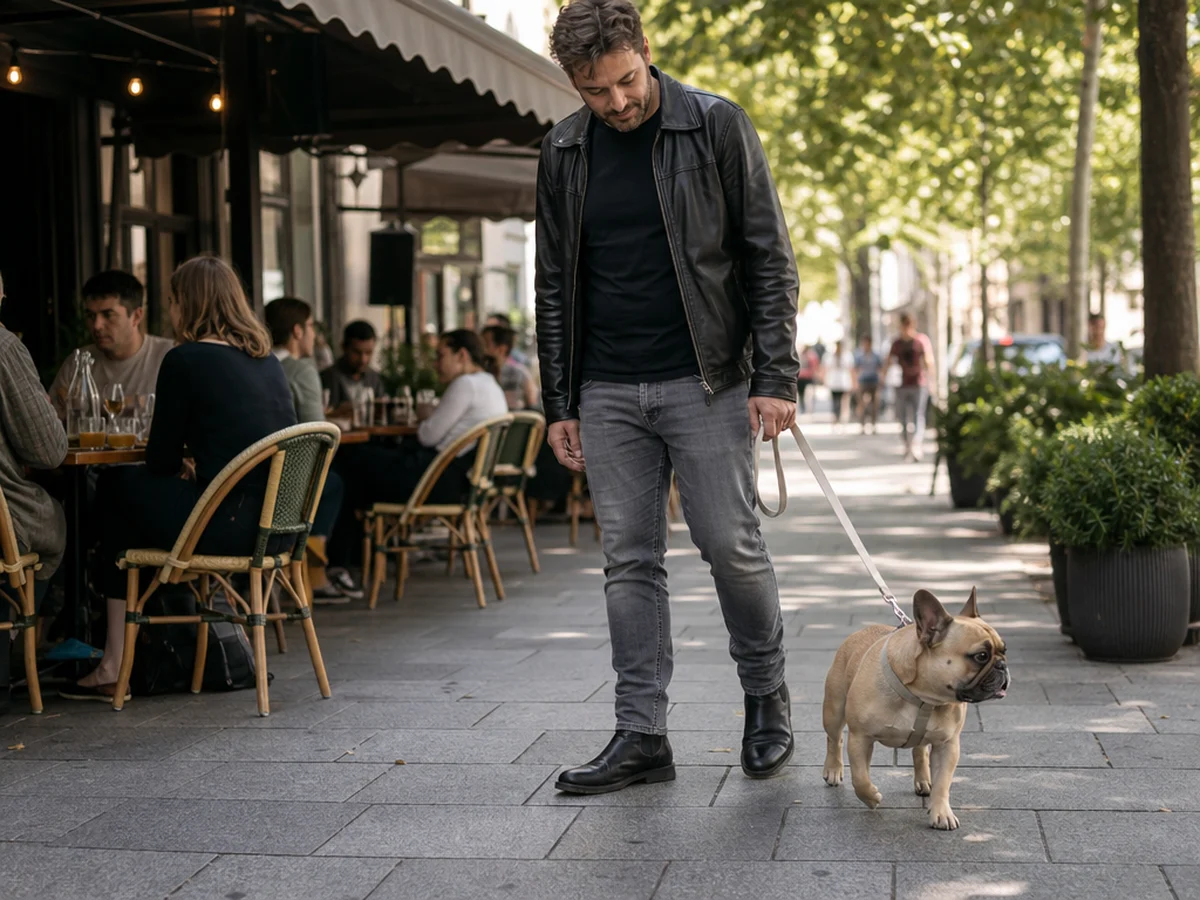
PetMD notes that dogs can be quick to pick up new skills but slow to transfer them to new scenarios, meaning they do not always generalize their lessons well. It also points out that "sit" and "sit-sit-sit-SIT" are different cues, as are "get down," "get off" and "lie down."
A cue that is solid in the kitchen may need rebuilding in the yard, because the setting has changed. Treat the yard version as a fresh try: ask for the easiest version, stand closer, lower the distractions and pay generously, then raise the difficulty a little at a time.
Distractions work the same way. A cue that is reliable in an empty room can fall apart on a busy sidewalk because everything around your dog has become more interesting than the lesson, and the answer is to start with the easiest version and pay more often until they settle in.
If a cue that used to be easy suddenly falls apart everywhere, or your dog seems uncomfortable doing it, bring it up with your veterinarian before changing the plan. Regular veterinary visits belong in any training routine, and the French Bulldog behavior guide covers what is worth checking as the cause of common problems.
Frenchie Temperament Puzzles That Come Up in Training
Some questions sit between the sections above, and they tend to show up when a plan that looked tidy on paper meets a real afternoon with a real dog. Three of them come up often enough to answer here.
Can Training Change a Frenchie's Temperament?
Training can change what a dog does and what they come to expect, such as offering a sit instead of jumping up. We cannot promise it will change a dog's overall temperament, so judge progress by the behavior you can see and not by a personality label.
A more useful goal is a dog who understands the lessons you teach and feels comfortable trying them. Work with the dog in front of you, and adjust the plan as you learn what they respond to.
Is It Worth Switching to a New Cue Word?
Sometimes. If the old word has been used loosely or in several versions, a fresh one can be cleaner than repairing it. Teach it from scratch with rewards and retire the old one.
What if Your Dog Seems Low on Energy?
Treat it as a prompt to make the session easier rather than a reason to push. Drop to the cues your dog knows best, use the rewards they love most, and keep the session short.
If low energy keeps showing up across several days, or arrives with other changes you can see, such as eating less, check in with your veterinarian before changing the training plan.
One Household, One Set of French Bulldog Rules
Training holds up when everyone in the home handles it the same way. Decide who hands out rewards during lessons and what a good try looks like. Talk it through once, so your dog is not paid for one thing by one person and ignored for it by another.
Choose one word for each behavior and stick to it. If one person says "off," another says "down" and a third says "get down," your dog is hearing three different cues, and the lessons you built will blur together. If one person tosses a treat for any sit and another waits for a straight back, your dog is getting two different answers.
Predictable Answers Build Confidence
VCA Animal Hospitals says predictability can build trust and confidence, and that rewards, even when they are accidental, will encourage a dog to repeat whatever they were doing immediately before they received the reward. It also advises keeping the difficulty level reasonable and not asking for something too challenging until the dog is ready.
Visitors, Children and Time Alone
Visitors can join in by asking for one simple cue you have already taught and rewarding it with a treat you hand them. Children can take part too, as long as an adult stays close and handles anything beyond a simple, well-known cue. Alone-time practice is its own topic, and our French Bulldog alone-time guide covers it.
Choosing a Class for a Frenchie's Temperament
A class is one more new place, so the cue-in-a-new-room lesson applies there too. If your dog is shy or easily startled in company, pick a class with small groups and room to step back, and ask whether the instructor can work with a dog who needs more space. Our French Bulldog socializing guide covers the groundwork for meeting new people and dogs.
The French Bull Dog Club of America recommends that you socialize any pet you bring into your home, and says French bulldogs are no exception. It adds that a canine good citizens course, an obedience course or other forms of training can make a huge difference in your pup adapting well to your family situation.
Before you sign up, ask to watch a session. You want an instructor who rewards good tries, explains how to handle your dog with reward-based methods only, and lets any dog take a break when they need one. If the room is loud and crowded and your dog cannot focus, that tells you about the class, not about their temperament.
 Puppy trainingFrench Bulldog Puppy at 3 to 4 Months: Teething and Mouthing
 Training basicsClicker Training a French Bulldog
 Puppy trainingFrench Bulldog Puppy at 8 to 12 Weeks: The First Month Home