 Frenchie
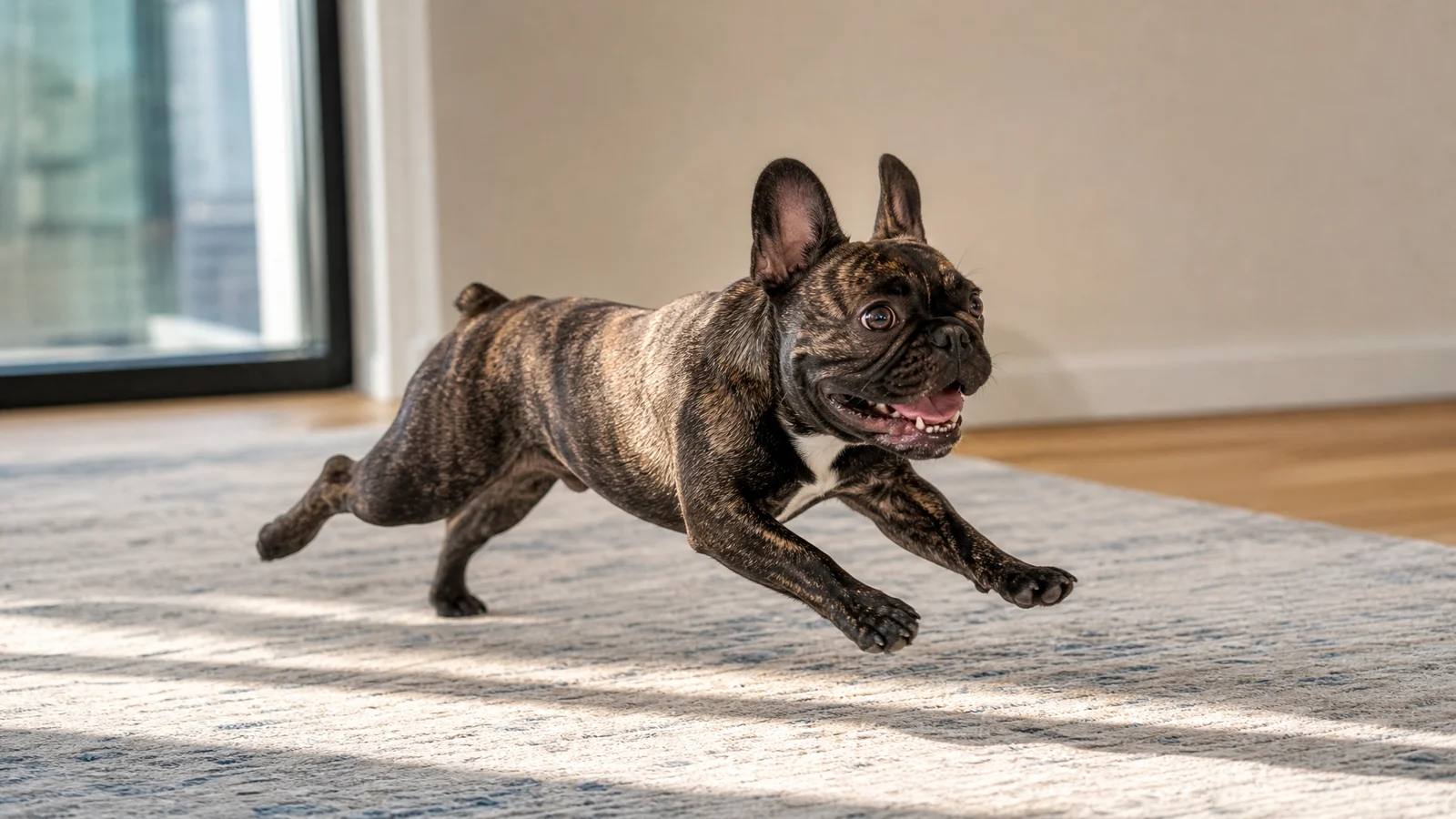
Your Frenchie is past the first birthday, and the house still sees sudden sprints, sofa launches and a doorbell that undoes every cue. Along the way, you'll learn how general maturity ranges apply after the first birthday and when a vet call comes before any training. Meanwhile the practice you do in these months still counts, and it does not have to wait for the energy to fade.
What works is steady, rewarded practice at a pace your dog can manage, plus a settle habit that holds in any room. Calm is a skill that grows with maturity and with practice, so the work you do now adds up long before the dog looks fully grown. Treat the coming year as a stretch of training with a moving target, not as a countdown.
Why Calm May Arrive After a French Bulldog's First Birthday
General ranges for dogs are wide, and the first birthday sits inside them rather than at the far end. Two of them are worth knowing, and neither is a French Bulldog schedule.
The American Kennel Club says most dogs reach their emotional maturity between 12 and 18 months. It adds that smaller breeds generally mature sooner while larger breeds can take longer, and that you can still expect some puppy hijinks and energy that, depending on breed, could last for several more years.
Social growth runs on a longer clock than the first birthday suggests. The Merck Veterinary Manual states that social maturity in dogs develops at 12 to 36 months of age.
For a Frenchie in the second year, both ranges point the same way: energy and focus may still be shifting well after the cake and candles. The month-by-month picture sits in our French Bulldog puppy training timeline, so this page sticks to what changes in how you train once the puppy stage is behind you.
Why Cues Wobble for a Young French Bulldog After One Year
A dog who once answered a cue promptly may seem to stop hearing it, and the dip can feel personal. It helps to know it is a recognized part of growing up.
The PDSA says that when dogs reach adolescence or puberty, studies show they are less likely to follow commands given by their owners. It stresses that we should not punish dogs for this, and that with patience and reward-based training they come out of the phase as well-behaved dogs.
In practice, shorten the sessions, move practice to a quieter room, and pay generously for cues the dog already knows. A missed cue is a cue to make the next try easier, not a reason to stop teaching. The aim is a dog who keeps practicing while the phase lasts, so the habit is still there when focus returns.
When Waiting Is Not the Answer for a French Bulldog
Waiting suits ordinary exuberance: the sudden sprints, the grabby greetings, the dog who needs a little longer to wind down. It does not suit everything. Heavy or noisy breathing that does not ease soon after play stops, or a behavior change that arrives suddenly, means stop the activity and call your vet before any training plan. Our French Bulldog heat guide explains the warning signs of overheating, so read it before warm-weather play.
A behavior that keeps growing deserves a reward-based trainer's eyes rather than more patience. That includes lunging that gets worse, or fear that spreads to new people or other dogs.
Regular vet visits belong in any plan for a dog this age, and they give you a place to raise anything about their energy that seems off. The cues and rewards behind every plan here are laid out in our French Bulldog training guide.
Teaching a Calm Settle When the House Is Busy
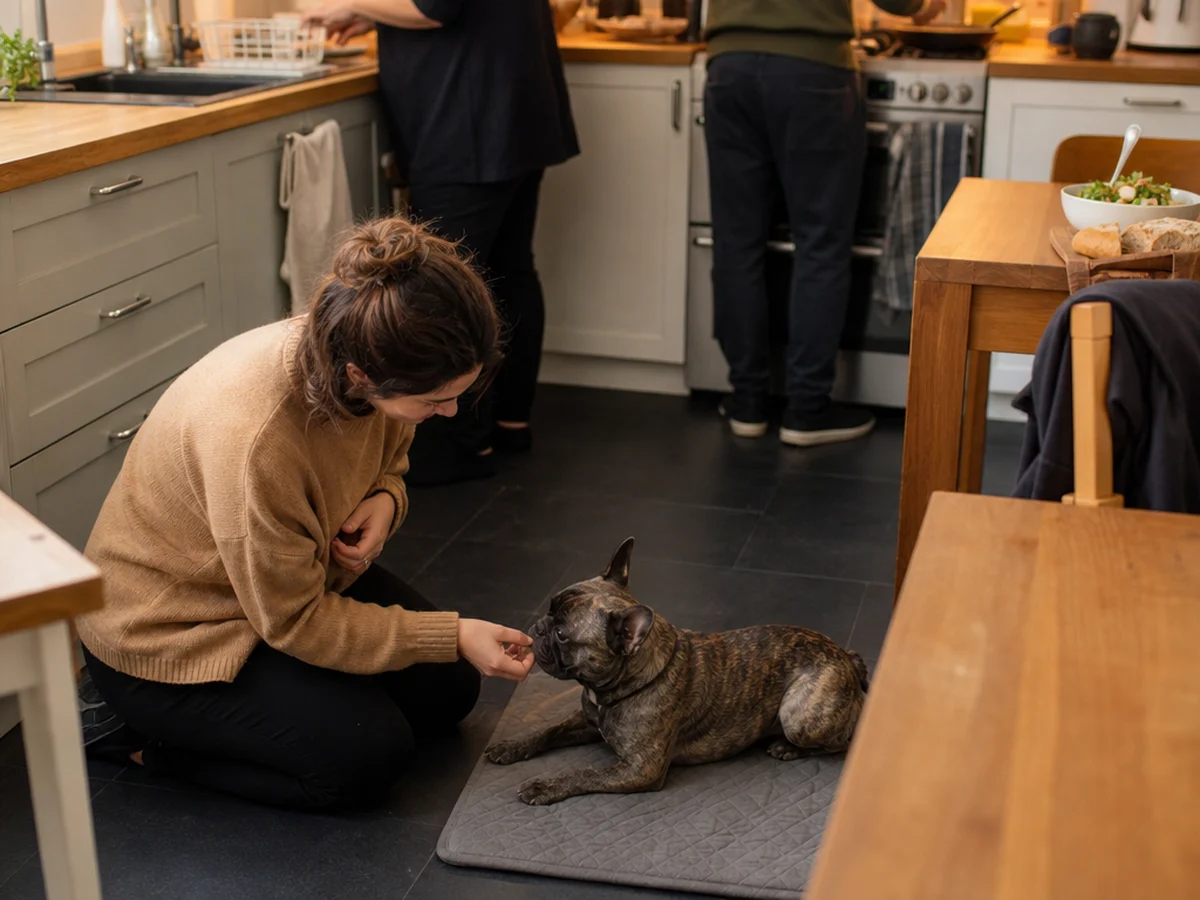
A settle habit helps in every room of the house, and it is the skill most worth building while energy is still high. It also gives a dog something to do besides wait for the next burst of excitement.
Dogs Trust says training with rewards can teach a dog to settle themselves down when people are busy, instead of looking for attention. It suggests rewards such as a gentle fuss, a stroke or just speaking calmly to a dog who is behaving quietly and calmly, so the reward does not get them too excited.
Here is one way to build a settle from scratch, with each step small enough that your dog can succeed before you add the next one, and with a reward at every stage so the mat stays a pleasant place to be:
- Pick a mat or bed in a low-traffic corner and let your dog explore it with no cue at all.
- Reward any lie-down or relaxed posture on the mat before you ask for anything.
- Once your dog settles reliably, say a calm word just as they lie down, so the word attaches to the behavior.
- Add ordinary household movement a little at a time, such as a walk past the mat, and reward calm between movements.
- Finish with a release word and a quiet reward, a stroke or a few soft words, so the end of practice is as low-key as the middle.
If your dog gets up and wanders off, make the next session easier with a quieter room, a shorter stretch on the mat and a reward for any step back toward it. Doorway excitement has its own method in our calm greetings for a French Bulldog.
Questions About Calm After the First Birthday
Some situations come up once a dog is past one year and do not fit neatly anywhere else, so here are quick answers to a few of them, each one built on the same reward-based steps used earlier on this page.
Is it too late to teach settling now?
No. Use the same steps, starting with the mat and a reward for any relaxed posture. Keep early sessions short and rewards frequent, because an older dog may already have other ways of getting attention.
Why do they settle for only one person?
It can mean the dog has learned that each person pays for different things. Give everyone the same mat, the same calm word and the same quiet reward, and have the person who is ignored run the first few settles with plenty of rewards.
Does settling slip after a trip or busy week?
Expect it to slip a little. Start again on the mat in the easiest room, reward often for a few sessions, and then add the household movement back in.
Does a calmer dog stop playing?
No. A dog can be playful and calm in the same afternoon, and what changes is how quickly they can switch off. That skill may keep improving with practice and maturity, which is why the practice is worth keeping up.
More Freedom for a Calmer French Bulldog
As calm shows up, let the house open a little at a time. Freedom works best when a dog earns it by being calm in the space they already have, not when it arrives automatically on a birthday.
Change one thing at a time. Start with the room beside your usual spot while you are home, then furniture on invitation once the dog settles first, then longer stretches in rooms you are not in, kept short and rewarded when you return. Daily play and brain games feed this calm too, and the amounts and games are in our French Bulldog exercise guide.
A calmer adult earns trust slowly, and every added bit of freedom doubles as a rehearsal. If your dog settles when the gate opens, the next step is ready, and if not, the previous level was the right one for now.
 BehaviorAre Frenchies Aggressive? French Bulldog Growling, Guarding
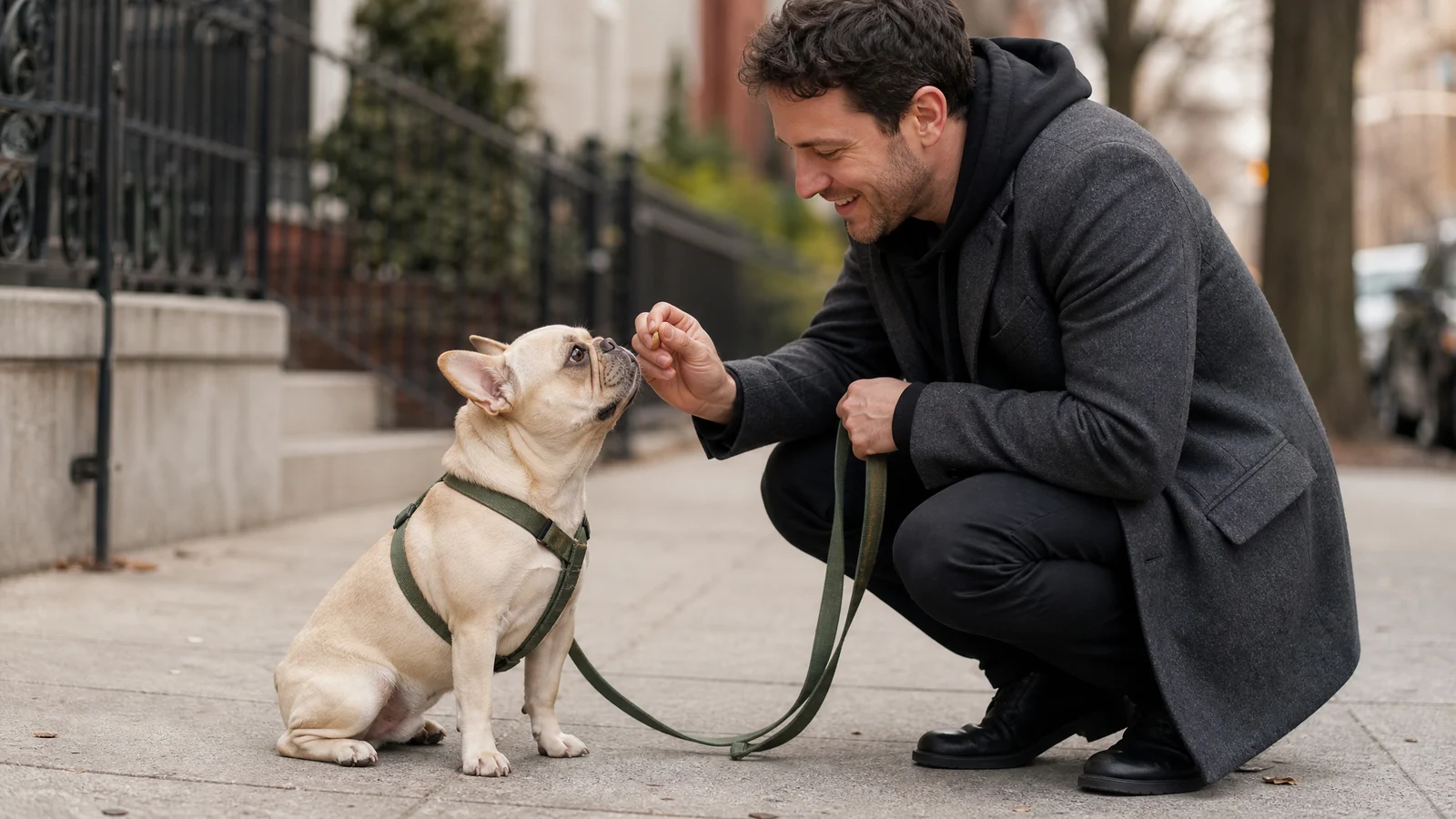 Training basicsAre French Bulldogs Easy to Train?
 BehaviorCommon French Bulldog Behavior Problems and Why They Happen