 Frenchie
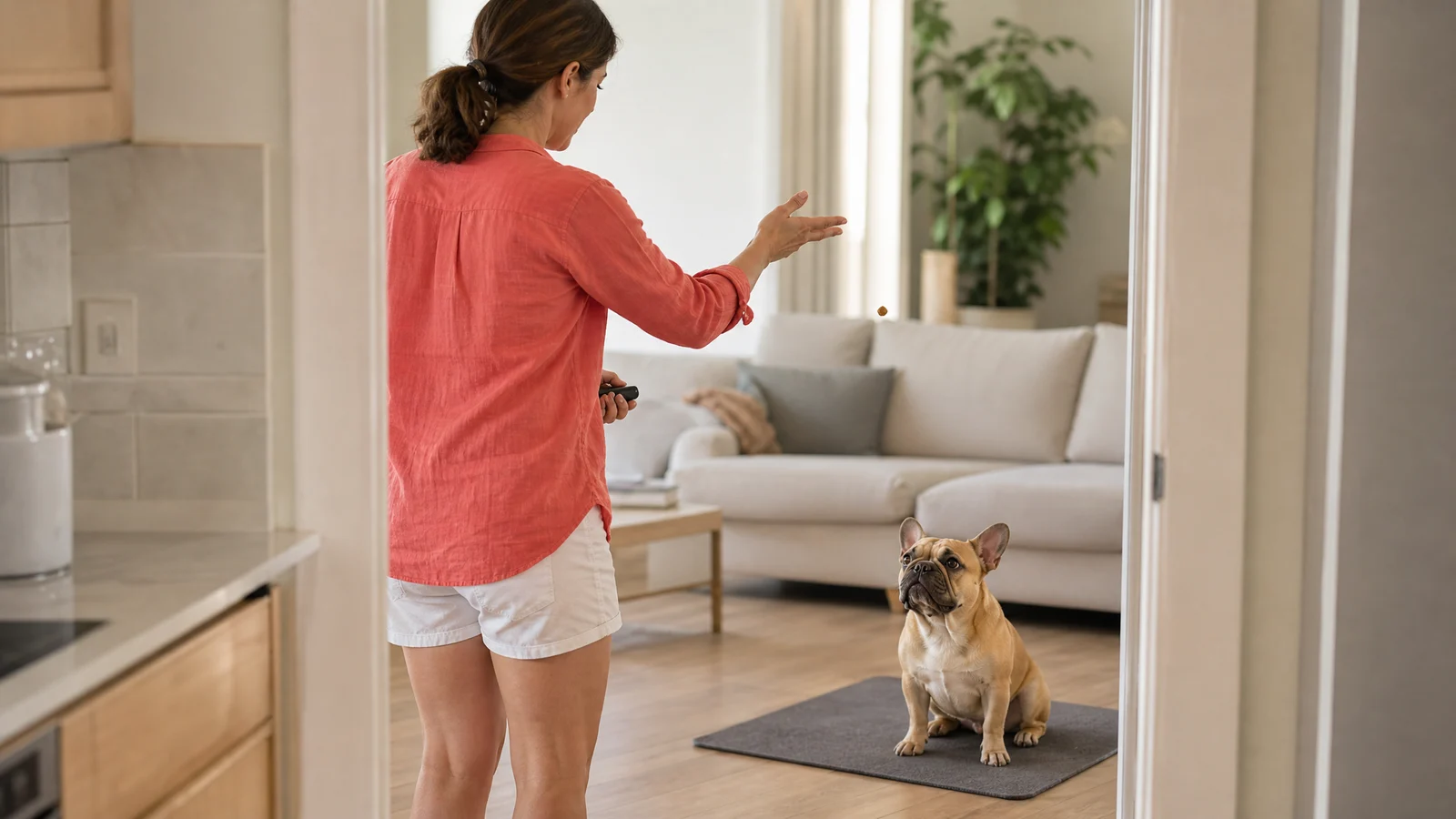
You are about to teach your French Bulldog that one small sound means food is on the way, and how you use that sound matters more than which clicker you buy. Get the meaning right and your Frenchie will start working out what earns it. In this guide, we start by giving the click its meaning.
That is worth a little care, because a clean click tells your dog exactly which moment paid, even while the treat is still in your pocket. Muddy it, and your Frenchie hears one more noise in a house already full of them. The early sessions are short and easy on both of you, and they set up everything that follows.
Charging the Clicker for a French Bulldog
Before a click can mark anything, your French Bulldog has to learn what it predicts. According to the American Kennel Club, a clicker becomes a conditioned reinforcer through repeated pairing with a reward (click, then immediately treat), and after about 10–20 repetitions a dog understands that the marker predicts a coming reward. Anything distinct from your other signals can serve as the marker, so a clicker is one option among several.
We run this pairing first and ask for nothing in return, so your dog has no puzzle to solve and the whole first session is the easiest one either of you will ever do.
- Choose your marker and set out the treats where your hand can reach them without looking. If the sound makes your Frenchie jump, press the clicker against your leg to muffle it.
- Click, then treat right away, asking for nothing. Every click gets a treat, with no exceptions.
- Click while your dog is doing different things, such as standing, sniffing or looking away, so the click belongs to the food and not to any one pose.
- Test it. When your dog's head swings toward you at the click, hunting for the treat, the sound now means food. If a dog ignores the sound you chose, mention it at a regular vet visit instead of guessing at the reason.
Keep it this dull until the head swing is quick and sure. Once it is, the click carries a promise, and you have something worth putting on a behavior.
Clicking the First Behavior Your French Bulldog Offers
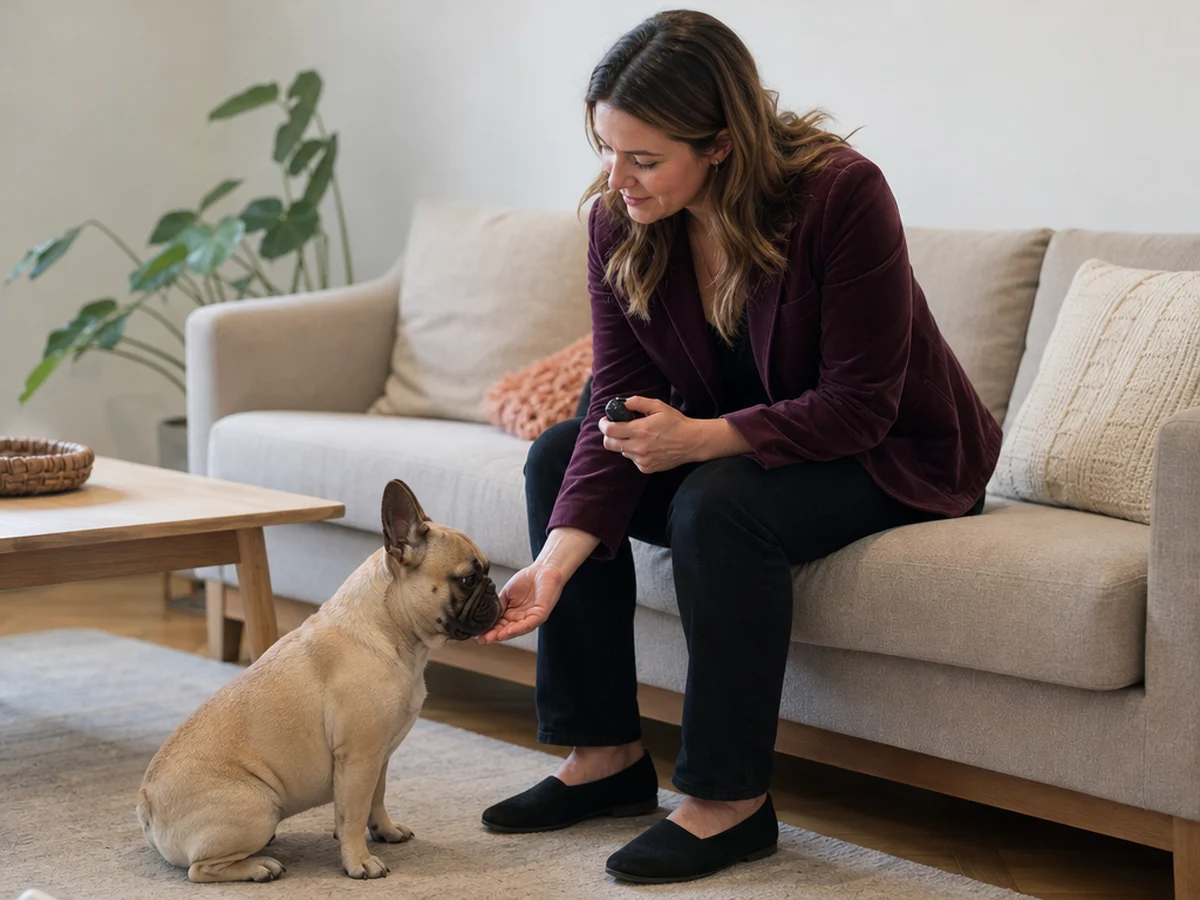
A click that predicts food is ready for work, so give it something small to mark. Pick a move your dog already makes without being asked, such as a pause, a glance your way or one step toward you. There is no cue and no lure yet. Watch for it and click at the instant it happens, because a click that comes after your dog has wandered on marks the wandering.
The Merck Veterinary Manual notes that clicker training requires frequent practice and excellent timing. That is why we begin with moves your Frenchie repeats on their own: you get plenty of tries at the moment without having to teach anything first. How big the treats should be and how to set up a session are covered in our complete French Bulldog training guide.
Letting the Click Arrive Before the Treat
A click only tells your Frenchie something new if it arrives before the treat does. When food is already in sight, your dog learns to watch your hand, and the click turns into background noise.
So click first, with your hands relaxed, and only then reach for the food. Keep the supply somewhere your dog has no reason to study, such as a closed container within reach or on your belt, and bring out a single piece after the click. The sound has to be what announces the payment.
If your Frenchie stares at your hands between clicks, the treat is too easy to read. Move the supply farther from the clicking hand and watch for the head swing from the charging step to come back. Which treats are worth a click is a separate question, and our guide asking are French Bulldogs easy to train covers it.
Clicker Side Effects in a French Bulldog Home
With the click now arriving ahead of the treat, the sound carries real value for your French Bulldog, and valuable things get noticed in ways you did not plan. Here are three questions that come up once the click carries value.
Why does my Frenchie keep repeating one move?
The lesson is working: your dog found the move that earns the click and keeps going back to it. Pay it a time or two, then wait, and click the first different thing they try, even a small shift in position. Switching what you click is how a stuck habit loosens, and your Frenchie learns to keep experimenting instead of replaying one trick.
What if the clicker makes my Frenchie frantic?
That is the charge doing its job, since the clicker now predicts food. Put it away until your dog settles, then click and pay for a calm moment such as a pause or a lie-down.
Can I train two dogs with one clicker?
Not at the same time. A click means food to every dog who hears it, so a second dog will arrive hunting for a treat. Give each dog a separate turn while the other waits in another room.
Noticing Good Moments Before You Reach for the Clicker
None of those side effects means the clicker is failing, because each one shows your dog paying close attention to it, which is what you built. When you want a place to put the new skill to work, our exercise and brain games guide is a good start. Keep a clicker where you will find it, since like a remote it will never be where you last left it.
Something quieter changes too: you start catching your French Bulldog doing things worth marking before you ever pick up the clicker. Your eye drifts from what you want to stop toward what you would like more of, and that habit outlasts any piece of plastic.
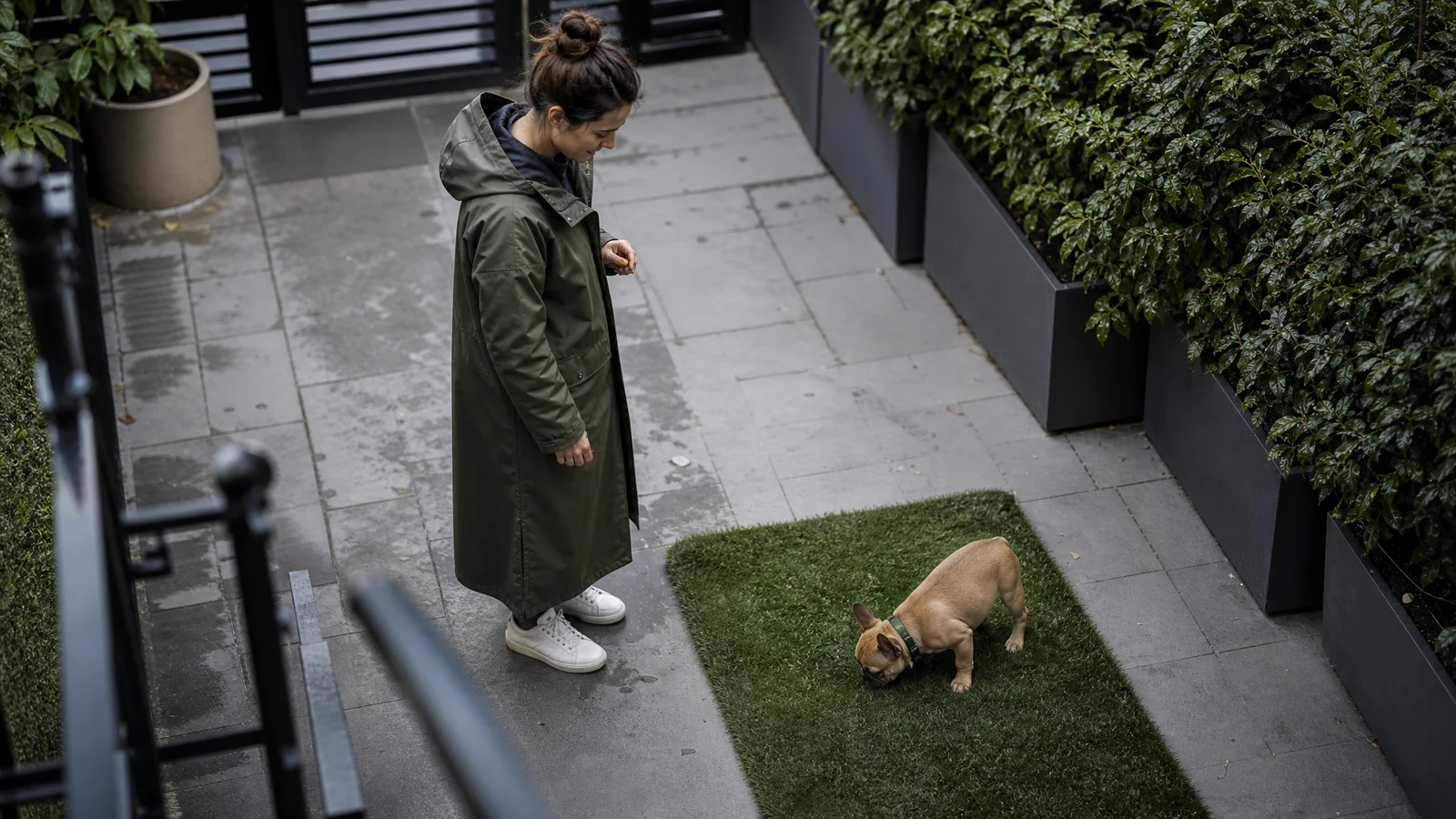 Puppy trainingFrench Bulldog Puppy at 8 to 12 Weeks: The First Month Home
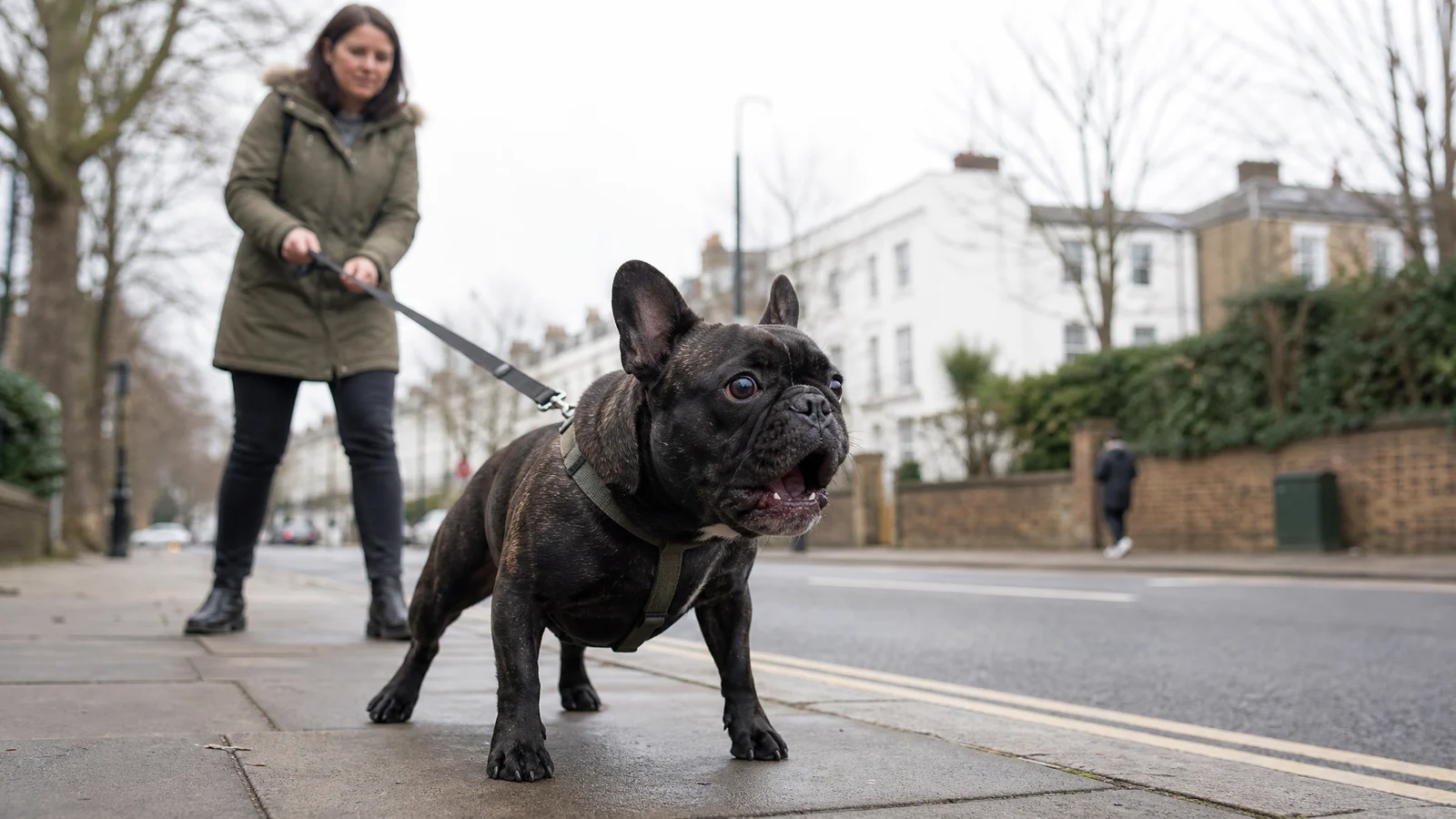 BehaviorFrench Bulldog Leash Reactivity: What Helps
 BehaviorHow to Stop a French Bulldog Pulling on the Leash