 Frenchie
11 Frenchie training topics
Every common Frenchie challenge, with first steps and guides to read.
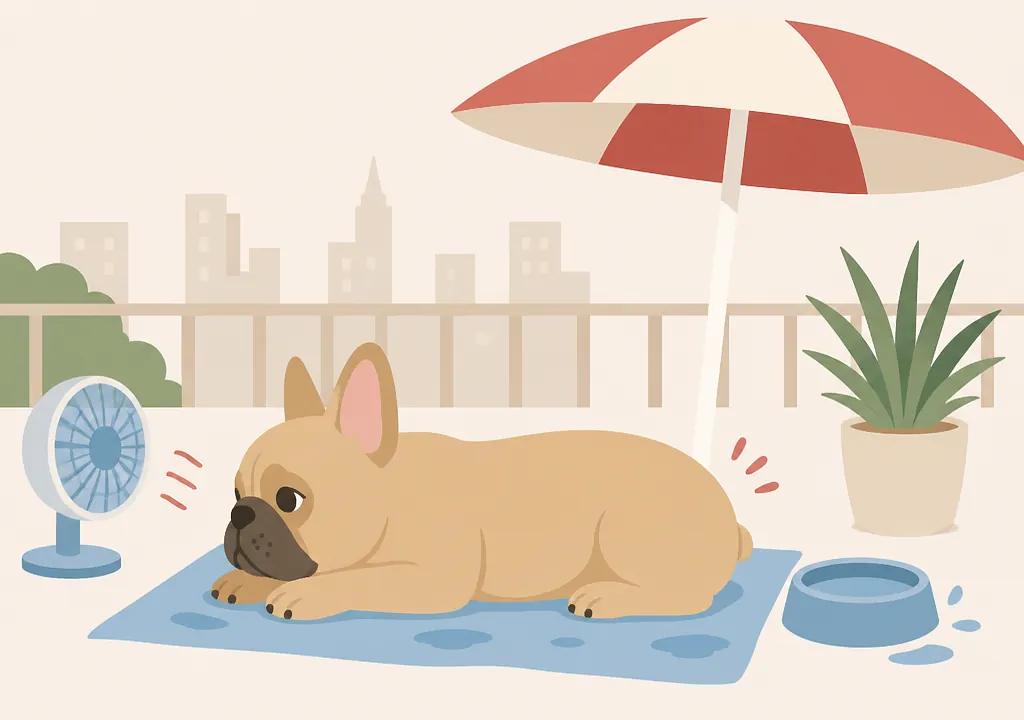
Struggling in the heat
Keep a flat-faced dog cool and safe.
If your French Bulldog is overheating, begin cooling and contact a veterinarian immediately. Do not wait for collapse, a particular thermometer reading or proof that the problem deserves the name heat stroke. A dog whose breathing becomes difficult in the heat needs urgent help, even if the outing seemed short and other dogs nearby appear comfortable.
This guide puts recognition and first aid before planning hot-weather walks. We then examine why a Frenchie's airway changes the decisions, how to reduce exposure at home and in the car, and what another caregiver needs to know. Preparation gives you practical choices before an emergency, while prompt veterinary attention remains essential if overheating occurs. A cooler-looking dog may still need assessment after the immediate signs improve.
Read the full guide: French Bulldog Heat Stroke: Signs, Prevention and Hot Walks
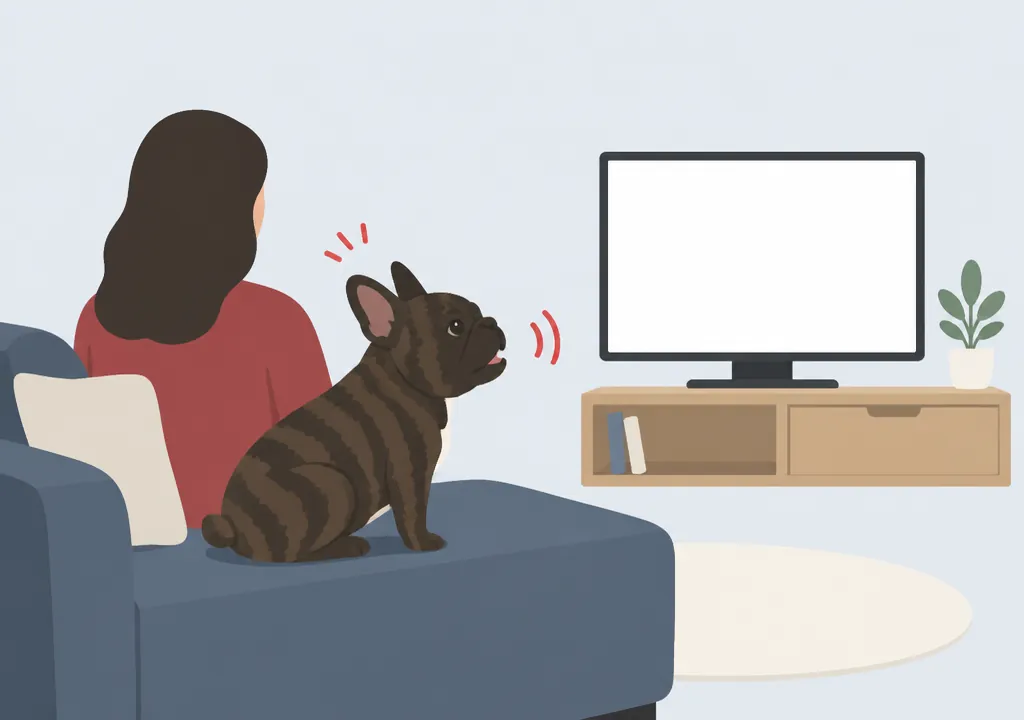
Barking for attention
Quiet ways to ask for a cuddle.
A description of the French Bulldog as quiet cannot tell you what your own dog will sound like at the door, during play or when left alone. Some vocal moments are brief and easy to understand. Others involve repeated barking, crying or a sharp sound that people call screaming, and the label alone does not explain what the dog needs.
The useful information is the episode around the sound. Notice what begins it, what changes while it continues and whether the dog returns comfortably to ordinary activity afterward. That account is more helpful than deciding that every Frenchie noise is either amusing or a problem. Keep the person's actions in the picture too, since a response can change what happens next.
Read the full guide: Do French Bulldogs Bark a Lot? Barking, Crying and 'Screaming'
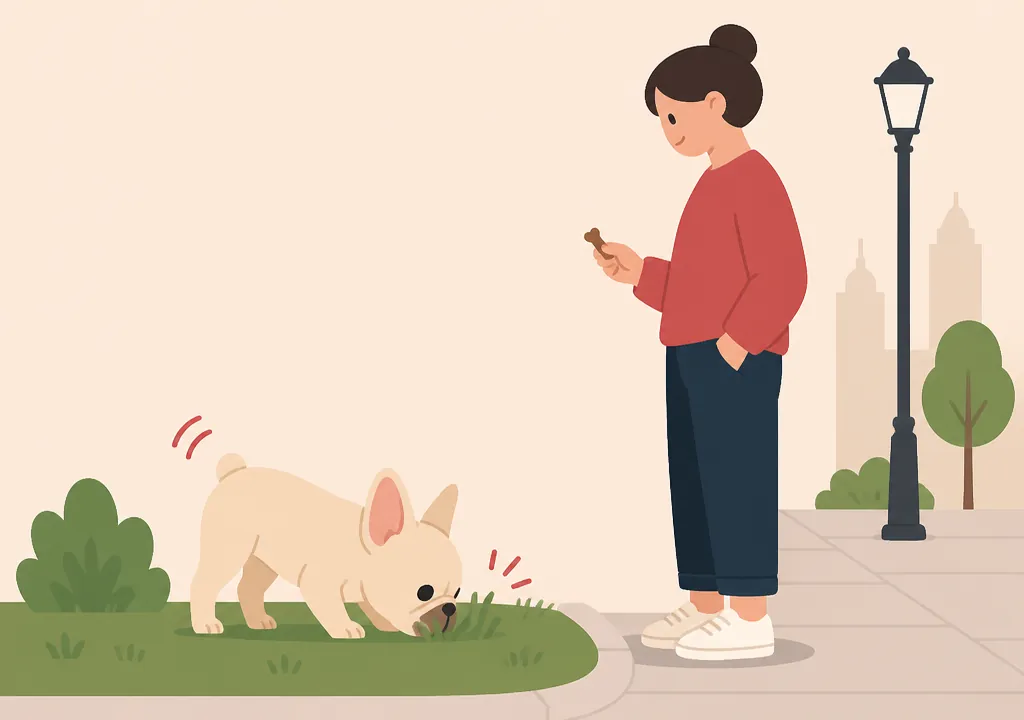
House training
A clear routine without the drama.
House training is where a French Bulldog's routine starts, and food, games and repetition do most of the teaching. A flat face, a back that dislikes leaping and an independent streak change how each session is planned.
The full guide is the complete plan, covering heat limits, rewards, housetraining and socializing.
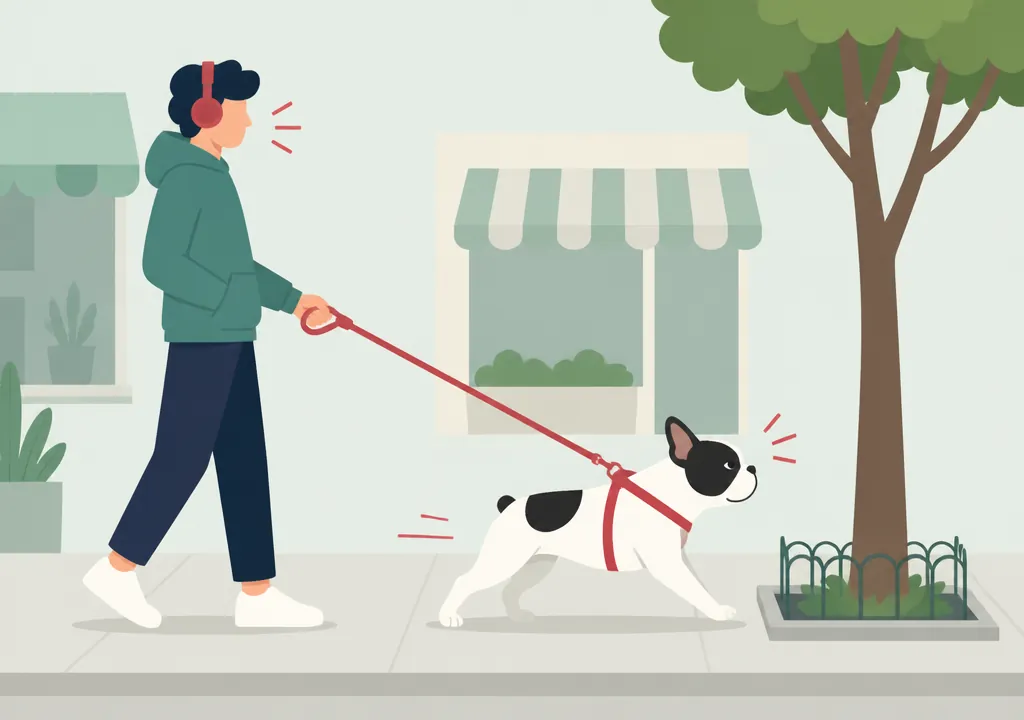
Pulling on the harness
Calm city walks.
Stubbornness is rarely why a French Bulldog goes flat on the sidewalk or hauls toward every dog. A short face makes breathing less efficient, so gear, heat and effort get checked before any training plan.
The full guide covers why the harness comes first, then planting, wheezing, lunging and wriggling out.
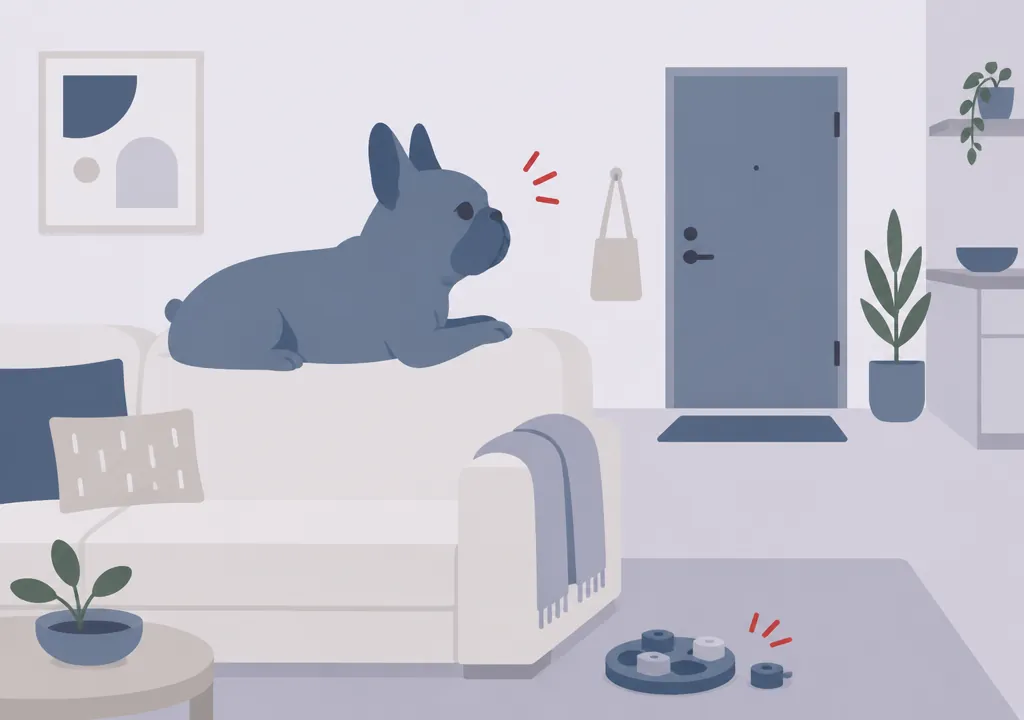
Time alone
Help a velcro dog relax.
Letting a puppy cry it out does not suit a French Bulldog, who overheats easily and does best with short absences. This breed was made for company, and a puppy left too long learns to cry.
The full guide follows one apartment puppy through house rules, indoor setup, short absences and clinginess.
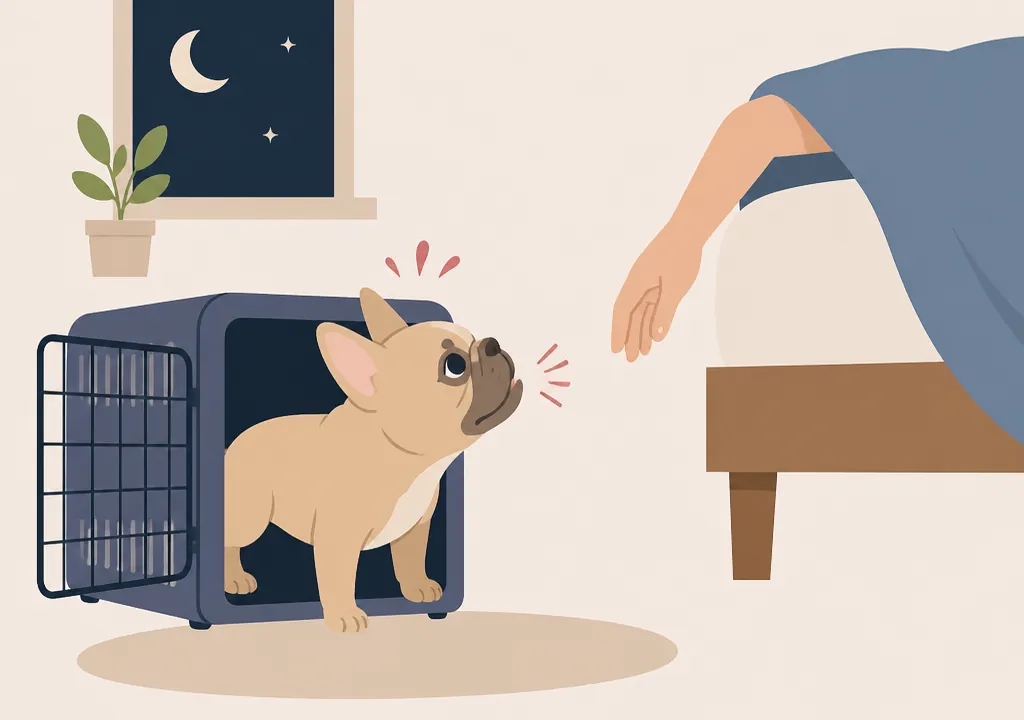
Crate crying
A den that feels safe.
A crate is easier to use when it is already familiar before a journey or veterinary visit makes confinement necessary. For a French Bulldog, that preparation begins with a space that fits the actual dog and stays comfortable. A label on the packaging cannot tell you whether your Frenchie can turn easily, stretch out or rest without feeling crowded.
The guide below treats the crate as a portable rest skill with several possible uses. You will choose the setup, make entry worthwhile and introduce the door before considering travel or prescribed rest. Each use needs its own preparation, and comfort inside a crate does not automatically mean comfort when people leave the home.
Read the full guide: Crate Training a French Bulldog (and the Right Crate Size)
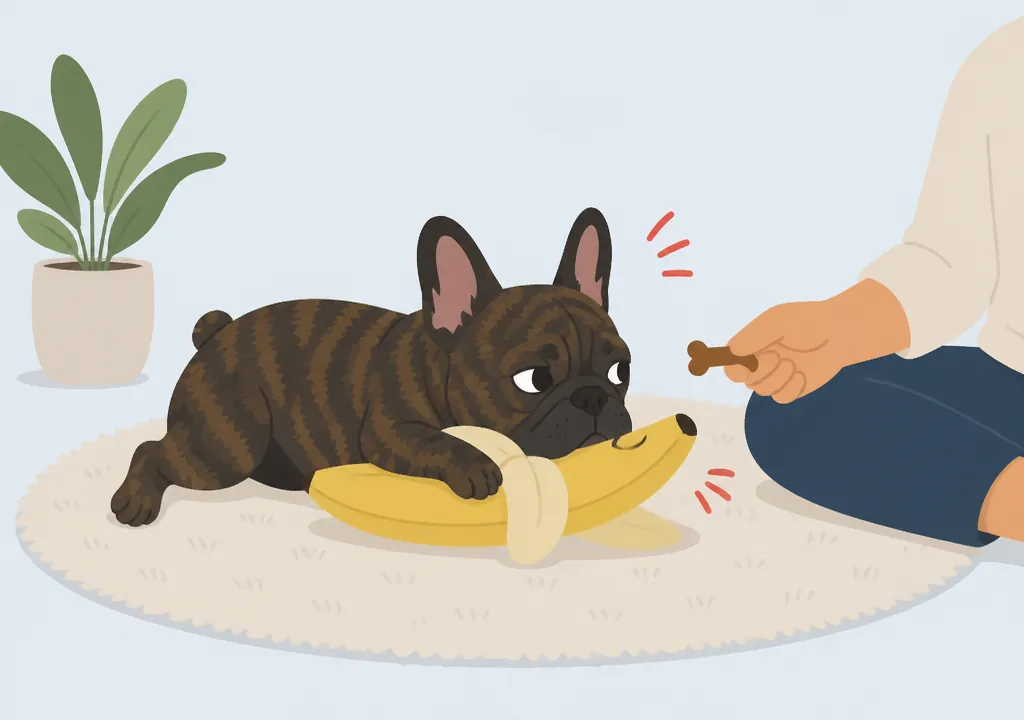
Guarding toys
Happy trades instead of a stare.
French Bulldogs are not naturally aggressive, yet a Frenchie can growl, guard or snap when afraid, in pain or crowded. Heard early, a growl over a toy is solved with a happy trade.
The full guide covers the standard, apartment and family cases, and the growl your vet should hear first.
Jumping up
Four paws on the floor.
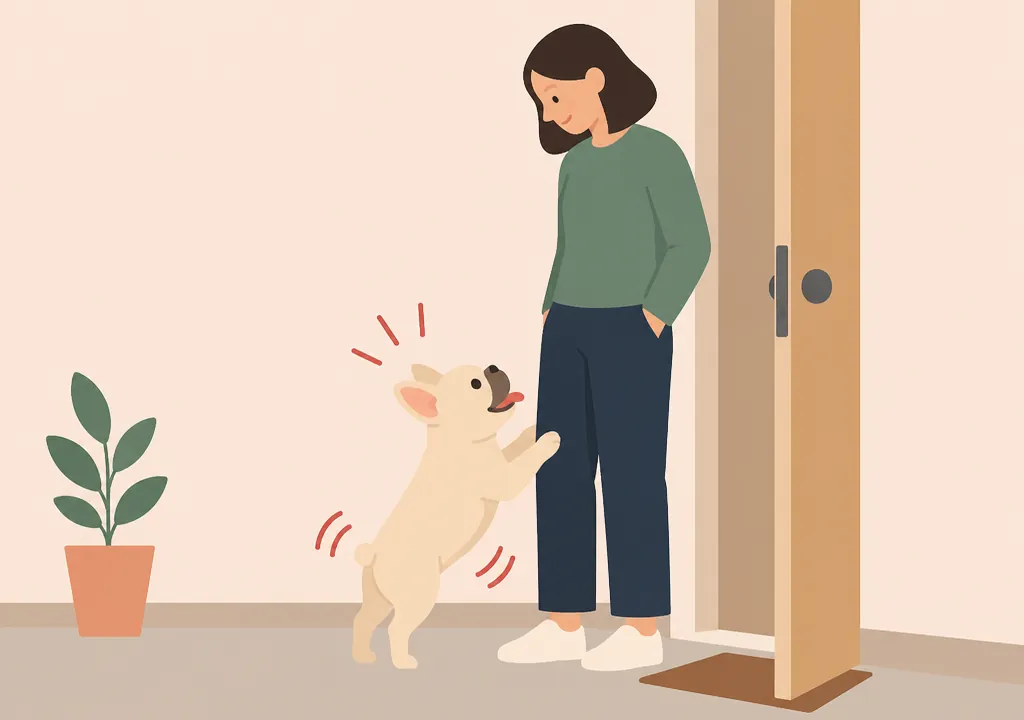
A greeting includes what the person does with their hands. When someone leans toward a French Bulldog, pulls their fingers away and then reaches down again, the dog may keep jumping to follow that moving attention. Asking for paws on the floor makes more sense when the person can bring a rewarding greeting down to the dog's level.
The aim is comfortable contact without repeated upward chasing. A Frenchie can remain friendly and enthusiastic while learning that grounded paws make people available. The lesson works best when arrivals are prepared and the human response stays easy to understand.
Read the full guide: Calm Greetings for a French Bulldog Who Leaps at Visitors
Chewing everything
The right chews for strong jaws.
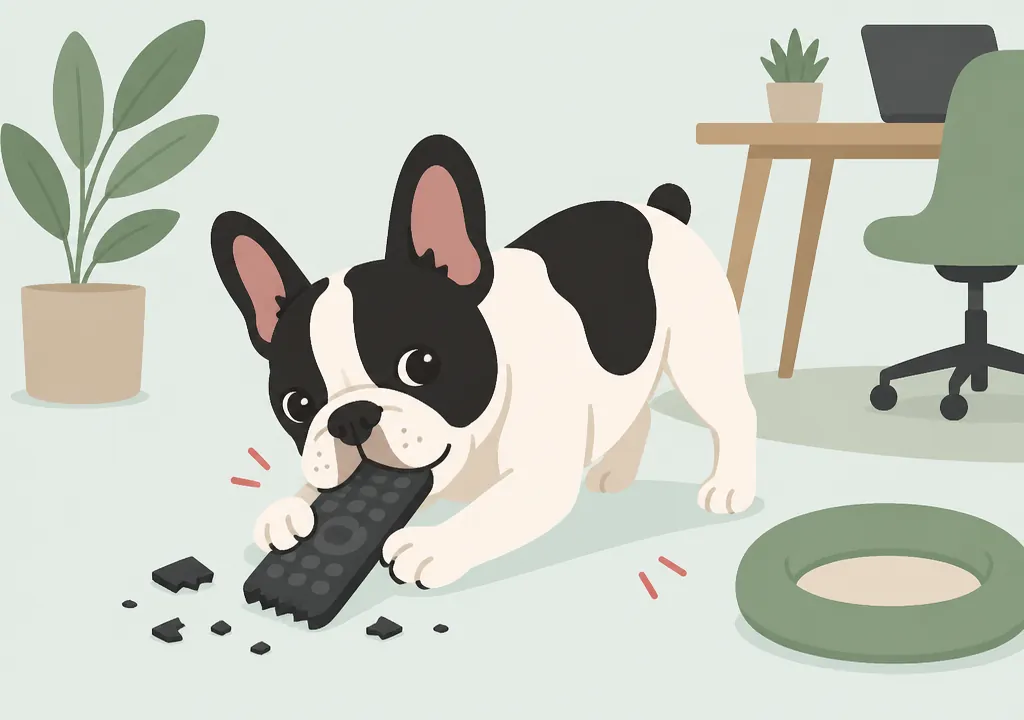
An untouched chew beside a French Bulldog carrying a shoe does not necessarily mean the chew needs to be harder. Carrying, pulling, investigating and settling down to gnaw are different activities. A dog looking for a shared game may have little interest in working quietly on an object, however durable it appears. Understanding that difference helps you offer something useful without turning every household possession into a contested prize.
Below, we will separate those activities, choose outlets that fit them and decide what can remain available under different levels of supervision. Then we will rehearse a comfortable chewing session, including its ending, before considering damaged or swallowed objects. The aim is to meet the dog's need for suitable mouth activity while keeping your Frenchie, the people nearby and the contents of the room safe.
Read the full guide: French Bulldog Chewing: Safe Outlets for Those Strong Jaws
Refusing to walk
When a Frenchie plants its feet.
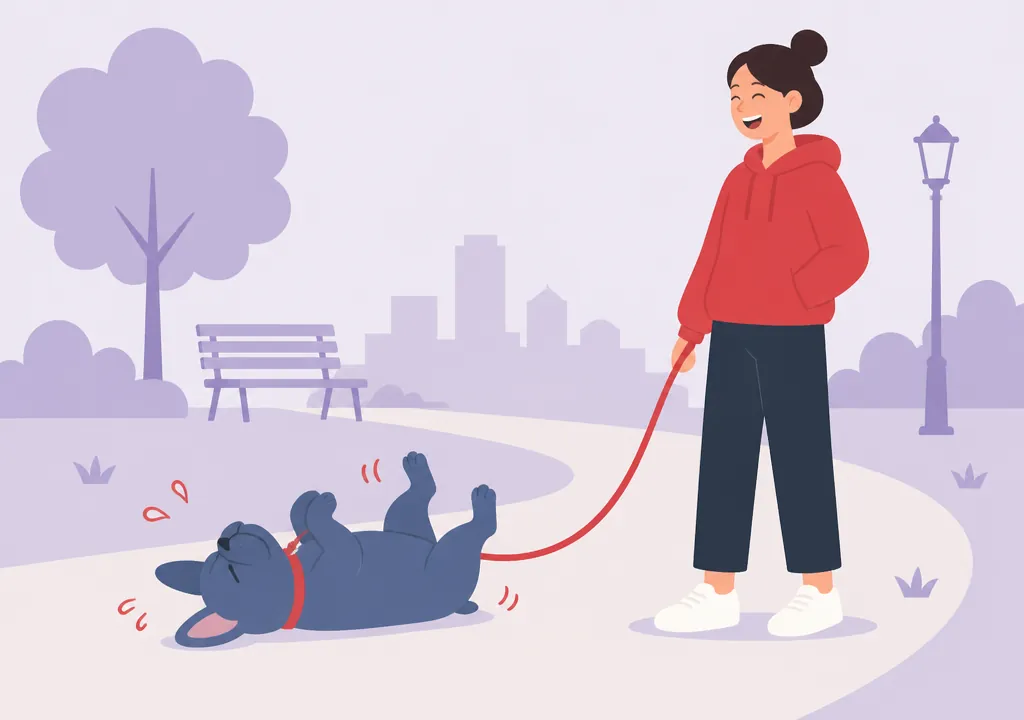
Sitting down on the sidewalk and refusing another step is why so many beliefs circle French Bulldog training. We have trained Frenchies for many years and have heard nearly all of them.
The full guide takes each belief in turn, from stubbornness and food to pain that looks like attitude.
Wrinkle and face care
Make face cleaning easy.
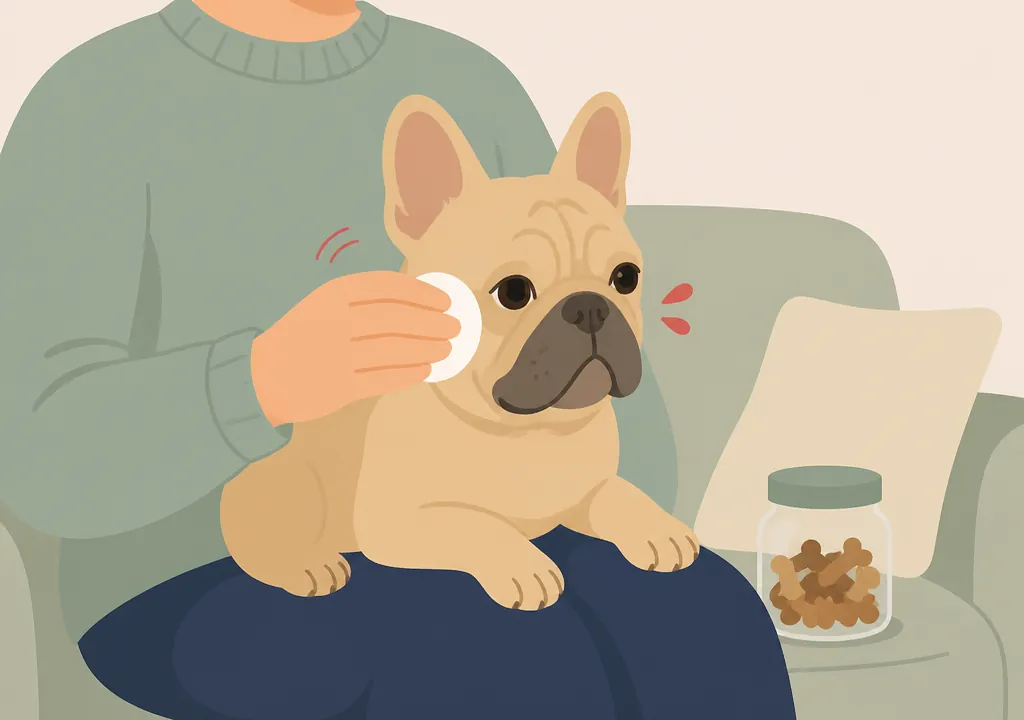
Face cleaning goes easiest when it starts in the first weeks, because Frenchies are creatures of habit and early lessons stay. Your puppy is ready to learn from the first day home.
The full guide is the puppy timeline from 8 weeks to 2 years, not a grooming manual.