 Frenchie
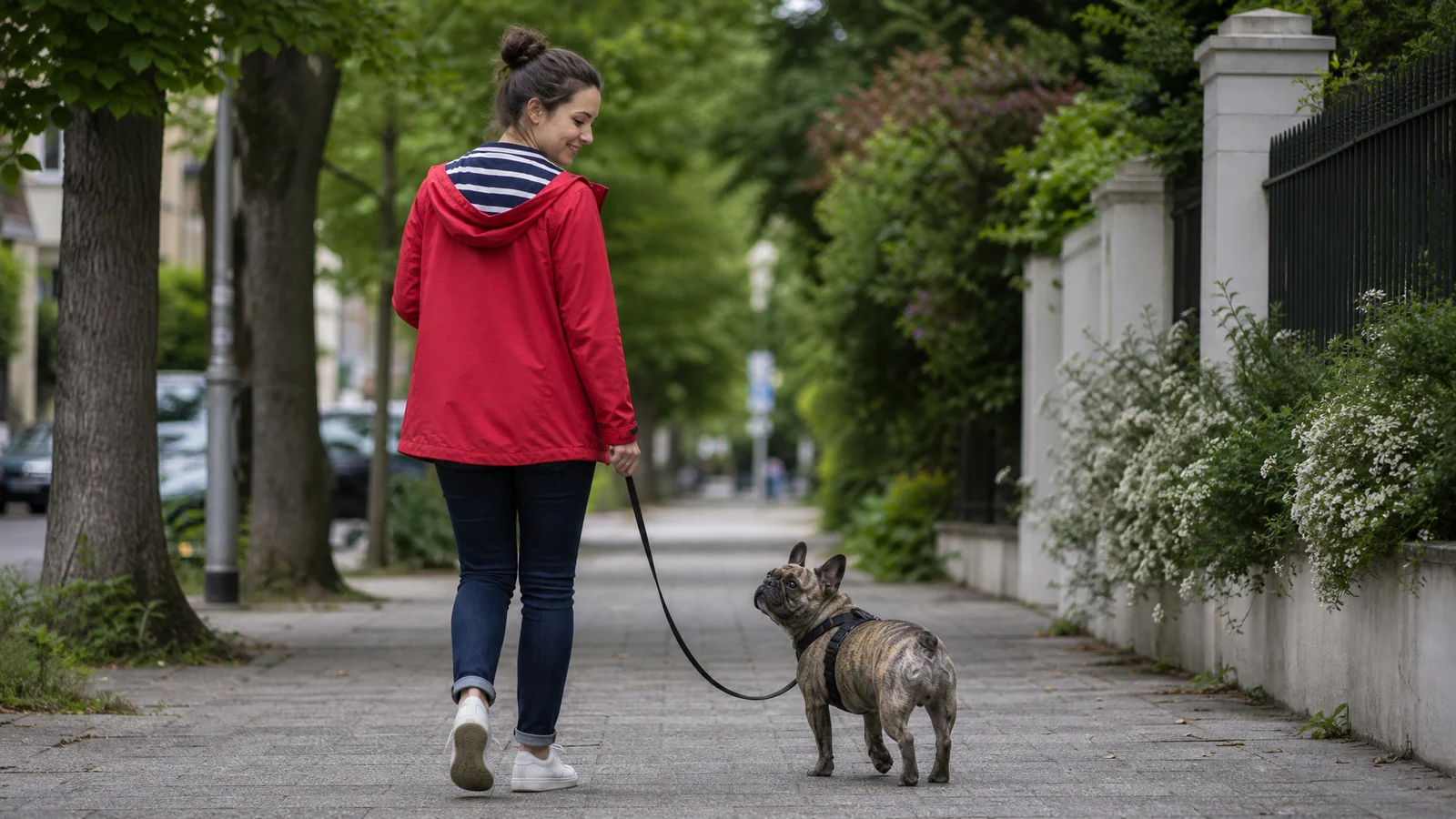
Some French Bulldog owners clip on the leash and enjoy a dog trotting beside them on a slack line, and plenty of those dogs eventually cover 3 miles or more once the distance has been built up gradually in the cool parts of the day. Other owners get ten feet from the door before their dog goes flat on the sidewalk like dead weight, or hauls toward every dog and smell on the block.
Same breed, very different sounds and behaviors. The cause is rarely plain stubbornness. A short face makes breathing less efficient, so gear, heat and effort belong in the diagnosis before any training plan does. Get that wrong and you teach a dog that walks are unpleasant. Get it right and you have a companion who happily strolls the neighborhood for life.
We'll walk you through why the harness comes first, then each thing you see or hear on a walk, from planting to wheezing to lunging to wriggling out, with the likely cause and the fix for each.
Why a French Bulldog Gets a Harness Before the Leash
A chest harness comes before any other gear because a flat-faced dog who leans into a collar is leaning on the throat, exactly where the airway is already tight. A harness spreads that pressure across the chest and shoulders. The RSPCA says a well-fitting harness is a safe way to help control a dog, as long as you also teach the dog with food to walk nicely beside you.
The second reason is the rule every Frenchie lives under. The breed's parent club says these dogs belong outdoors only in a fenced yard or leash and should never be allowed to run free. That applies for the dog's whole life, not until training is finished. So loose-leash walking is a core daily skill for this breed, not a polish you add at the end.
Fit matters more than the brand. Owners mention front chest rings that calm pulling and harnesses that sit well behind the shoulders, and also dogs who lost chest hair to friction after a poor fit. Check these points:
- The straps sit clear of the armpits, and the front legs swing freely without a shortened stride or a hop.
- You can slide a flat hand under every strap, yet the harness does not rotate or ride up when the dog leans.
- Nothing presses on the front of the throat or windpipe when the leash goes tight.
- After each walk, run your fingers over the chest and armpits for redness or thinning hair.
Before you walk anywhere, wear the harness indoors. Show it, feed a treat, buckle it, feed another, unbuckle, repeat across several days. Frenchies are food-motivated, though a minority of owners find ordinary treats lose their power once outdoors. Keep squeezy tube cheese in your pocket for those days, since owners of treat-ignoring dogs name it as the reward that still works outside. Harness first, lead second, distance last.
When Your French Bulldog Plants on the Leash
Several owners describe the same scene: the dog sits, freezes when they want another direction, or lies down to end the walk. It looks like a protest, and sometimes it is. But the order of questions matters, and the body gets asked before the attitude does.
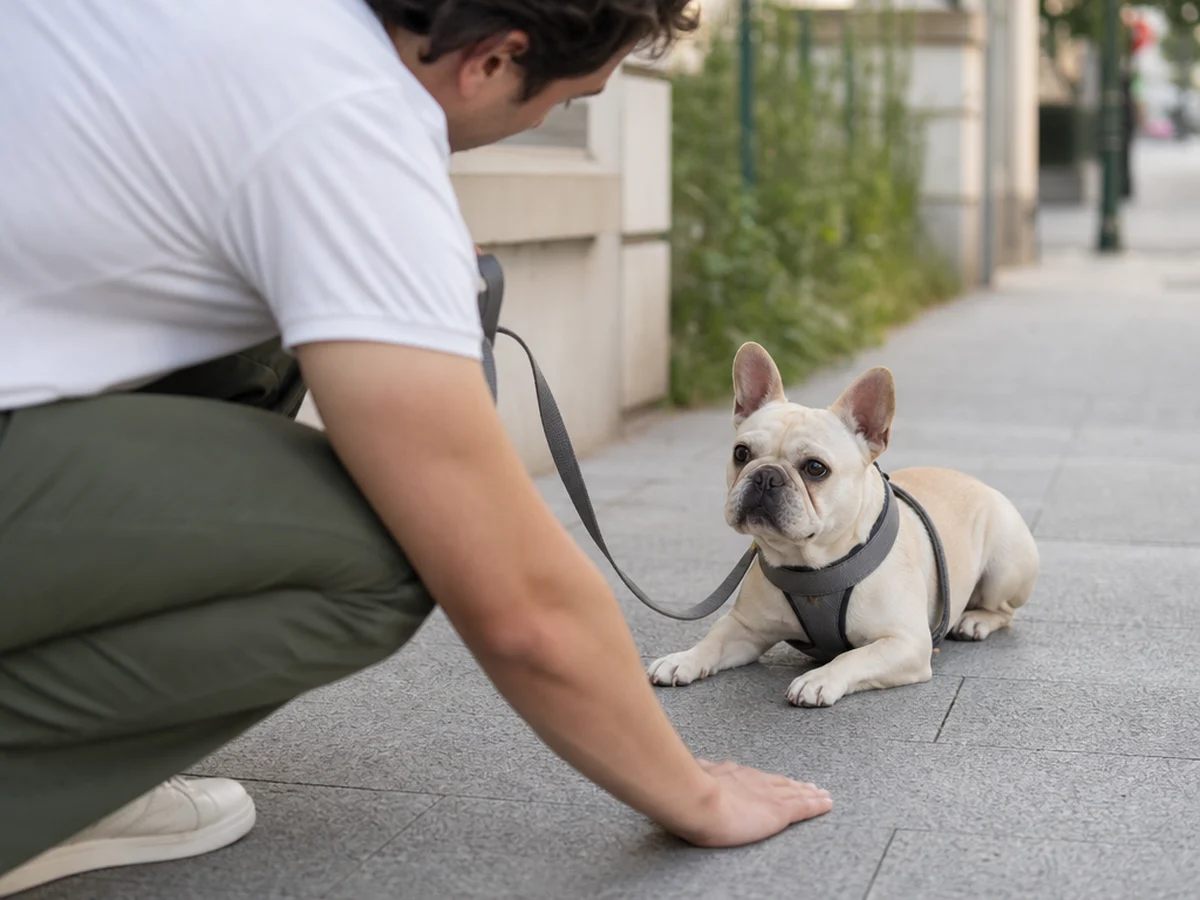
- Heat. Touch the sidewalk with your hand, and if it is too hot for you, it is too hot for the paws. Warm, humid weather can bring on breathing trouble even during a fast walk, so a dog who stops in summer may be telling you the truth.
- Breathing. Listen for noise and watch for effort. A dog who labors on a brisk three-minute walk in mild weather deserves a vet visit before any exercise plan.
- Pain. A dog who avoids their equipment altogether may be in pain, so rule out medical causes, and check for a rubbing strap too.
- Fear. Dogs can keep fearing things that used to predict discomfort, even after the cause is fixed. If the dog freezes at the sight of the harness or the clip, go back to feeding treats around the gear until the clip means food.
Only when all four come back clean do you treat it as a pacing problem. Move the walk to quiet hours, since fewer distractions make it easier to get a reluctant dog going. Reward every few steps with something good, luring forward with a treat at nose level and being patient between steps. If the dog has frozen completely, a calm, brief carry of a few steps, then setting them down, beats hauling on the leash. That works better than a tug of war.
A sit-down strike during a sniff is different from a sit-down in the middle of a flat road. Give the first a minute. Never wait out the second in the sun. Plan for a short walk that ends well, not a long one that ends in a standoff.
Wheezing, Snorting, or Gagging on the Leash
Noisy breathing on walks is one of the most misread sounds in this breed. Owners shrug it off as normal Frenchie noise, but excess soft tissue in the nose and throat of some short-faced dogs makes normal breathing difficult, causing heavy panting or noisy breathing, and narrow nostrils make it harder still. A snore at home is one thing. A rasp or gag at the end of a leash is another.
Three things push on that airway at once. Heat is the obvious one, since a short face tolerates heat, exercise and stress poorly, and all three raise the need to breathe. Effort is the second, so a fast walk or hard pulling counts. Pressure is the third: a collar under a pulling dog squeezes the throat. Hard panting also inflames and swells the airway lining, which narrows it further, so stop before the heavy panting starts, not after.
Stop the walk, move to shade, offer water and let the dog settle if you see any of these:
- Very noisy breathing during or after the walk, even if it comes and goes.
- Gagging or bringing up frothy foam after exercise or excitement.
- Overheating easily in moderate weather and being slow to cool down afterward.
- A dog who cannot play without becoming distressed.
Any of these means a call to a vet experienced with short-faced breeds, and the sooner the better. Note how fast the breathing settles after a walk too, because slow recovery is information. Go out in the early morning or evening in summer, and keep regular vet visits on the calendar, since airway signs can worsen as a dog ages.
This is general information, not a diagnosis. Only your veterinarian can tell you whether your dog's airway needs evaluating or treating, so ask before setting an exercise plan if breathing noise is a pattern.
Leash Pulling Toward Every Smell and Squirrel
Pulling mostly comes from two things: a dog who is excited and a history of pulling working. Every time a tight leash got the dog to the lamppost, the pulling was paid. Owners describe everything from steady tugging in a harness to a dog who seems to be walking the human. Remember too that a hard-hauling Frenchie is working their airway harder, so this is a comfort fix as well as a manners one.
The fix is a routine that makes slack the only thing that goes forward. Keep each session short and in the cool part of the day:
- The moment the leash tightens, stop walking and just wait for the pulling to stop.
- When the dog turns toward you or the line loosens, say your marker word and drop a small treat by your leg.
- Walk on. Let the first few steps of slack earn another treat.
- Once slack steps come easily, reward every few steps, and let a good sniff stand in as the prize for a stretch of loose leash.
Pea-sized pieces are plenty, and too many treats upset some dogs' stomachs. If the dog ignores ordinary treats outdoors, cheese is the one some owners of treat-ignoring dogs say still gets through. Skip long loops while you practice.
Frenchies are strollers, not joggers, and many stop to greet everyone, so calm hellos on the leash are part of the lesson. Our guide on French Bulldog exercise needs helps size the walk. A slack ten-minute walk beats a hauling hour.
Barking and Lunging at Other Dogs on Walks
Pulling that starts the instant another dog comes into view is a different animal from general hauling. A few owners describe it. Behind the noise sits excitement, frustration at being held back, or fear. All three look alike from the other end of the leash.
The cure for all of them is distance. Find the gap at which your dog sees the other dog but can still take a treat, and stay at or beyond it. For a Frenchie there is a second reason to keep that gap generous: every bout of barking and lunging against the harness loads a short airway, and hard panting swells it further.
Because many Frenchies love to greet everyone, a dog who lunges out of frustration is often a social dog who has been held back too long, so calm, planned hellos at a distance they can handle belong in the plan.
Cross the street, step between parked cars or turn around. While the other dog is in view, feed a steady stream of treats. When the dog leaves, the treats stop. Over weeks, the sight of another dog starts predicting food, and you can shrink the gap a little at a time.
If the dog lunges anyway, turn calmly and walk away without fuss. Temperament toward other dogs varies from Frenchie to Frenchie, so don't force a greeting, and don't label a barky dog mean. Frustrated and frightened dogs are not bad dogs. Our piece on French Bulldog trainability covers how much their personalities differ. If the barking is sudden or new, mention it to your vet, because pain can sit behind a change in behavior.
Zigzagging, Backing Out, and Slipping a French Bulldog Harness
A Frenchie who zigzags is usually following their nose. One who backs out of the harness is either uncomfortable or has learned that reversing makes the pressure vanish, which makes escape a self-rewarding habit. Owners also report scratching at collars and rubbed chests, so first rule out a bad fit. Re-check the straps against the list above, then adjust so nothing slides over the head or shoulders when the dog reverses.
Next, change what happens when the dog backs up. Stand still, stay calm and keep the leash slack. When the dog steps forward again, reward right at your leg. Practice at home with the leash clipped and treats flowing before you do it near anything exciting. Never drag the dog forward, which only makes backing out stronger.
Near roads, use a second point of security. Clip a double-ended lead to the harness and also to a flat buckle collar, with the slack carried by the harness attachment so the collar is only a backup. The club's emergency-kit advice names a buckle collar with a sturdy leash.
Check both attachments before you leave the house, and keep the dog off busy sidewalks until the harness is reliably comfortable. An escaped Frenchie near traffic is a worse outcome than any training shortcut can justify.
Leash for Life: Your French Bulldog's Walk Plan for Today
Everything above comes down to the same few things: a harness that fits, a leash that stays slack, a walk that stays cool, and a dog whose breathing you know. The leash-for-life rule is easy to live with once loose-leash walking is routine, and the short face is easy to protect when you plan around heat and effort. Our complete French Bulldog training guide picks up the wider picture.
Today, do one thing. Fit the harness indoors, using the checklist, and feed treats while you buckle it. Then pick the coolest hour of the day, touch the sidewalk first and take a five-minute walk. Reward every slack-leash step with something worth wanting, and stop while the dog is still breathing quietly and happy to go on. Do that again tomorrow and the day after, and add distance only when it feels easy.
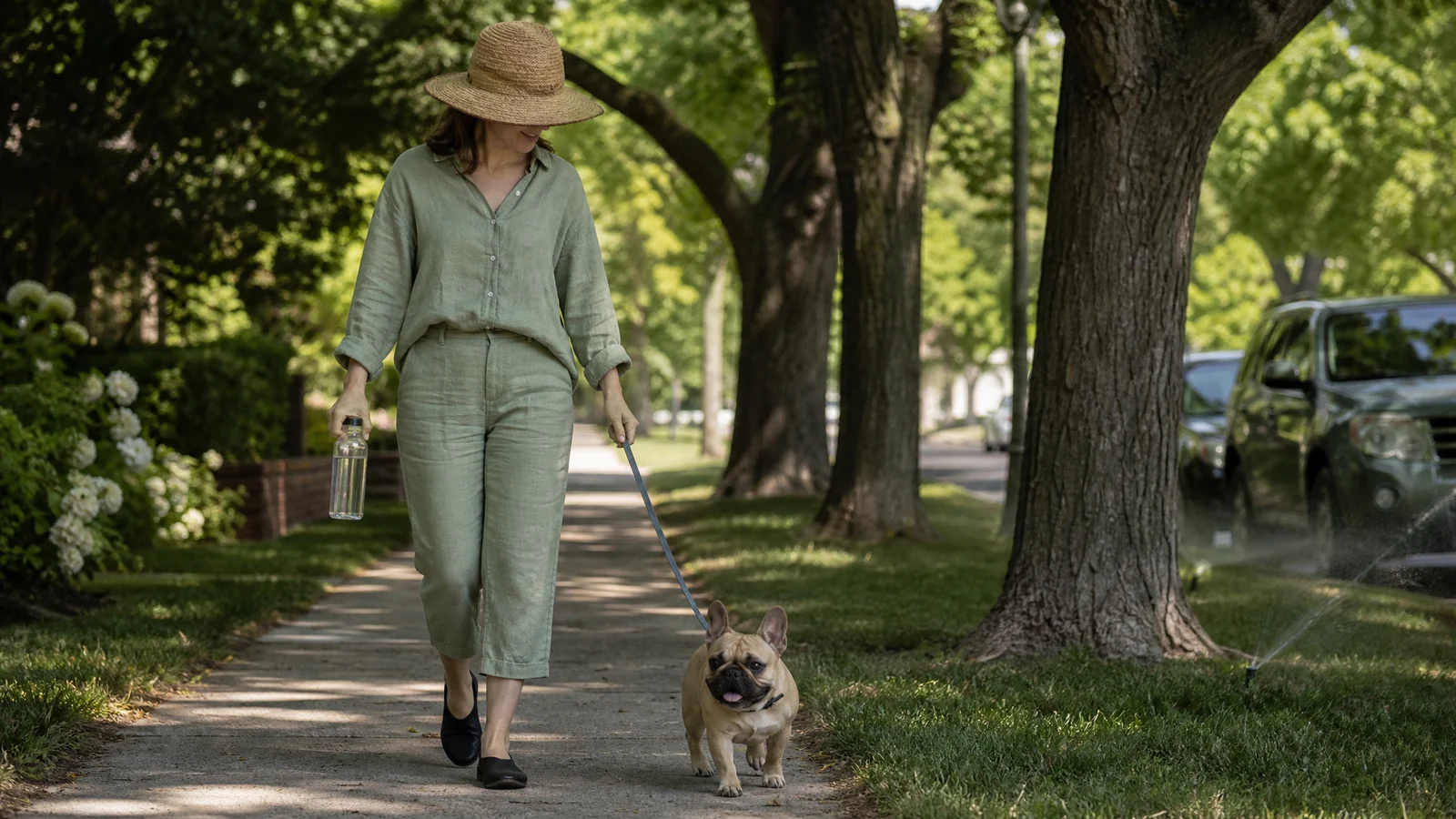 HealthFrench Bulldog Heat Stroke: Signs, Prevention and Hot Walks
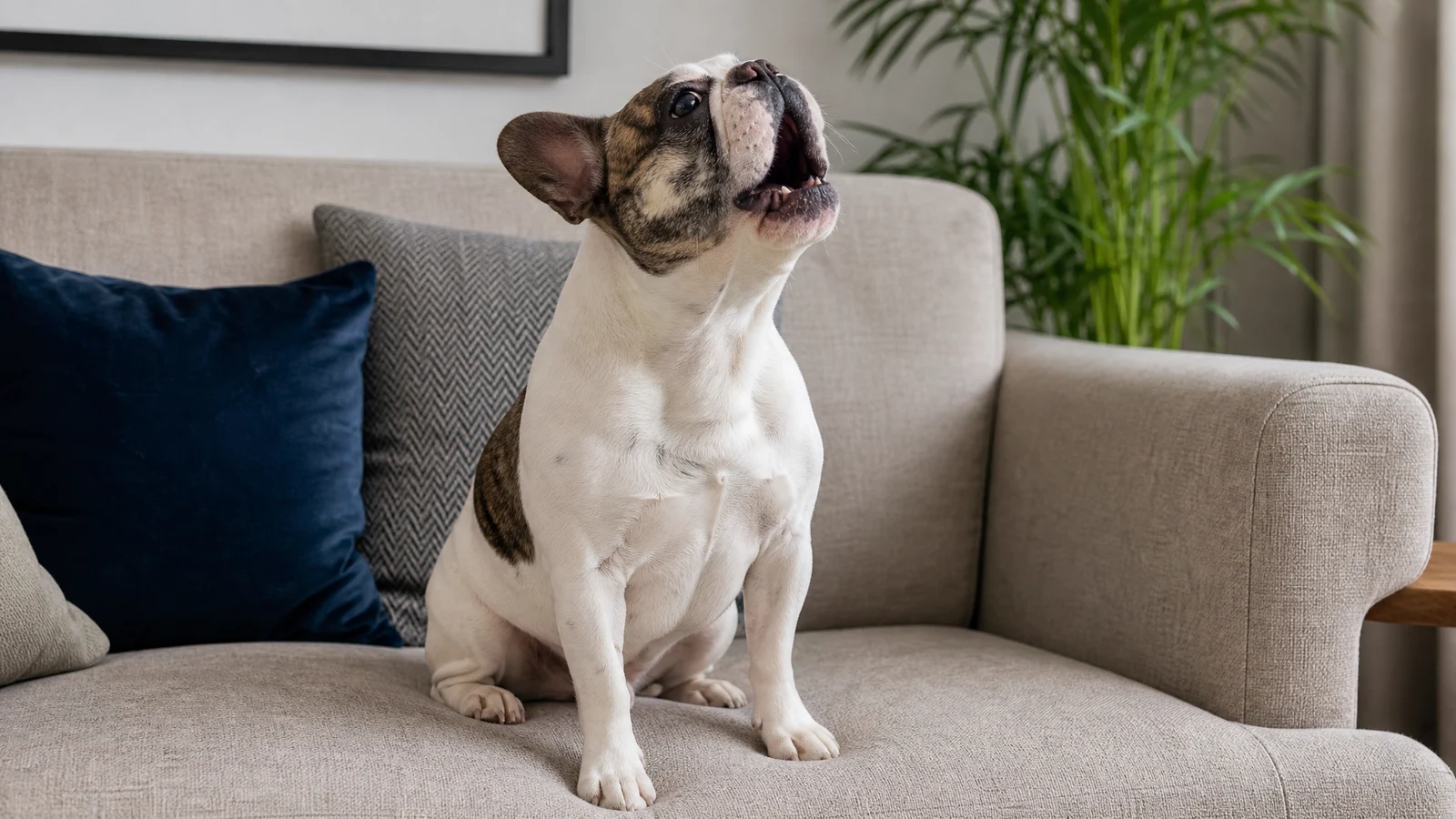 BehaviorDo French Bulldogs Bark a Lot? Barking, Crying and 'Screaming'
 Training basicsCrate Training a French Bulldog (and the Right Crate Size)