 Frenchie
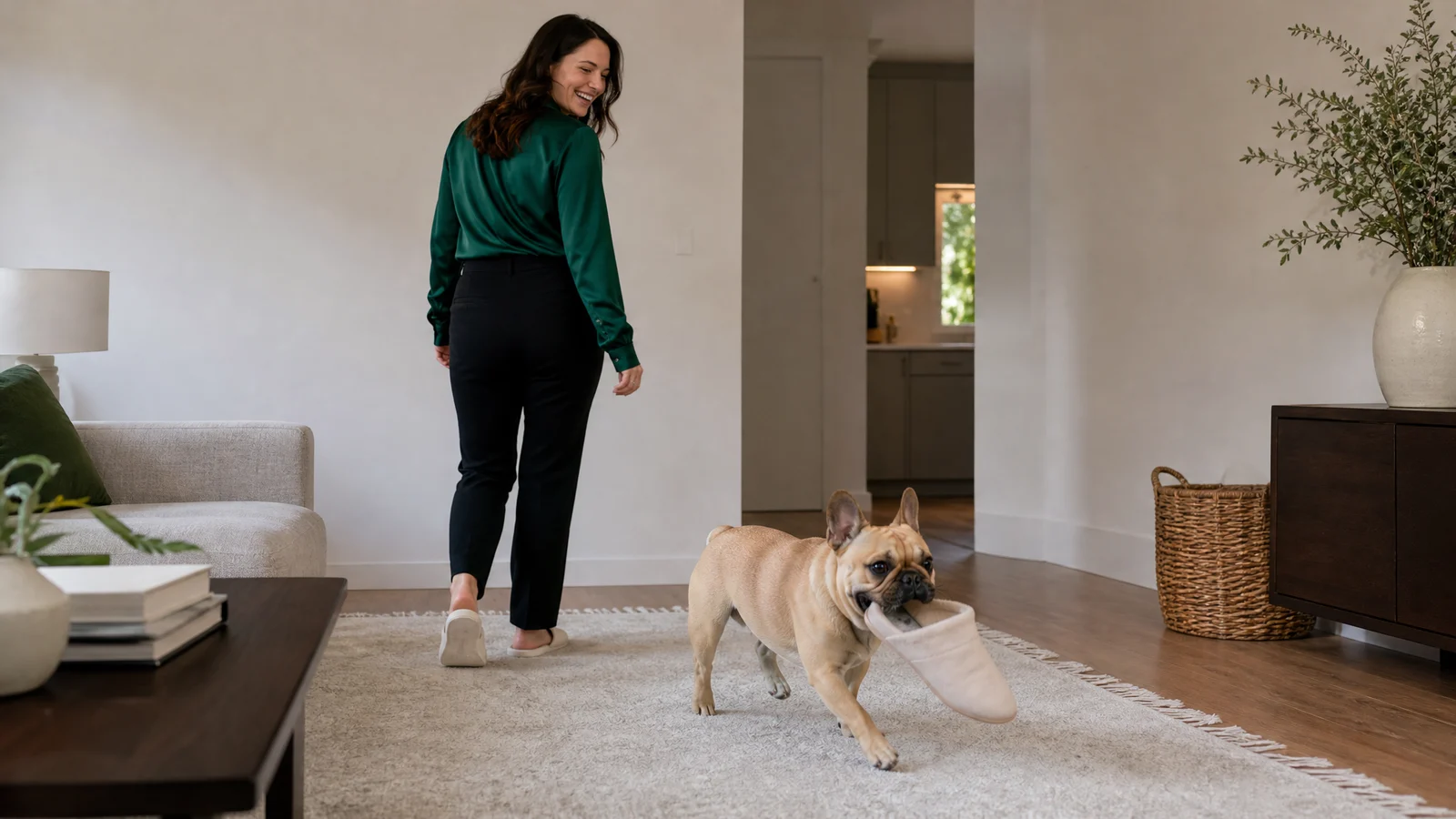
Sooner or later every French Bulldog household meets the same small test: the dog has just done something outrageous, and you have a second to decide whether it was funny or a problem. How you answer those moments, far more than any list of cues, is the training you will do from day to day. Ahead you'll see what that daily work looks like, what reward-based training needs beside it, and which households find it natural.
That is why we say little here about individual cues, since each has its own guide. What those guides leave out is the daily weather of living with a Frenchie: the pranks, the mess, the habits you never meant to teach, and the way you respond to all three.
The Part of a French Bulldog Fit Nobody Schedules
Nobody puts mischief on the calendar, and the same prank can look charming at noon and exhausting at bedtime. According to the French Bull Dog Club of America, the antics of this breed can have owners laughing all day or feeling frustrated by their mischievous pranks and misdeeds.
That swing is the real question behind fit. A household that can stay amused through a week of chewed shoes and stolen socks has the temperament this work needs, while a household that is short on patience at the end of a long day will feel every misdeed, however small the dog. Neither is a flaw, and knowing which you are makes every later choice easier.
It also helps to notice your own first reaction, because it tends to repeat. Some people laugh and reach for the phone, some sigh and take the object away, and some raise their voice. None of those is wrong as a feeling, but each teaches the dog something different, and the next section shows what to do with the moment once you have caught it.
The mischief often lands on the dog's mouth first. When it does, our French Bulldog puppy biting guide covers what to offer instead, and the rest of this page stays with the way you respond.
What a Reward-Based Reply Looks Like in a French Bulldog Home
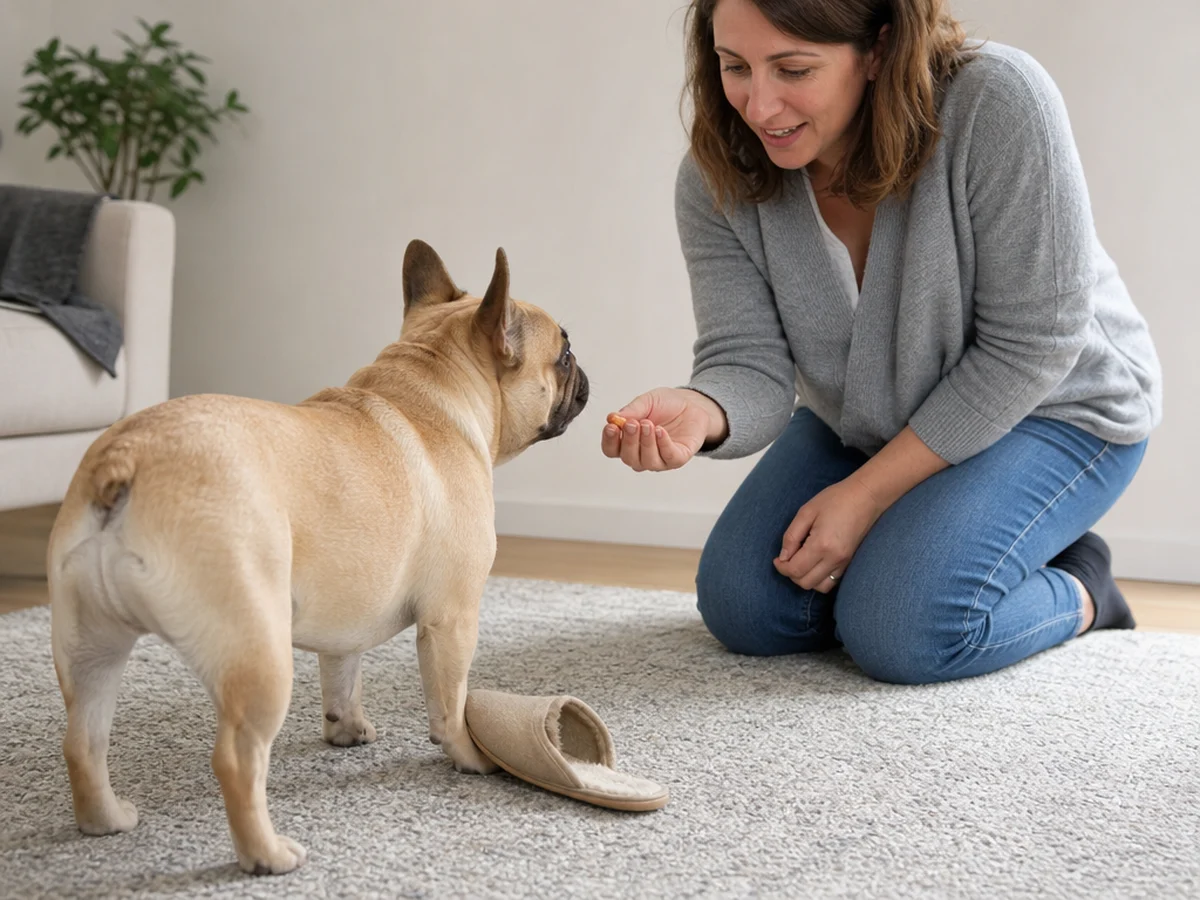
Laughing or frustrated, you still have to answer, and the answer teaches the dog something either way. Attention can be a reward, so a big reaction to a prank may pay for it without meaning to, while a calm, rewarding reply points the dog toward something you would rather see. That is the whole of a reward-based reply: stop the unwanted thing from paying, and pay the thing you want instead.
Three ordinary moments show how it looks in practice. Each pairs what the dog does with what you pay for instead.
- Something chewable in the mouth. Offer an allowed chew in trade, and pay the moment the dog takes it, so that grabbing the wrong thing starts a better deal.
- A hello that turns into a leap. Pay the instant all four paws are on the floor, and let the leap earn nothing but a pause.
- A puddle on the rug. Clean up quietly with no scolding, and save your praise and treat for the next time the dog goes in the right spot.
Each moment has a full routine in its own guide, including our French Bulldog greetings guide for the door and our French Bulldog potty guide for the floor. The shape of the reply stays the same across all three, which is why it gets easier with repetition.
Management That Fits Beside Reward Training in a French Bulldog Household
Replies alone fall short. The Dumb Friends League behavior team leader calls reward training very effective but says it "requires additional considerations," and that we need to utilize management tools to prevent unwanted behaviors as much as possible and train the alternative desirable behavior in conjunction with it. Her example is baby gates, which will help prevent house soiling by making it clearer that the correct place to potty is outside.
In practice, management means arranging the day so the mistakes get fewer chances: what is within reach, who is watching, and where the dog rests while you cook or take a call. It is not a failure of training. It is the half of the plan that keeps working while your attention is somewhere else, and it is what lets the rewarded replies do their job.
Walk through each room and ask what the dog could get into with nobody watching, then decide what a better option would be, whether that is a chew within reach or a closed door.
Management also bends with the weather, and when it is hot our French Bulldog heat-stroke guide is where the plan for walks and play belongs. Regular vet visits sit on the same calendar, since questions about the dog's health are best answered by someone who can examine them.
Training as a Conversation With Your French Bulldog
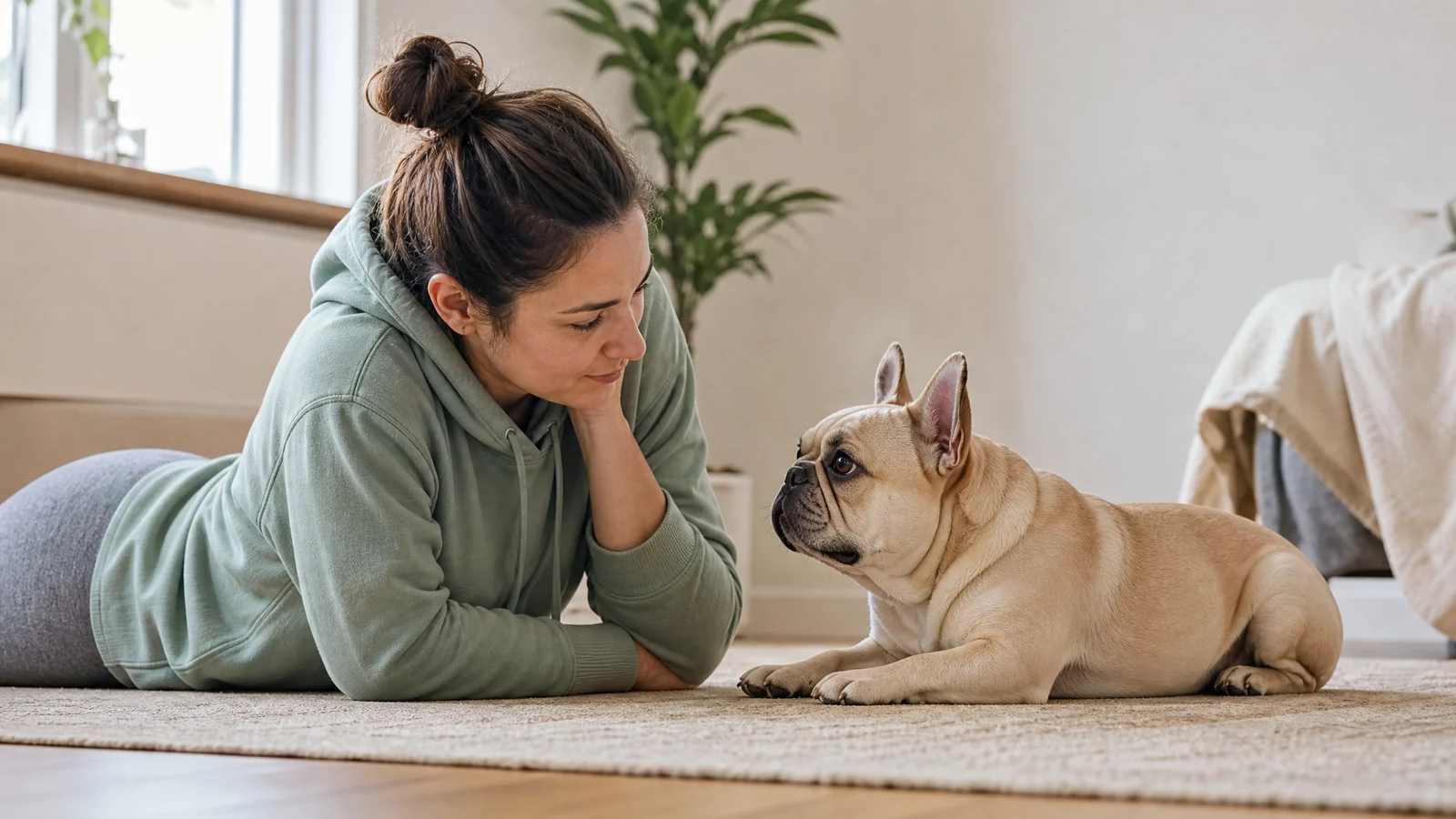
Replies and management add up to something larger than obedience, and it shows first in how well you and the dog understand each other. A cue is a word you have agreed on, a reward is a way of saying yes, and the dog's posture and appetite tell you when the answer was too much or too little. The skills list is only the visible part of a shared language.
Seen that way, a session is a conversation as much as a lesson. Tufts University lists force-free training among its tips for preventing anxiety and chronic stress in an adult dog, and says training "opens communication between a person and a dog" and is "not just about getting skills."
For a household, the practical side is small. Watch what the dog does with each reward, notice what they ignore, and let that change the next thing you offer. A dog who keeps leaving a treat on the floor is telling you something about the treat, the place or the moment, and you lose nothing by listening.
The Households Where This Work Fits a French Bulldog
Everything above takes someone who is there to answer, so the practical question is who will be around when the pranks happen. Long stretches when nobody is home can make the work harder, and our French Bulldog alone-time guide covers that side.
Where the house is empty for part of the day, management carries more of the load and the rewarded replies carry less, so the plan leans on what you arrange before you leave.
 Training basicsHow to Teach a French Bulldog to Focus on You
 Training basicsHow to Choose a French Bulldog Trainer
 Puppy trainingFrench Bulldog at 6 to 12 Months: Adolescence Begins