 Frenchie
Coming when called needs three things in place before it needs any skill from the dog: a word, a place and a prize. Settle those first and the rest is repetition. Skip them and the dog is left guessing, which looks a lot like ignoring you.
The word is short and used for nothing else. The place is a closed room or secure yard where little competes for attention. The prize is something the dog truly values, kept for this lesson. Everything here teaches coming to you, so bringing back a toy is a separate skill.
Follow along and you'll get a Frenchie who turns toward you at the word, a prize worth turning for, and a way to raise the difficulty without losing either. Each section can be practiced on its own before the next one begins.
Setting Up French Bulldog Recall Lessons at Home
Pick one word, such as "come" or "here," and have everyone in the home use it the same way. Start in a closed room or a secure yard with a dog who is relaxed and little else going on. Keep a few treats within reach of everyone who will call, and let one person run each session from start to finish. Our complete French Bulldog training guide covers general session setup, so this page stays with the call itself.
Battersea Dogs & Cats Home says to begin in a secure area in the house or garden, where the dog is comfortable and doesn't have too many distractions. It adds that the reward should be something the dog really wants and something special that they don't get all the time, or ideally that you only use for recall.
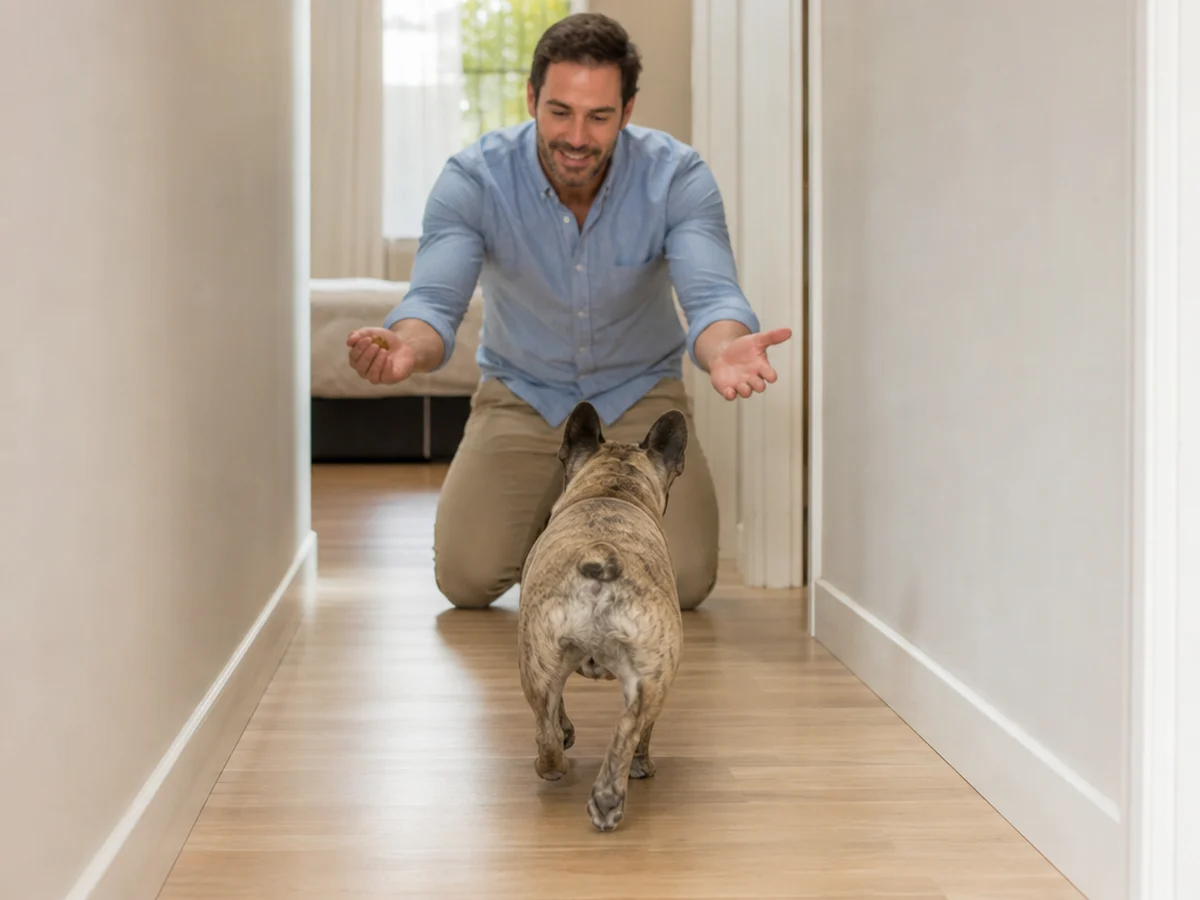
When the dog arrives, hand the treat over low, right where they stopped, then release them back to whatever they were doing. Close distances come first, a few steps across the room, so that every call ends in a payment.
Best Friends Animal Society says to say "come" only once, with great enthusiasm. If the dog does not come within a few seconds, don't repeat the cue: wait until they arrive, reward, and start again. It also notes that "come" is often used to interrupt what a dog thinks is fun, so call in a cheerful voice and reward generously.
Treat Hand-Offs, Slow Returns and a Changed Dog in Recall Practice
Each question here concerns the moment between the call and the payment, because that gap shows a Frenchie what the word is worth. The last one steps outside it, to a dog whose answer has changed.
What if they snatch the treat and dart off?
A snatch-and-dart means the payment ended before the arrival did. Deliver the treat low and close to your own body, rest a hand lightly on the harness while they eat, then give a release cue so leaving becomes part of the routine. Next time, call from a shorter distance.
Does a slow, wandering return still count?
Yes, if they end up at you. Pay the arrival whatever the route, then shorten the next call so the trip is brief. Chasing after the dog, or repeating the word, only adds noise.
What if they used to come and now don't?
A Frenchie who answered reliably last month and now doesn't deserves a different response from one who never did. PetMD says to schedule a trip to your veterinarian if your formerly attentive dog starts ignoring you, and that it might be that your dog simply can't hear you calling, not because they are choosing to ignore the cue.
Raising French Bulldog Recall One Notch at a Time
Change one thing per step: a new room, then a person standing in it, then a different floor, then a sound from outside. Keep your distance short while the other piece changes, and clip a secure line to the harness whenever the space is not fully enclosed.
Dogs Trust says that if a dog finds responding hard because of distractions, you might need to use something extra tempting in that location, such as boiled chicken, a game or a toy. It also says that when a dog runs straight over as soon as you call them, rewarding this with an active and energetic game is a wonderful prize.
Some moments are better left alone for now, because a call that cannot be paid for teaches the dog nothing. Hold the cue back when:
- the dog is chewing something they guard
- you do not have the treat in reach
- a door, a wall or a loud noise sits between the two of you
- you are frustrated or in a hurry
Routine vet visits are a good moment to mention it if your Frenchie seems to respond to you differently than before. If practice stalls and you wonder about stubbornness, our Frenchie trainability guide takes that up, and daily play amounts live in our French Bulldog exercise guide.
Why the Line and Gate Stay On During Recall Practice
Practice never replaces the physical setup. The line, the fence, the gate and the harness stay in place at every step, however well the last session went.
Harness fit and walking manners belong to our French Bulldog leash training page, so check the gear there before you add distance or distractions. If the dog pulls toward a gate or a door while you call, fix that first and return to the cue once the setup is calm.
Keeping the French Bulldog Recall Word Worth Answering
The word keeps its meaning only if it never signals the end of something good or the start of something unwelcome. Do not use it to call the dog away from a game they are enjoying, or toward a bath, a nail trim, the crate or the end of time in the yard.
In those moments, walk over and collect the dog yourself. The recall word stays tied to its special reward, so every time the dog hears it, something good is still waiting.
 Training basicsIs a French Bulldog the Right Dog for You? What Training Takes
 Training basicsHow to Teach a French Bulldog to Focus on You
 Training basicsHow to Choose a French Bulldog Trainer