 Frenchie

Your French Bulldog puppy is ready to learn from the first day in your home, and breeders send puppies off at about 12 weeks. What owners really need to know is what to expect at eight weeks, at six months and at two years, because this breed follows a wide timeline.
Owners report house training finishing anywhere from about 4 months to 2 years, biting that fades by 8 months or lingers as playful mouthing past a year, and bodies that keep filling out long after the first birthday. That spread matters because Frenchies are creatures of habit. What a puppy learns early tends to stay, so a rule taught right once beats a rule changed later.
Here we follow French Bulldog puppy training stage by stage, from the first weeks at home through the approach to age two. This article looks at the puppy years month by month and answers the questions owners ask most, so read on to learn how to build a steady routine for a new puppy, what teething does to focus and chewing, how to hold your course through adolescence, and what maturity looks like in a dog nearing two.
First Weeks With Your Puppy
A French Bulldog Club of America board member describes Frenchies as ritualistic, which is why the first weeks are about routine rather than tricks. A puppy who finds that waking, outings, meals, play and naps arrive in the same order starts to predict what comes next, and prediction makes learning calm.
Set a schedule and stick to it. Because puppies leave the breeder at about 12 weeks, part of this stage happens before you meet them, so ask what each pup has already met, including other pets and children.
Setting Up the Routine
Decide where the puppy sleeps before the first night, because that choice is hard to reverse. If you let a puppy into your bed, plan on sharing it with an adult dog for life. If you want them in their own bed, teach that from the beginning.
Many owners say nights settle faster when the puppy can see, hear or smell them: the crate beside the bed, a worn shirt inside, or a warm water bottle wrapped in a T-shirt. Settling time runs from about a week to months, so read crying as a question about distance rather than stubbornness. A minority move the crate a little farther from the bedroom each week instead.
A crate-trained puppy is easier to housebreak, because dogs treat a crate as a den and a safe haven. Most workable days follow a loop of crate, play, meal, outing, nap. Young puppies sleep a lot and are active in short spurts, so hold training to a few minutes right after play, when they are ready to settle.
Many owners are frightened by fast breathing during a puppy's sleep, sometimes on the very first night. The vets they asked called it dreaming or normal puppy REM sleep, and it stopped when the puppy woke. How long it lasted ranged from one night to well past puppyhood. Raise it at a regular vet visit, and call sooner if breathing looks labored while awake.
Name, Handling and Mouth
Begin with the name. Say it once, and when your puppy glances at you, mark it with a marker word like yes and give a treat. Add handling next. Many Frenchies dislike nail trims and grooming, and owners who touched paws daily from eight weeks, even with pretend clips, found it much easier later. Food is the usual motivator here, so small treats go a long way.
Mouthing has causes, and the cause tells you what to do. Puppies mouth to explore, in play, while teething, and more when over-stimulated, tired or struggling to cope. So when mouthing spikes, check for tiredness before assuming bad manners. Offer a chew, pause the game calmly, and let the puppy nap.
Puppy Foundations Through Month Four
By now your puppy knows the house and the rhythm of the day, which makes this the stretch for building real skills. It is also the tail end of the socialization window, and the weeks after homecoming count more than they seem to.
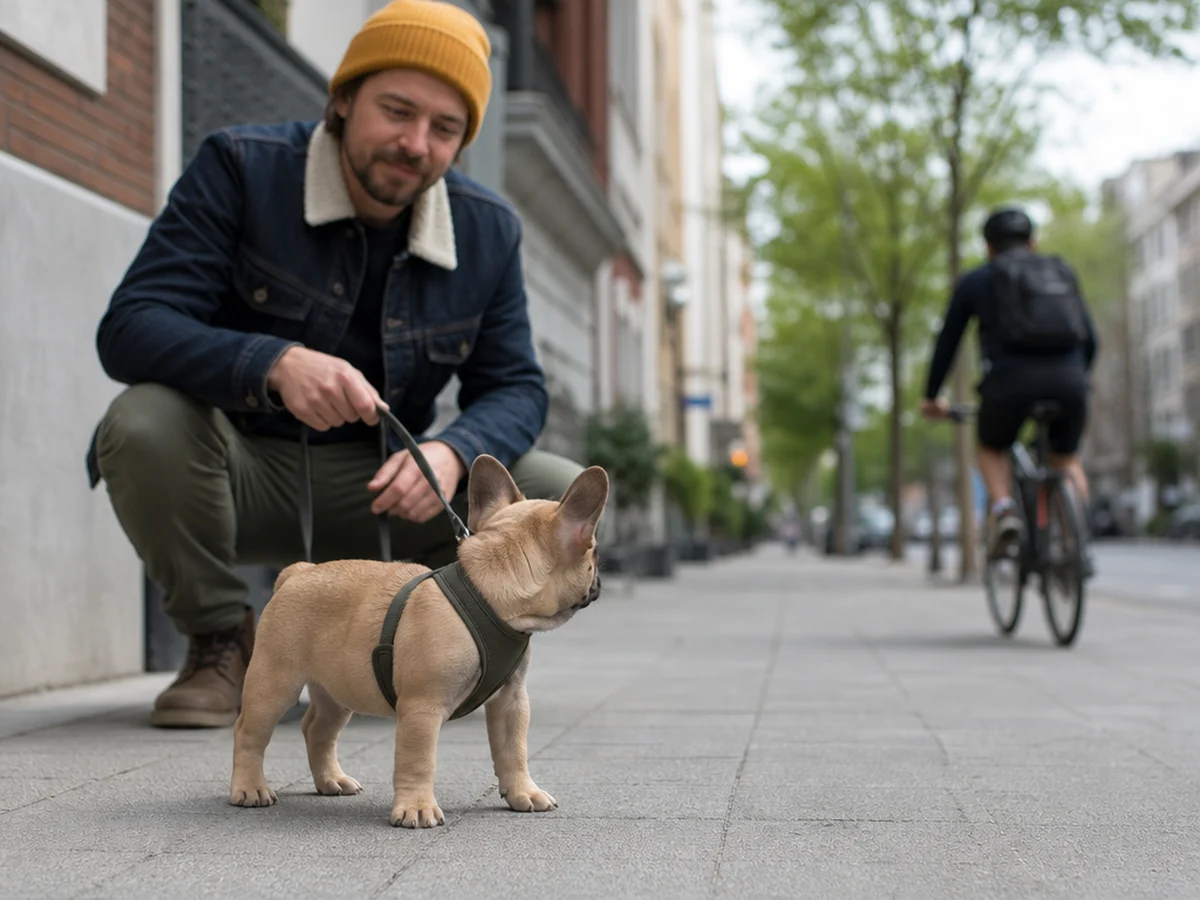
Socialization Within the Window
Veterinary behaviorists describe the first three months as the most important period, when sociability outweighs fear. Before vaccinations are complete, many owners keep puppies home, carry them outside, and use the time to get them comfortable in a collar and harness. Start classes when your vet says immunity is adequate. That date is the vet's call.
Aim for confidence as well as friendliness, since the international breed standard disqualifies both an aggressive and an overly shy dog. The breed's even temperament is not automatic. It comes from good breeding plus socialization and training by you. Let the puppy watch new things from a distance and pair them with treats.
If you live in a city, add crowds, elevators, loud noises and busy stores. A city puppy can settle into urban noise and elevators within a month of steady exposure. On hot days, move practice indoors to air-conditioned places such as a garden center or home-improvement store, since Frenchies do best in moderate temperatures.
Skills Worth Building
These make a sensible set for this stage:
- Sit, down and a hand target, taught in a few quiet minutes at a time, because short sessions keep a distractible puppy successful.
- Come, practiced indoors first with the best treats, so the word always predicts something good.
- Calm wearing of a collar or harness, which makes the first real walks smoother.
- Brief daily time alone. Short, calm absences that end with a reward, started early, help a puppy learn that being left is nothing to worry about and set them up to cope better later.
Honest House Training Expectations
Owners give ages from about 3 to 4 months up to 2 years for reliable habits, and several who trained other breeds say their Frenchie took far longer. Slow learners often have months of accidents, then a day when it simply clicks. Common advice treats accidents after four or five months as stubbornness. In this breed that reading is usually wrong, so keep the routine, keep rewarding outdoor success, and skip the comparisons.
Puppy Teething and Training Months
Somewhere near 4 months, a puppy who seemed to be getting it starts chewing everything and listening less. Teething explains it. Dogs have 28 baby teeth and 42 adult teeth, and permanent teeth arrive from about 4 to 5 months, with all present by 7 months. Relief comes from chewing on everything, and a sore mouth competes with your cues. We have trained Frenchies for many years, and the sessions that hold up here are brief and end on an easy win.
Owners place the worst biting at 4 to 6 months. They see it ease anywhere from 8 months to almost a year, and some credit a month of consistent redirecting while others say nothing helped until the dog grew out of it. Owners of dogs aged 1.5 to 2 years often report that mouthing of hands and feet continues, playful rather than hard. So aim for a soft, manageable mouth rather than a deadline.
Choose chews with the breed's jaws in mind:
- Pick indestructible toys, because bulldog jaws destroy soft and stuffed toys in seconds.
- Skip rawhide-type chews, which the breed club says can soften and lodge in a Frenchie's throat.
- Some owners report success with real-wood chews, so ask your vet about anything hard.
- Play tug if you like, since it suits the breed's strong hold. Teach a drop it traded for a treat so the game has a clear end.
Puppy-proof as well. Owners describe puppies eating cardboard, shoes, plants and small rocks, so management does half the work while training catches up.
Teenage French Bulldog Training
Adolescence is the least tidy stage, and knowing the cause helps. Adolescence can begin as early as six months or as late as a year, and it may run until 18 months to two years, driven by big hormonal changes and a reorganizing brain. A teenager is less refusing on purpose than working with a brain under construction. That is why skills solid at 5 months can look shaky now.
Why Training Seems to Slip
In Frenchies, expect changes in activity and temperament at 6 to 8 months, when hormones kick in. Watch for them rather than assuming training has failed. Go back to rewarding often, practice in easy places first, and add distractions bit by bit. If a cue fails, make the task easier instead of repeating it louder. The same window suits more advanced training and puppy obedience, since the dog is more developed.
Common Setbacks
Owners describe a handful of bumps between about 6 months and a year:
- A barking phase, which usually calls for more rewarded quiet and more outlets, not a new rule.
- Separation anxiety at around 10 months, which goes back to short, calm departures.
- A potty regression around 10 months, which is worth a vet check before blaming training.
- Sock stealing around 7 months and a bit of attitude around one. Trade for treats and stay cheerful.
- Females may be clingier or have urinary accidents, and males may mark or hump more, so adjust management rather than expectations.
Joints are still developing, so keep early training low-impact. Strenuous running and jumping should wait until at least eight months and up to a year, and your vet decides the exact timing. Owners say Frenchies show little fear of heights and will leap from furniture, so manage the setting.
Spay and neuter timing is a discussion for your breeder and vet, not a training decision. Breed club material mentions university studies recommending 8 to 10 months, after puberty, for some health benefits.
This is general information, not medical advice. Questions about surgery timing, regressions or breathing belong with your veterinarian.
When There Is Another Dog
In multi-dog homes, some teenagers start stealing toys or food and bickering, so manage meals and toys. Owners report a range with an older Frenchie, from months of grumpiness before the pair became inseparable, to a firm bond by the puppy's 16 months, to an older male who nipped. Frenchies also play roughly, with shoulder barges and full contact. Pause the game if one dog is getting overwhelmed.
French Bulldog Maturity by Two Years
Nobody can hand you one age for a finished Frenchie, and the owner reports show why. Size, shape and manners each arrive on their own schedule, so the last stage of this timeline is less about a deadline and more about knowing what to look for in your own dog.
Growth Keeps Going
Many owners say their dog was still gaining after the first birthday, with adult size arriving anywhere from about 15 months to about 3 years. The head and body often take 2 or 3 years to look in proportion.
Reported adult weights run from 12 lb to 49 lb, even among littermates. Puppies also look chunkier than they are, and some owners credit bloodlines for earlier or later maturity. A smaller or slower dog may still be asked if they are a puppy. Judge your own dog, not the calendar.
Training in the Second Year
By the second year, many dogs are steadier, but habits you stop practicing can slip. Proof sit, down, stay and recall in the yard, on walks and in calm new places. Fade treats gradually by rewarding some repetitions and not others, and keep real rewards for the hardest tasks. Playful mouthing of hands may remain, so keep the redirect habit.
Some owners report changes that surprise them after puppyhood, including health issues appearing around age two. Keep regular vet visits on the calendar and watch weight, heat and joints. Short walks, sniffing time and indoor games keep a mature Frenchie fit without overheating.
Next Puppy Training Questions
By two years, owners usually have the same few questions. How long will house training really take? Often longer than tidy schedules promise, and the steps are laid out in French Bulldog potty training steps. How do you handle nights and time alone? Crates, sizing and building independence are covered in French Bulldog crate training and separation. And how large will your dog get? See how big Frenchies get, since size varies widely.
Biting and manners follow the same logic as everything above: reward the behavior you want, manage the setting, and wait for the brain to catch up. For this breed, habit is the whole game. Frenchies are creatures of habit who mature slowly, so a steady routine, rules set early, short sessions and generous rewards will carry your puppy through teething, adolescence and the long fill-out to two years.
 Exercise and jobsHow Much Exercise Does a French Bulldog Need? Plus Brain Games
 Training basicsHow to Potty Train a French Bulldog Puppy
 Training basicsHow to Train a French Bulldog: The Complete Guide