 Frenchie
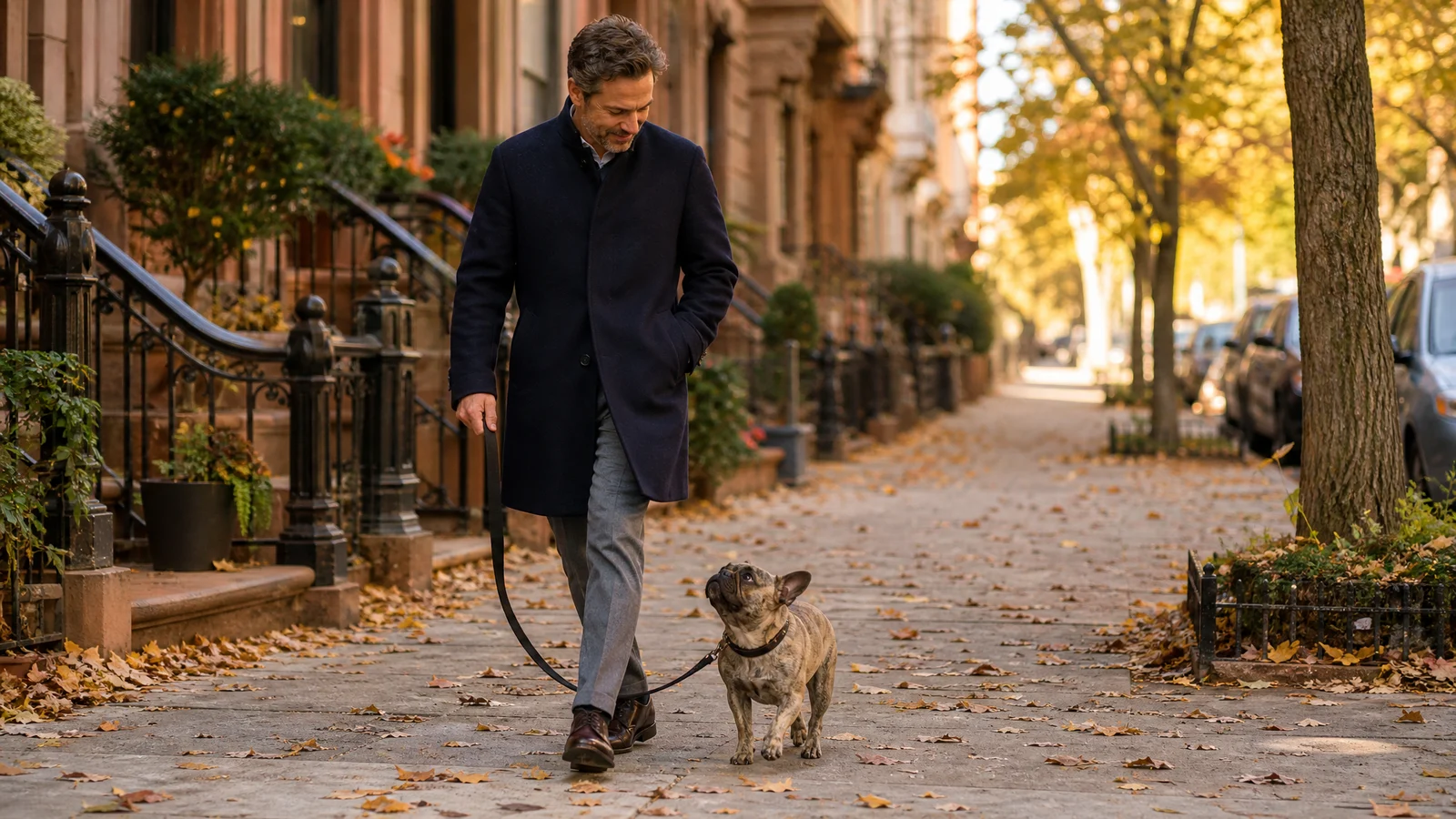
You can teach your French Bulldog to heel with a leash, a few treats and a hallway, and the lesson comes down to one idea: your leg is the best place in the house to be. A Frenchie who is paid there again and again starts choosing that spot on their own, which is what makes a short stretch of tidy walking possible when a crowded sidewalk or a doorway asks for it.
That makes this a lesson about your timing and your treats more than about effort from your dog, so you can begin today with no special gear. In this guide, we show the lesson itself and what to do when your dog slips out of position.
What Makes a French Bulldog Choose Your Leg
A dog chooses a spot for the same reason they choose anything else: it paid off the last time. For heel, that means the reward shows up at your side every time and nowhere else. American Humane's walking tips suggest rewarding calm walking with treats, praise or a favorite toy when a dog walks calmly by your side, and treats are the easiest of the three to place exactly where you want your dog to be.
Pick one side and stay with it. Switching sides asks your Frenchie to start the guess over, while a single side lets every pay build on the last one.
Teaching a French Bulldog Heel in Four Small Moves
Because the payment does the teaching, the lesson is only four small moves, and a hallway or any quiet room gives you all the space you need. Nothing here asks your Frenchie to hold a position for long, so each move is easy to try on its own before you add the next.
Set Up Your Hands
Hold the leash in the hand away from your dog and let it hang loose, so it never tugs. Close a few treats in the other hand and rest it low against your leg, where you want your dog to end up.
Walk a Step and Let Them Join
Take one slow step, then another, and let your Frenchie wander along beside you without asking for anything yet. You are only waiting for them to land in the spot, and a dog who is not asked to do anything has no reason to feel pressured.
Mark and Pay at Your Leg
The moment their shoulder lines up with your leg, say a short word such as "yes" to mark it, then deliver the treat right at your leg. Because the mark and the treat both land there, arriving at your side is what gets paid, which is why the spot starts to feel like the dog's own idea. Our complete French Bulldog training guide covers treat size.
Lengthen the Walk Between Pays
When landing at your leg is happening every time, let two steps go by before the next pay, then three. Finish a rep on a pay rather than on a wobble, and step away while your Frenchie is still interested.
Where a French Bulldog's Heel Wobbles
After a few reps, you will probably see your Frenchie end up in the same wrong place more than once. Three spots are the likeliest, and each has a first thing to try:
- Ahead of your leg. Something in front of them may be worth more than your side, so pay a beat earlier, while their shoulder is still close to your leg, and pay a little more generously.
- Behind your leg. Catching up may not have paid yet, or your steps may be longer than they can match, so shorten your steps and pay the moment they arrive beside you.
- Crossing in front of you. They may be following the treat hand across your body, so keep it low and against your leg until they stop watching it.
Try one adjustment, run a few reps and see whether the spot changes before you try another, because two changes at once make it hard to tell which one helped. A wobble that repeats is information about your setup, so a few reps with one change will show you more than a long session ever could.
When a French Bulldog Hangs Back
Hanging back is the one slip that is not always a training matter. If your Frenchie lags on every walk and also refuses to walk or seems reluctant to move at all, start with your vet, since a dog who will not follow may be uncomfortable rather than unwilling. Our French Bulldog behavior problems guide has more on what a sudden shift in behavior can mean.
Even when nothing looks wrong, mention how your dog walks at their regular vet visits, because a gradual change in gait is easy to miss at home. If your vet finds no reason for the lag, go back to the shortest stretch that works and pay each catch-up.
French Bulldog Heel Questions Worth Answering Early
A lot of heel trouble traces back to small habits on the handler's side of the leash, and these three questions are mostly about those. None of the answers needs anything beyond what is already in your hands, which is good news if a session feels stuck.
What if they jump at the treat hand?
Keep the hand closed and low, and wait. Pay only when four paws are on the floor and their shoulder is at your leg, and jumping soon stops paying. Opening your hand early to quiet them teaches the opposite.
Does heel work with a harness?
Yes, the lesson is the same with a harness on. For fit, pulling and everyday walking gear, our French Bulldog leash training guide goes into it.
Does my Frenchie have to look up at me?
No. Position is the whole lesson, and whether your dog glances up is their business. Treats at your leg tend to bring plenty of looks anyway, so there is no need to ask for them.
A Sniff Is the Best Pay for Heel
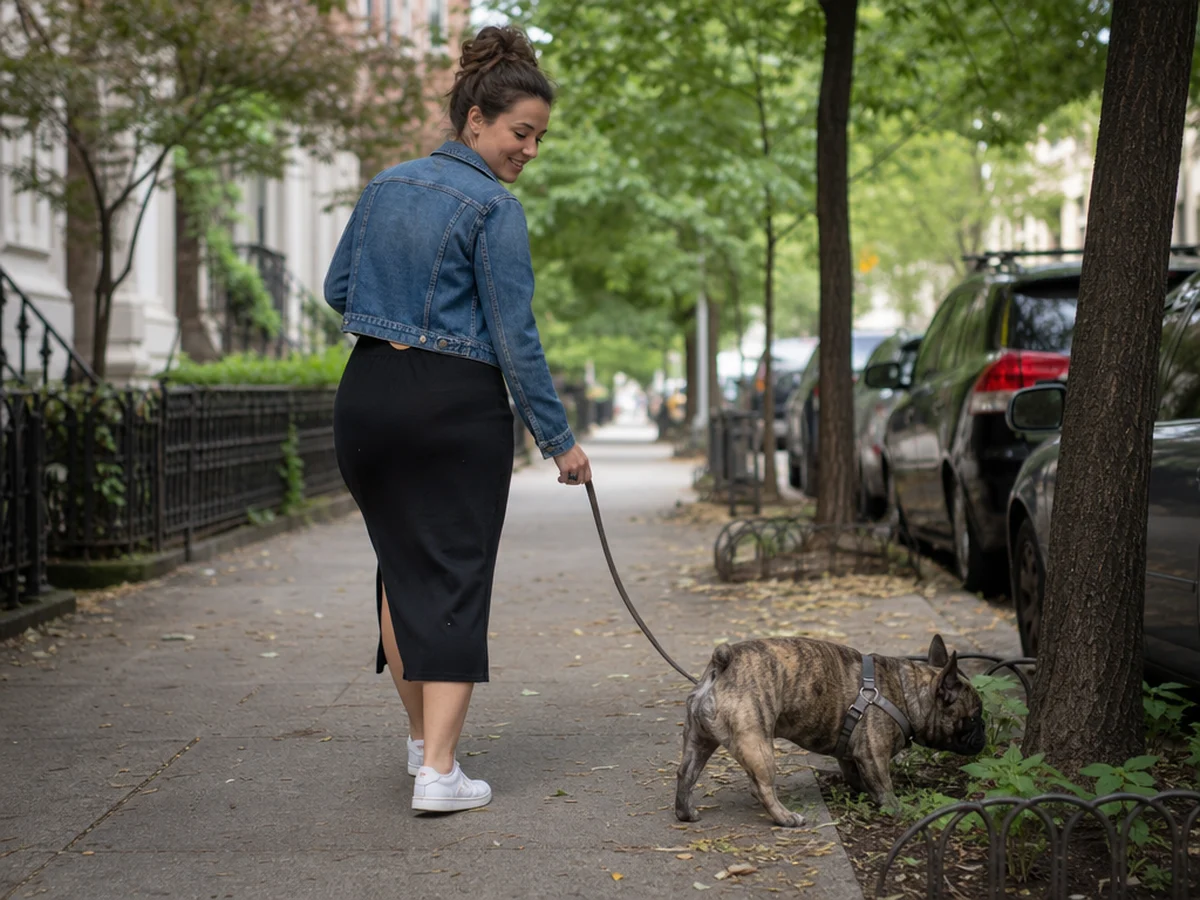
Treats get the spot learned, but sniffing is a reward your Frenchie values in a different way. Fear Free's guide to sniff walks says to teach nice walking and then add a cue for exploring, and that adding it can improve heel, because the chance to sniff around is a great reward for good behavior.
Seen that way, a few tidy steps at your leg are what a sniff costs your Frenchie, and the sniff costs you nothing. Carry it the way you carry treats: a short stretch beside you, then the nose gets its turn.
 Exercise and jobsHow to Teach a French Bulldog to Roll Over
 BehaviorFrench Bulldog at 1 Year and Up: When Do They Calm Down?
 BehaviorAre Frenchies Aggressive? French Bulldog Growling, Guarding