 Frenchie
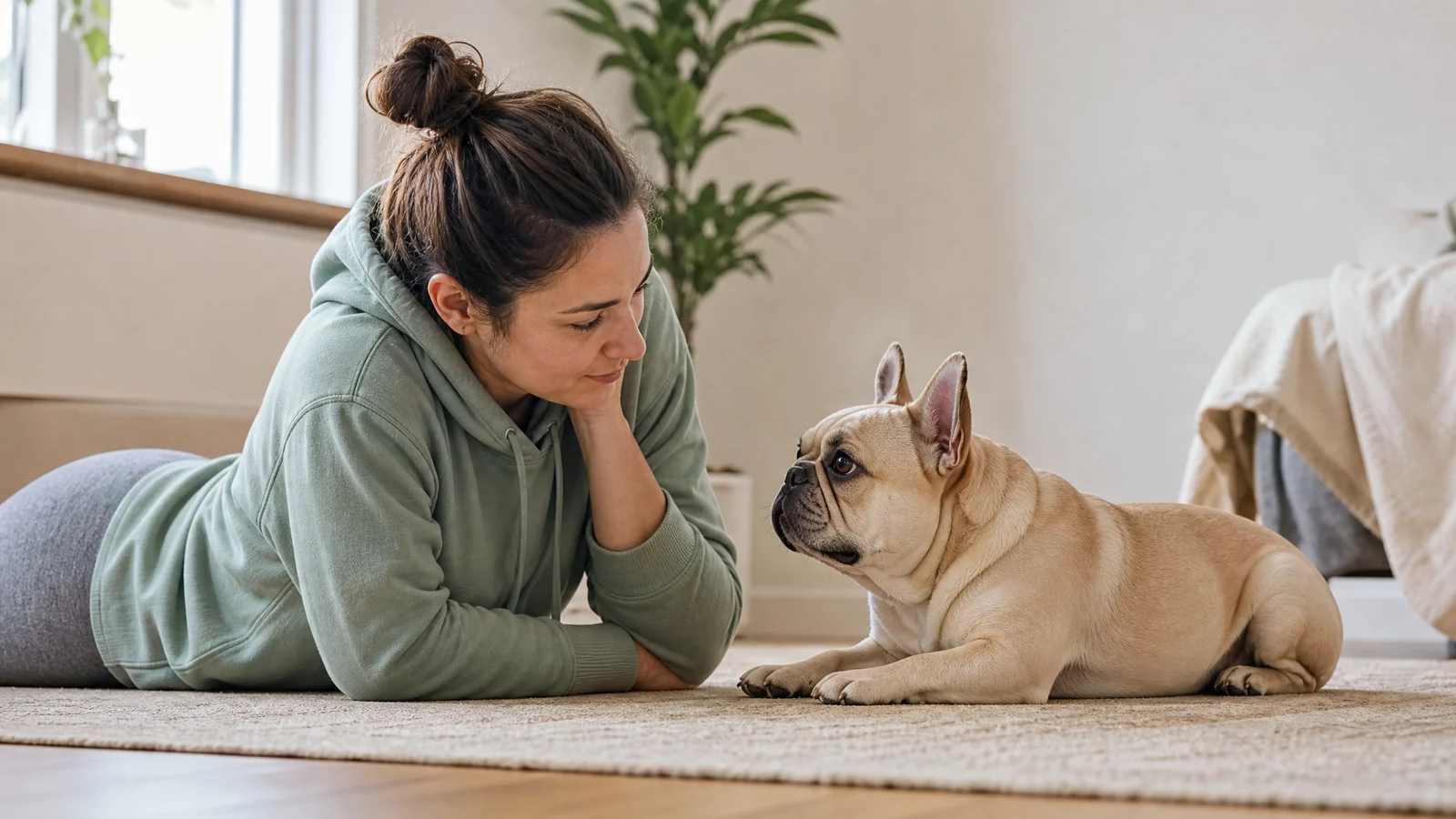
To your Frenchie, you are one interesting thing among many, and out on a busy sidewalk you are rarely the loudest. Focus training moves you up that list one small payment at a time, so that glancing your way becomes the first thing they try.
In this guide you will find a quiet-room start, a walk-ready version of the same habit, and answers to a few common questions. All you need is a handful of small treats and a few quiet minutes.
The whole idea is a trade. Your French Bulldog looks at your face, you pay for it at once, and over many repeats that glance stops being a favor to you and starts being a habit.
Teaching Your French Bulldog Focus in a Quiet Room
A glance only becomes a habit if it keeps paying off, so begin where nothing else is competing for your dog's eyes. Sit or stand facing your Frenchie with a few small treats in one hand, held low and still. Say nothing and wait. The moment their eyes reach your face, hand over a treat, then wait again.
That setup lines up with advice from AAHA, which tells owners to train in "a quiet, calm, and distraction-free area" because it helps a dog "focus on the task at hand." Think of a room with the door shut and nobody else moving around.
Three small habits decide whether those first rounds work. Each is easy to get wrong without noticing:
- Hand low and quiet. A treat hand that waves or hovers near your face becomes the thing your dog watches, so rest it near your belt and let the eyes find your face.
- Treat on arrival. Hand it over while your Frenchie is still looking, because a treat that lands a beat late pays for the glance away.
- Few words, easy face. Coaxing, chatter and leaning in turn a glance into a conversation you then have to manage, while a relaxed face lets the look stand on its own.
Run a few rounds this way and the wait for each glance should shrink, which is your sign the habit is taking hold. The Dumb Friends League Behavior Team Leader opens with a condition, "If you are new to clicker training," and then suggests starting with "hand targeting, eye contact/capturing attention, and recall behaviors." For that beginner, paying glances is a sound early skill.
French Bulldog Focus Before the Distraction Arrives
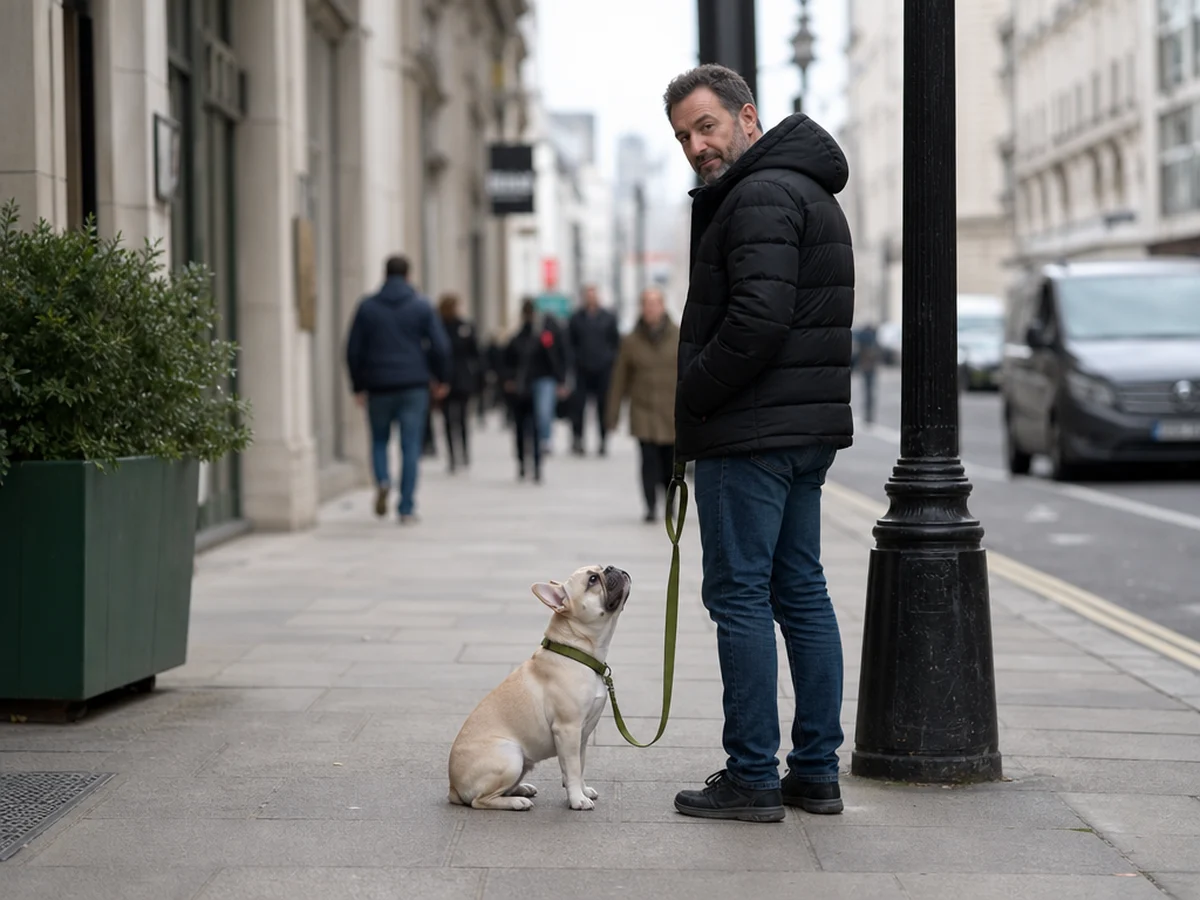
A shorter wait in a quiet room is good news, but the habit only earns its keep out where the smells and sounds are. Once the glances come dependably, pick a short word such as "watch" and say it as your dog's eyes arrive, so the word and the glance become the same thing.
The American Kennel Club frames the payoff for walks this way: be proactive, and "grab your dog's attention before they see the distraction, and hopefully they won't even notice it at all." That timing is the whole trick, because a dog who has already locked onto something is a much harder audience than one who is still looking at you.
So scan ahead, and ask for the look while the thing is still far off or out of sight. Pay generously when it comes, since you are teaching your Frenchie that checking in beats checking out the neighborhood.
If pulling is your main trouble, our French Bulldog leash guide covers gear and loose-leash walking, and our French Bulldog socializing guide covers meeting other dogs and strangers. Regular vet visits matter here too, because a dog who is uncomfortable can find it harder to focus.
Reading Your Frenchie's Signals Early On
Practice throws off small signals that are easy to misread, and each one changes what you do in the very next round. A few common questions come up while the habit is still young.
Should I pay looks they offer unasked?
Yes, at least some of them. A glance that arrives on its own is exactly what you are building, so reward it. Away from practice, pay the quiet ones and let the rest go. If your Frenchie starts pushing for attention with noise or pawing, wait for a calm glance before the treat comes out.
How long should a look last?
A moment is plenty. Pay as soon as the eyes meet. Once glances are dependable, wait a beat longer before paying, then another, so the look stretches in tiny steps. Never ask your dog to hold it, because a fixed stare is not the goal and a quick glance that returns often is worth more.
What if their eyes drift off mid-round?
Drifting is normal, especially when a round runs long. Pause, let your Frenchie settle, and start the next round shorter or somewhere quieter. Pay the next glance that comes and end the session while it is still going well. If focus keeps fading, ask your vet whether anything physical could be getting in the way.
Will focus help with other training?
Yes. A dog who checks in with you by habit is easier to teach nearly everything else, because you have their attention before you ask. Reward-based training builds on that same trade, so each new skill starts from a dog who is already looking your way.
Paying More for Focus When the World Gets Louder
Every step from the quiet room toward the sidewalk is harder for your dog than the one before. That is worth carrying out the door, because a look in the quiet room is cheap to give and a look beside a busy street is not, and your Frenchie notices the difference.
So let the pay follow the difficulty. A plain treat is plenty at home, but when the glance comes in the middle of something exciting, make the reward a better one and hand it over right away. Your dog learns that checking in is the best-paying move available, whichever room or sidewalk they happen to be standing on.
 Training basicsHow to Choose a French Bulldog Trainer
 Puppy trainingFrench Bulldog at 6 to 12 Months: Adolescence Begins
 Training basicsFrench Bulldog Temperament: What It Means for Training