 Frenchie
Somewhere in the fourth to sixth month, a Frenchie puppy often stops treating you as the only safe place in the room. They wander off, inspect things they once ignored and take new surroundings in stride. You'll read what that shift means for new experiences, for your house rules and for the outings you plan.
What follows is general puppy development. Expect small changes first, such as longer trips away from your side and more interest in everything around the house. Confidence can grow unevenly, so a puppy who is bold in the yard may still hang back in a loud, crowded place. The useful question is what your puppy can handle today and how to set up the next step so it goes well.
Why a French Bulldog Puppy Explores Farther in These Months
At home, the change often shows up as small differences in what your puppy does when they think nobody minds. A puppy who can now cover more ground is also unwatched more often than a month ago, so the house is what needs a second look. Typical signs include:
- Following you to the kitchen and then carrying on past you into the next room.
- Staying behind to sniff a spot after you have already walked away from it.
- Looking at a visitor or a sudden sound with interest instead of ducking behind your legs.
- Trying to reach the low shelf, the bin or the edge of the table that was out of reach before.
The American Kennel Club says that starting around 12 weeks, a puppy is less fearful and is becoming more curious and independent. It adds that exposing your puppy to new things in a controlled way will help them feel confident and secure, and that with their newfound confidence and growing independence, they'll start exploring further away from your side.
Treat the wandering as something to pay for rather than something to fix. When your puppy turns around and trots back on their own, meet them with a treat and a few friendly words, then let them head off again. Returning pays better than staying away, and the puppy learns that coming back never ends the fun. For the bigger picture of what comes next, see the French Bulldog puppy training timeline.
New Experiences for a French Bulldog Puppy at 4 Months
It is easy to read a puppy's growing boldness as proof that socialization is finished. A puppy who now walks past a stranger without a second look has only shown they can handle that one stranger, on that one day, in that one place. Sounds, surfaces, hats, bicycles and unfamiliar rooms are all still new to them.
According to the Merck Veterinary Manual, dogs are most receptive to learning how to deal with new situations until about 16 to 20 weeks of age. After this age, dogs do not stop learning from exposure. They just do so at a much slower rate and perhaps in a different way. Given adequate opportunities, it adds, puppies will learn about the social and physical environments when they are ready.
In practice, each new sound, surface and kind of person is still worth a short, calm introduction. Keep the visits brief, let your puppy choose how close to go and pay for relaxed behavior. Our guide to socializing your French Bulldog covers who and what to introduce and how to handle greetings.
When a Puppy Hangs Back or Outgrows the House Rules
A confident puppy and a cautious one can live in the same body on the same afternoon. The questions below cover the cautious moments, what a house-trained, bolder puppy can be trusted with when nobody is watching, and two everyday frustrations that tend to turn up at this age.
What If My Puppy Is Still Shy?
A puppy who hangs back needs the same thing a bold one does: good experiences they can walk away from. Starting where the puppy is comfortable and moving forward slowly gets further than hurrying, and a puppy who is allowed to retreat learns that new things are not traps.
The American Veterinary Medical Association advises rewarding positive or neutral engagement with their surroundings, allowing a pet to withdraw if they seem uncomfortable and moving at a pace appropriate for the pet's personality. Your veterinarian, it adds, can provide recommendations if the socialization period has passed and/or your pet needs more help, including possible referral to an animal behavior specialist.
Do House-Trained Puppies Still Need Crates?
Being reliable about where they pee does not settle where a puppy may roam, and a bigger puppy is a more curious one. If the crate is not yet a comfortable place for your puppy, start with our French Bulldog crate training guide.
Cornell University says puppies tend to explore with their mouths, and that the growth of adolescence lets them reach places and objects they couldn't at 10 weeks old. It suggests moving tempting items to secure locations and using baby gates to limit where a puppy can roam. Even a perfectly house-trained canine teenager might not be ready to resist the urge to rip open couch cushions, so it recommends a crate when they can't be supervised.
What if my puppy ignores me outdoors?
Outside, everything smells and moves, so your voice has more to compete with. Try asking for less, from a little farther from the distractions, and pay generously when your puppy checks in with you. If it keeps happening, your veterinarian or a reward-based trainer can help you sort out whether the setting is simply too much.
Should I scold my puppy for chewing things?
Scolding rarely teaches a puppy what to chew instead, and it can make them wary of you. Trade the forbidden item for something that is fine to chew, praise the swap, and keep tempting things out of reach. Ask your vet if the chewing seems intense or comes with other changes.
Everyday Household Moments in a Frenchie Puppy's Week

Confidence comes from many small, good experiences, and plenty of them already live in your home. A vacuum running in the next room, a visitor's umbrella by the door and a delivery box on the floor are each a small new thing. Mention any worry about your puppy's confidence at regular vet visits too, and let ordinary days do the rest.
Let your puppy look and sniff at their own pace and pay for relaxed behavior with a treat. If a sound is too much, lower it or move farther away before trying again. Once your puppy is settled, a short cue session in the style of our French Bulldog training guide makes a pleasant finish.
Outings Over These Months for a French Bulldog Puppy
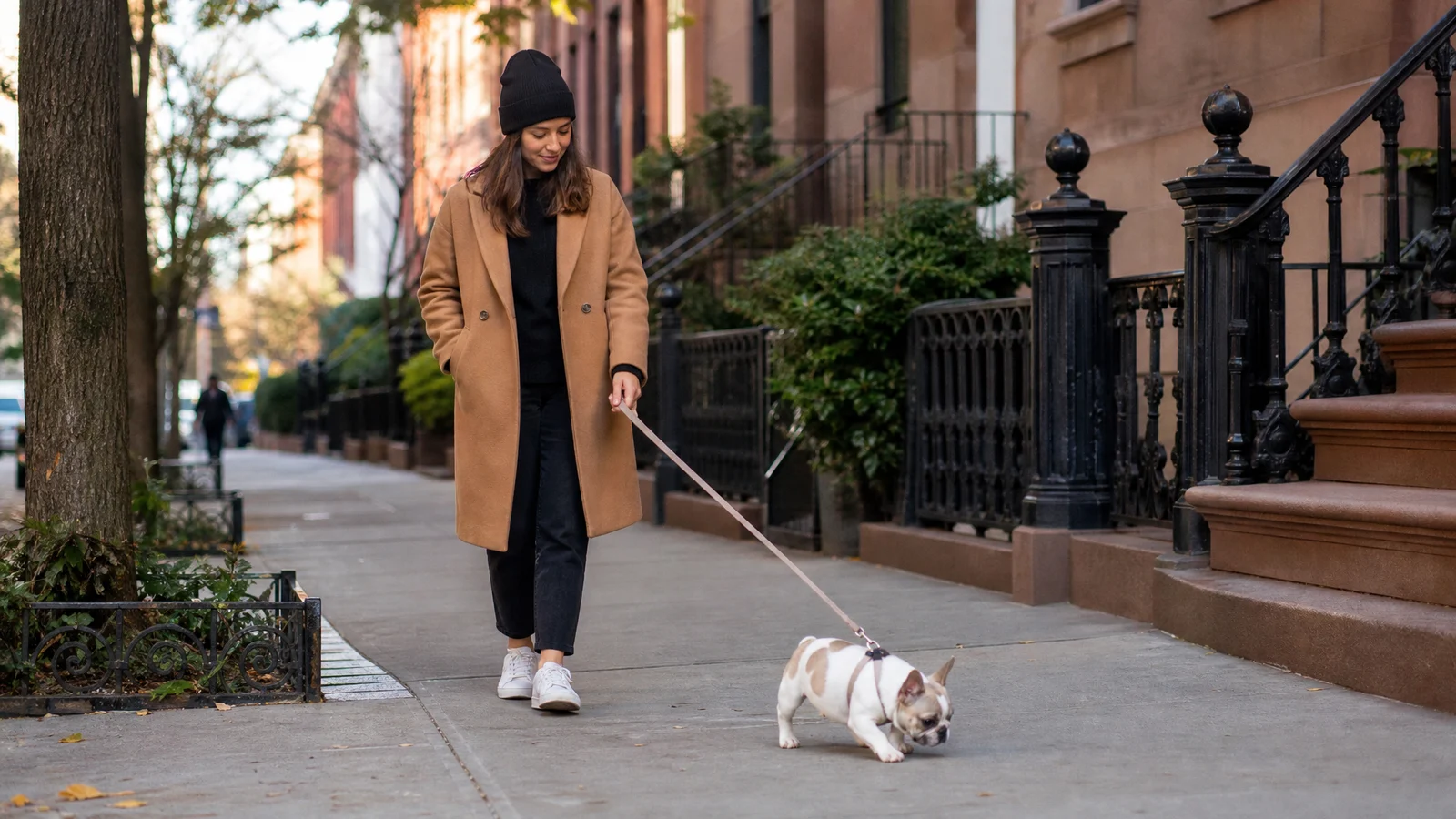
Decide on the setting before you leave the house. A good spot has room to step aside from foot traffic, a view of the busy part from a distance and an easy way out if your puppy has had enough. Bring treats your puppy loves and keep the harness and leash the same ones from outing to outing, so the equipment is one thing that never changes.
Greetings with people and dogs can stay optional. The basics of walking on a leash are in our French Bulldog leash training guide.
Your Place in a French Bulldog's Wider World
A puppy who explores farther still needs you to be easy to find. When something startles them, stay where you are, keep your voice ordinary and move without hurry. Your calm gives them a reliable base to return to, and a puppy who knows the base is dependable can afford to range a little wider the next time.
Skip the big fuss when your puppy comes back from a scare. A quick, pleasant touch and a treat tell them the trip was fine, and a calm return to whatever you were doing helps an ordinary startle stay ordinary. That is the quiet job of these months: being the steady part of a world that is getting bigger for your puppy.
 Training basicsHow to Teach a French Bulldog to Heel
 Exercise and jobsHow to Teach a French Bulldog to Roll Over
 BehaviorFrench Bulldog at 1 Year and Up: When Do They Calm Down?