 Frenchie
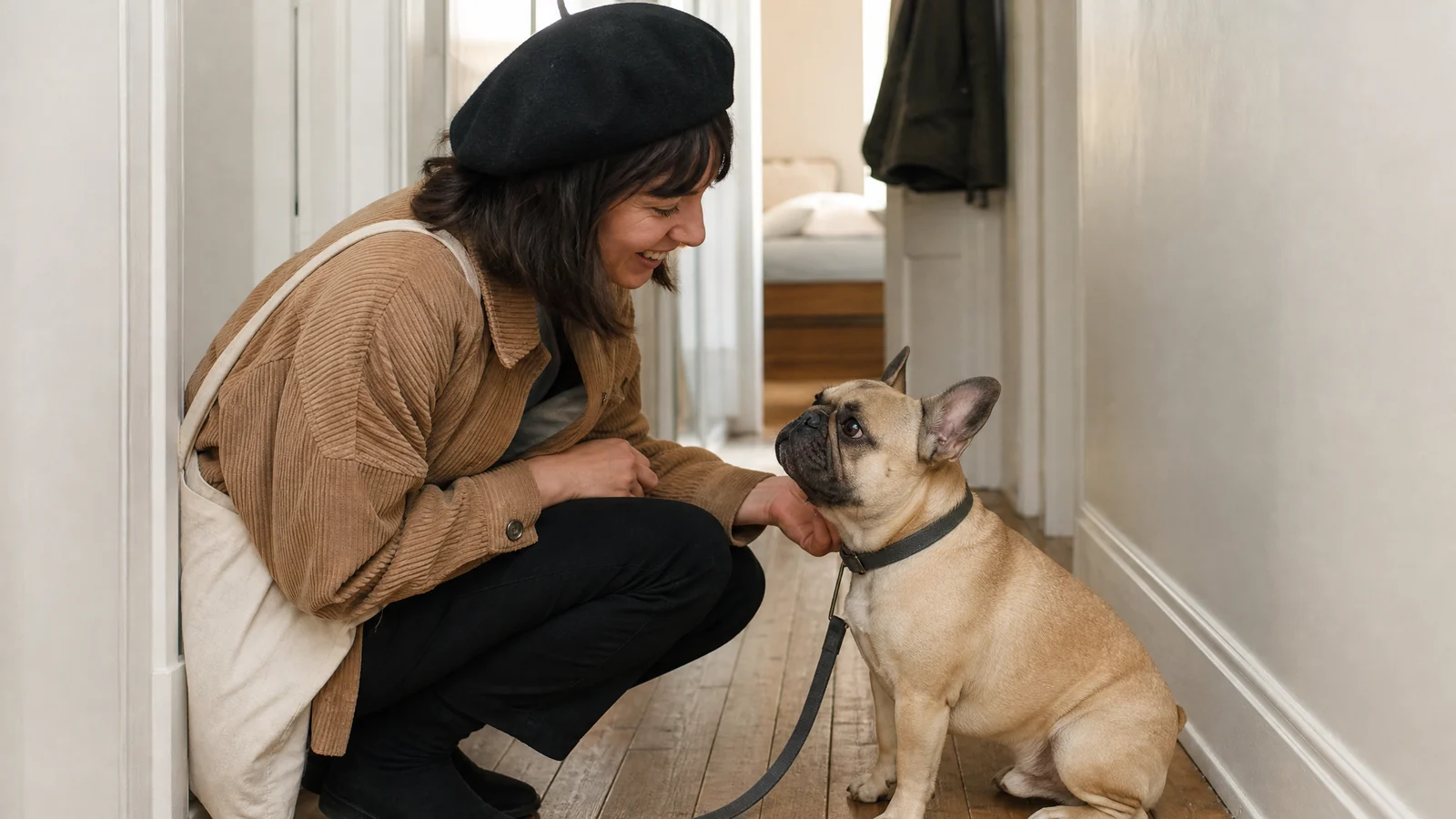
A greeting includes what the person does with their hands. When someone leans toward a French Bulldog, pulls their fingers away and then reaches down again, the dog may keep jumping to follow that moving attention. Asking for paws on the floor makes more sense when the person can bring a rewarding greeting down to the dog's level.
The aim is comfortable contact without repeated upward chasing. A Frenchie can remain friendly and enthusiastic while learning that grounded paws make people available. The lesson works best when arrivals are prepared and the human response stays easy to understand.
Below, we will arrange the entrance, reward the first useful moments and introduce touch in small pieces. We will also consider when a sit helps, how different people can participate and what to change if jumping returns during the greeting.
Arrivals That Make French Bulldog Greetings Easier
Prepare the arrival before the visitor reaches the dog. A door opening, bags swinging and several people talking create a much harder lesson than a quiet greeting inside. Arrange a comfortable separate space while the guest enters, then begin practice once coats and belongings are out of the way.
The Dogs Trust jumping guide recommends preparing visitors and reinforcing paws on the ground. Tell your helper what to do in plain terms before bringing the dog over. They should be willing to pause contact without scolding, pushing or turning the moment into a game.
- Choose a stable surface with room for the dog to move away.
- Keep rewards ready where the adult can reach them easily.
- Ask the visitor to hold bags and loose clothing out of the lesson.
- Use a secure barrier when a real arrival is too busy for practice.
A visitor who is unsteady, frightened or unable to follow instructions should not be the training helper. Offer a comfortable visit with separation instead. Your dog's progress does not depend on every person providing a greeting, and nobody needs to absorb repeated jumps to demonstrate consistency.
Keep the lesson comfortable for the dog as well. Avoid crowding around the Frenchie or blocking every route away. A dog who moves back should be allowed to pause, rather than being called into contact again until they stop trying to leave.
Grounded Paws Make Greetings Rewarding
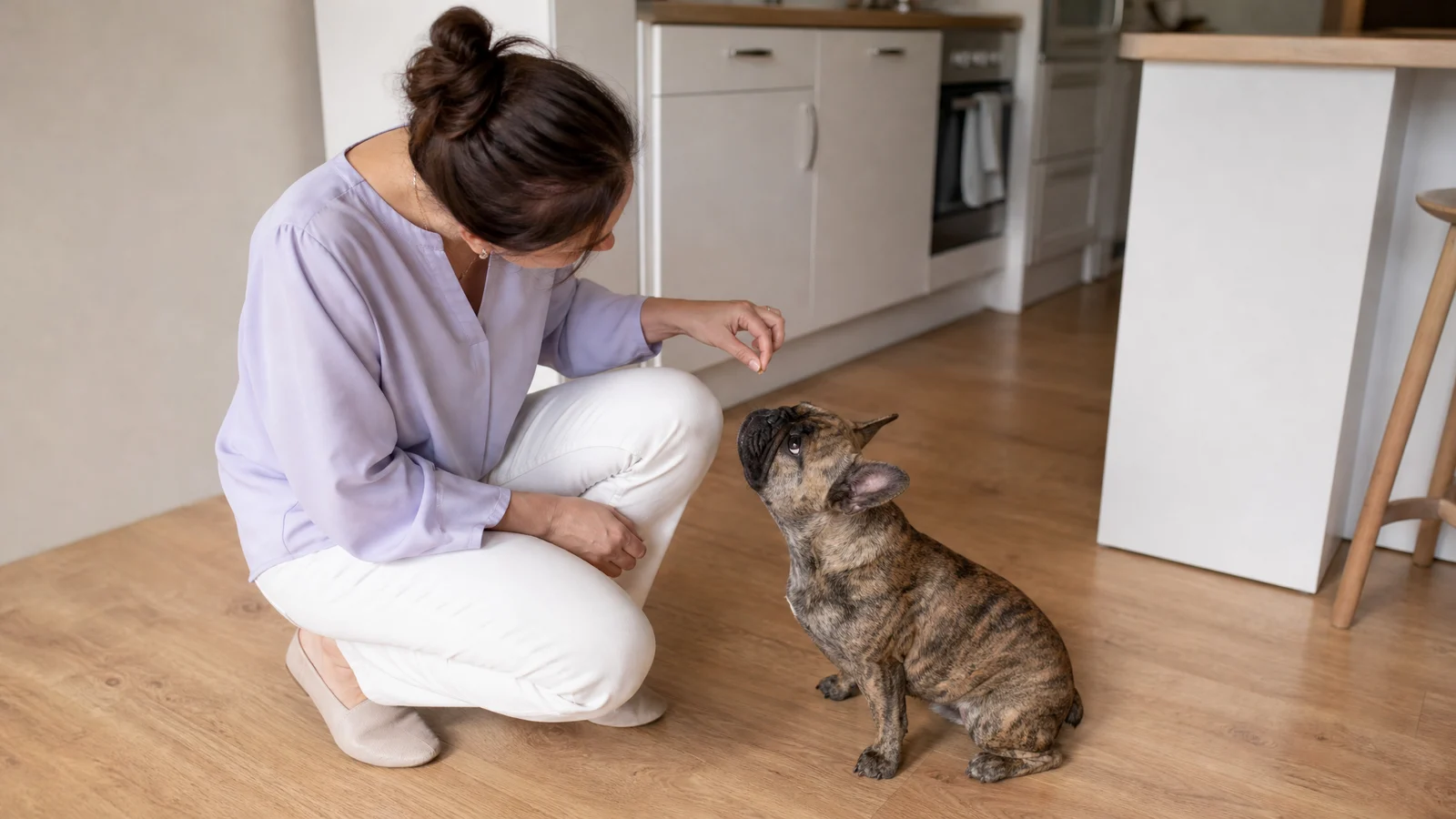
Start with a familiar adult standing quietly nearby. Notice the moment your dog has all paws on the floor before any leap begins. Mark that moment with a familiar word or click, then deliver a small reward low enough that collecting it does not require stretching upward.
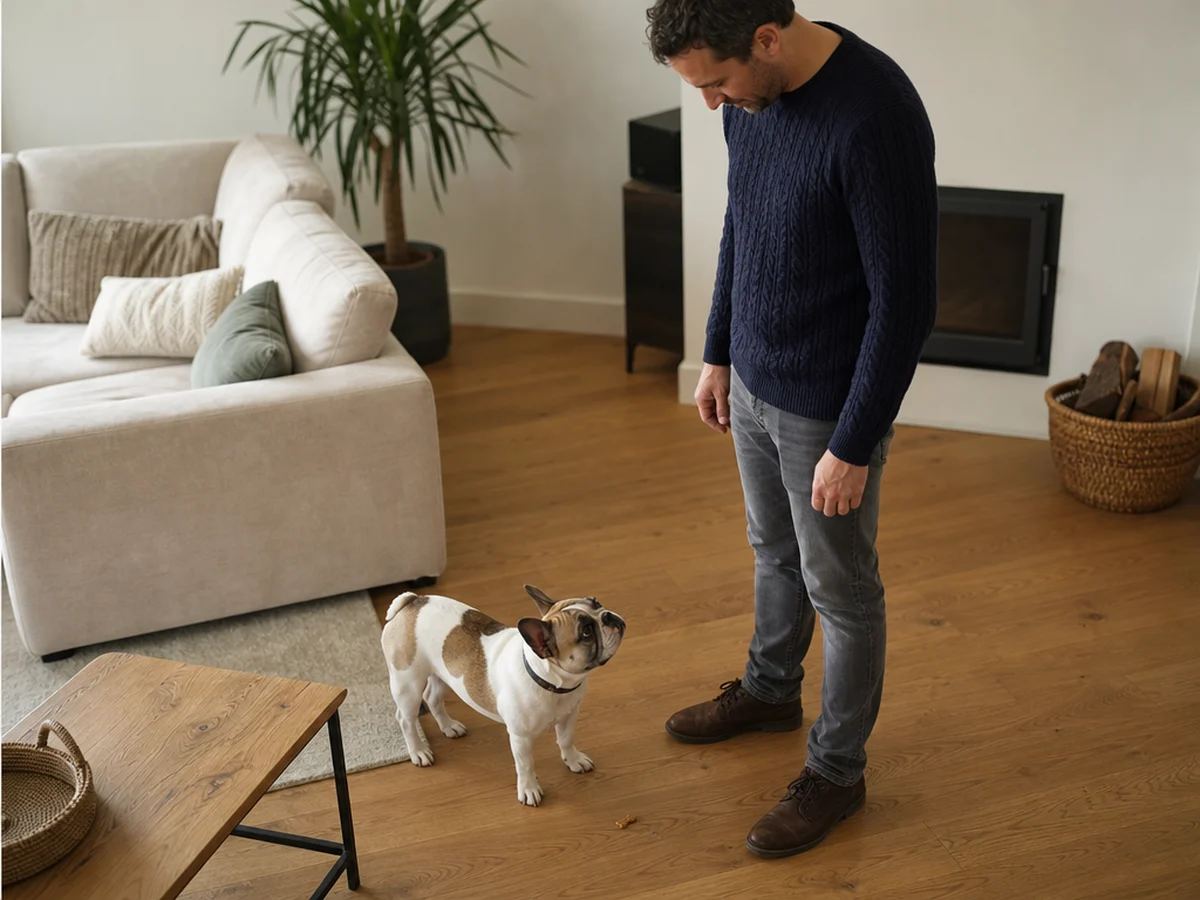
Our French Bulldog training guide explains the broader use of clear cues and rewards. Here, the useful response may initially be a brief standing pause. You can build on that simple success without requiring a long sit while a person bends toward the dog.
- Let the dog approach the quiet adult at a comfortable pace.
- Mark grounded paws before hands or voices become exciting.
- Deliver the reward close to the dog's natural head height.
- Pause, then reward another grounded moment if the dog remains comfortable.
Reward placement matters because the next movement often follows the food. Holding it above your Frenchie's head can encourage upward reaching, while dropping it awkwardly between a visitor's feet can draw the dog into a crowded position. Place or offer it where the dog can collect it with room to stand normally.
If jumping has already started, reduce the excitement and create a little space. Do not grab paws, push the chest or use a knee. Restart only when the situation is manageable, and arrange the next reward earlier. Repeatedly waiting for a jump before offering a treat can make the unwanted action part of the pattern.
Human Hands in French Bulldog Greetings
Food can make grounded paws worthwhile, but the greeting may still fall apart when a hand approaches. Teach that part deliberately. Keep the helper's movements small enough that your dog can remain comfortable, and let contact stop before excitement turns it into another reaching game.
A Hand Approaches Without Becoming a Target
Begin with the helper's hands still and close to their own body. Reward the dog for standing nearby, then have the helper lower one hand a little. If paws remain grounded, mark and reward. Return the hand to rest rather than continuing all the way to a stroke in one attempt.
Battersea's clicker basics explain how a marker makes the rewarded action clearer. Use that timing to identify grounded paws while the hand moves, not merely after the hand has vanished and the dog has stopped chasing it.
Adjust the person's posture too. A seated adult may be easier for one dog, while another becomes more excited when a face is closer. Choose a position that gives the helper balance and the dog space. There is no need to crouch over the Frenchie to make a greeting count.
Brief Touch With an Easy Pause
When a small hand movement is ordinary, offer brief gentle contact where the dog appears comfortable. Stop and observe what happens next. A dog who stays nearby with a loose body may welcome another short touch, while turning away or stepping back means the pause should continue.
Keep hands quiet during the pause. Waving fingers above the dog or repeatedly withdrawing them just out of reach can restart the leap. The adult can look away slightly or rest their hands while the handler rewards a comfortable standing moment, then offer contact again if the dog wants it.
If the greeting becomes mouthy, end the contact and make the next attempt less exciting. Our guide to French Bulldog puppy biting addresses hands and clothing in more detail. A toy may help some interactions, but it should not become a way to keep touching a dog who needs a break.
A Sit Can Help With Greetings
Sitting is one possible greeting behavior, not the only acceptable posture. A relaxed stand with grounded paws may be easier to maintain while someone offers brief contact. Choose the response your dog understands and can perform comfortably, then reward it consistently.
| Greeting option | When it may help | What to watch |
|---|---|---|
| Comfortable stand | The dog can remain grounded during a short approach | Hands should not lure the head upward into a leap |
| Familiar sit | The dog already offers it easily around the helper | Keep the wait brief and release before excitement builds |
| A pause away from contact | The dog or visitor needs more room | Make the pause restful rather than another demanding lesson |
Practice a sit away from greetings before asking for it during an arrival. Give the cue once when success is likely, reward the response and allow movement again. Repeating the word while a visitor keeps reaching toward the dog adds noise without teaching a clearer action.
If sitting suddenly looks uncomfortable or your Frenchie avoids a previously easy posture, discuss it with your veterinarian. Regular veterinary visits are also a useful time to review comfort and activity. Training should accommodate the individual dog's movement rather than force a posture to satisfy a greeting rule.
Greetings Across Family and Visitors
People who live with the dog can rehearse the same quiet response during ordinary reunions. Keep those lessons brief and separate from the busiest part of arriving home. Put belongings away and meet practical needs before expecting the dog to concentrate on a carefully timed greeting.
The RSPCA training advice supports short, rewarding practice. Use a familiar person's successful version as the starting point for another adult. Keep the location and reward placement similar while the helper changes, then introduce more natural variation as the dog becomes comfortable.
Visitors need only a simple instruction, such as keeping hands still while you reward the first grounded pause. You can handle the food and timing yourself if that is easier. A guest does not need to learn an entire training system to avoid accidentally encouraging jumping.
Limit greetings with children to carefully supervised situations that are comfortable for everyone. Adults should control the arrangement and offer separation whenever needed. A child running away or lifting hands high may invite pursuit, so teaching the dog and guiding the child's actions belong in the same plan.
Rehearse standing up before the guest needs to leave. The dog may interpret that movement as a fresh invitation even after a quiet seated visit. Reward grounded paws during a small rise, then let the guest sit again while the lesson is still easy.
The Moment Jumping Returns During Greetings
Look for the change immediately before the leap. Perhaps the visitor starts talking excitedly, strokes for longer or stands up after being seated. That detail tells you which part needs an easier lesson. It does not mean the dog has forgotten every earlier success.
- Shorten contact if jumping begins near the end of a stroke.
- Lower reward delivery if the dog keeps reaching upward.
- Practice a smaller hand movement if reaching starts the leap.
- Pause the greeting when the dog cannot settle between attempts.
Check whether the dog has had enough interaction for that visit. More repetitions are not always the answer, especially when each one becomes faster and less controlled. A quiet break behind a familiar barrier can preserve the rest of the visit while avoiding further rehearsal of jumping.
Seek qualified reward-based help if greetings include stiffening, growling, snapping or fear that makes safe practice difficult. Those responses need their own assessment. Do not keep approaching to test whether the dog will tolerate contact, and do not punish a warning in order to obtain a quieter greeting.
Tell the helper which movement will change next time. Naming a shorter stroke or a still hand gives them an adjustment they can actually make.
Comfortable French Bulldog Greetings Over Time
Judge progress by the whole exchange. Your Frenchie approaches with grounded paws, the person offers manageable attention and both can pause without another leap. That is a more useful result than a dog holding a tense sit while hands continue moving just beyond reach.
Keep rewarding the parts you want to see again, especially with a new person or after a busy arrival. As the lesson becomes familiar, greetings can feel more ordinary. The human half of the interaction remains simple: bring attention within comfortable reach and let the dog stay on the floor to enjoy it.
 BehaviorFrench Bulldog Chewing: Safe Outlets for Those Strong Jaws
 Training basicsAre French Bulldogs Good With Kids?
 Training basicsHow to Teach a French Bulldog to Sit