 Frenchie
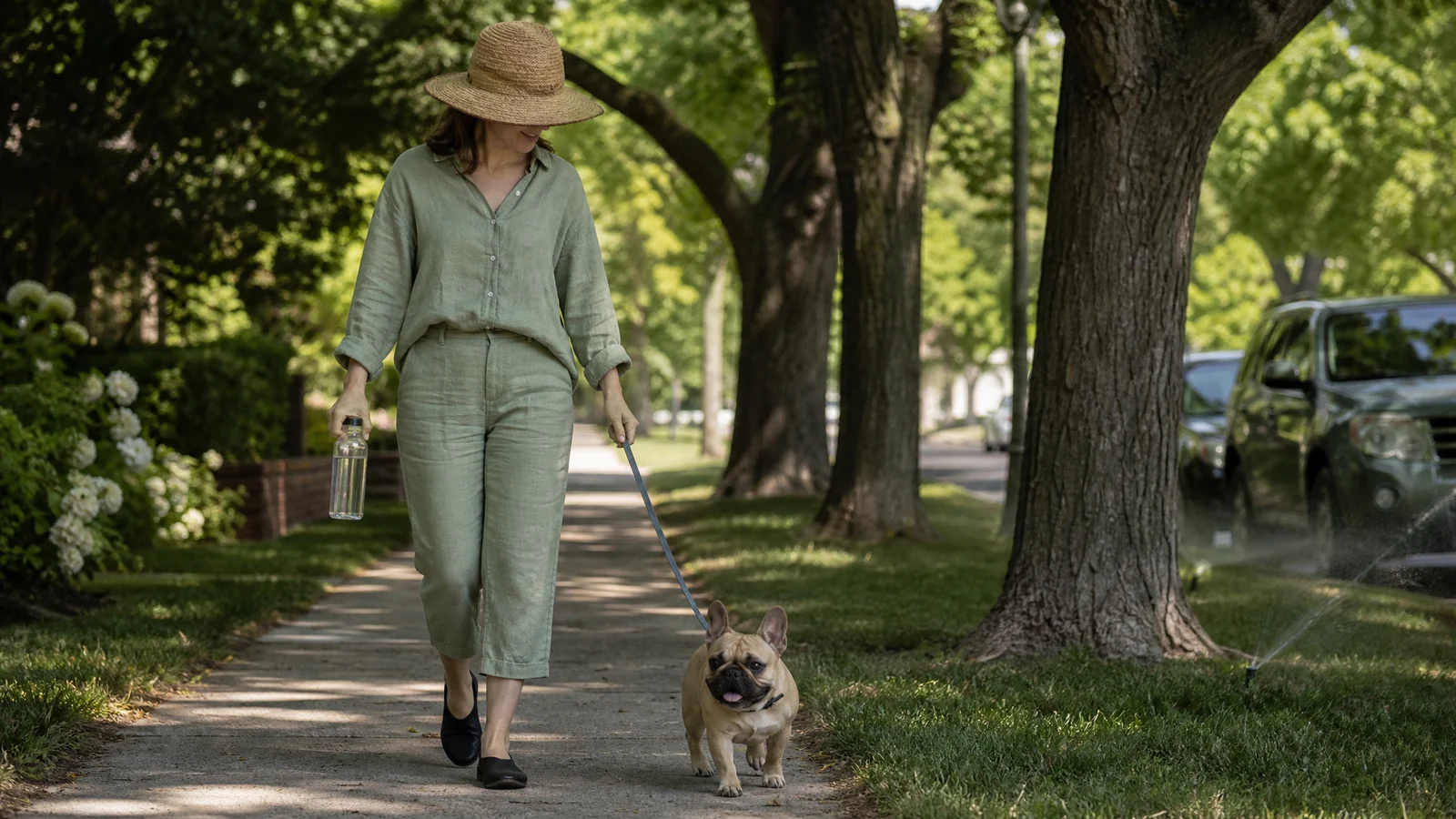
If your French Bulldog is overheating, begin cooling and contact a veterinarian immediately. Do not wait for collapse, a particular thermometer reading or proof that the problem deserves the name heat stroke. A dog whose breathing becomes difficult in the heat needs urgent help, even if the outing seemed short and other dogs nearby appear comfortable.
This guide puts recognition and first aid before planning hot-weather walks. We then examine why a Frenchie's airway changes the decisions, how to reduce exposure at home and in the car, and what another caregiver needs to know. Preparation gives you practical choices before an emergency, while prompt veterinary attention remains essential if overheating occurs. A cooler-looking dog may still need assessment after the immediate signs improve.
Recognize Possible French Bulldog Heat Stroke Now
Look for a change in breathing, movement or awareness during warm conditions or activity. Heavy panting that intensifies, unusual drooling and reluctance to move deserve attention. More severe signs can include vomiting, weakness, confusion, seizures or collapse, but waiting for those signs can lose valuable time.
The Royal Veterinary College guidance treats suspected overheating as a situation requiring immediate action. The following observations are reasons to act, not stages you must watch unfold in order. A dog can deteriorate quickly.
| What You Notice | What It Means for Your Response |
|---|---|
| Escalating panting, drooling or agitation | Stop activity, start cooling and contact a veterinarian |
| Struggling or unusually noisy breathing | Treat the breathing difficulty as urgent |
| Weakness, confusion, vomiting or collapse | Seek emergency veterinary care while beginning safe cooling |
Heat exposure may occur indoors as well as outdoors. A warm enclosed room, an unventilated travel space or a vehicle can matter even when no exercise has taken place. Tell the veterinary team where the dog was and what changed.
Do not dismiss a new breathing sound as a normal Frenchie quirk. If your dog is struggling to breathe, emergency assessment is needed whether or not heat is the only cause. Keep handling calm and avoid adding unnecessary exertion.
Immediate Cooling for Suspected Heat Stroke
Move the dog out of the heat and begin cooling promptly. If another adult is available, one person can call the veterinary practice while the other starts first aid. Tell the team you have a French Bulldog with suspected overheating and describe breathing, responsiveness and any collapse.
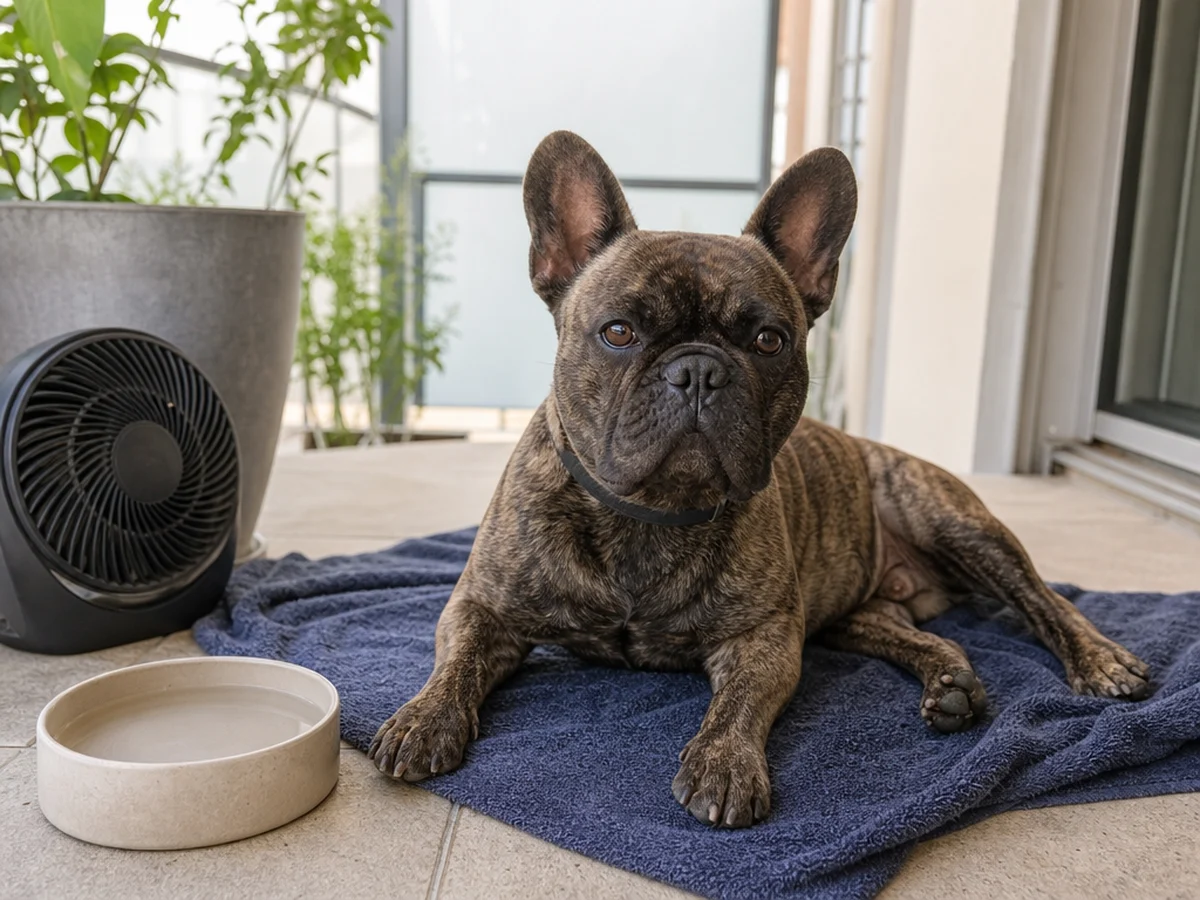
PDSA's current first aid recommends cold tap water and airflow. Do not delay while trying to make water lukewarm, and do not cover the dog with wet towels. Covering them can interfere with losing heat.
- Stop exercise and move into shade or a cool, well-ventilated area.
- Gently wet the body with available cold tap water, keeping water away from the nose and mouth.
- Add airflow from a fan or air conditioning when available.
- Offer water if the dog is alert and able to drink, without forcing it.
- Contact a veterinarian urgently and arrange transport to an open practice, continuing cooling as directed.
The RSPCA cooling advice also prioritizes starting cooling before transport. This means beginning useful first aid promptly, not waiting at home until the dog looks normal. Use the veterinary team's instructions to coordinate cooling and the journey.
Keep the vehicle cool and well ventilated. Have another adult help monitor the dog when possible so the driver can concentrate on the road. Do not force an impaired or unconscious dog to drink or put water over their face.
Avoid delaying the call while searching for a thermometer or attempting a difficult examination. Report the signs you can observe safely. The veterinary team can tell you what additional information is useful and how to provide it without disrupting immediate care.
Why Heat Challenges a French Bulldog's Airway
French Bulldogs have short muzzles, and some have narrowed or obstructed breathing passages. This can make moving air harder, especially during heat, excitement or exertion. The dog's willingness to keep playing does not show that their breathing and cooling are keeping up.
The ACVS airway overview describes breathing problems associated with this head shape. Noisy breathing, poor exercise tolerance and collapse deserve veterinary attention. They should not be treated as personality traits or problems to solve through more training.
Discuss your individual Frenchie's breathing during regular veterinary visits. Describe changes during sleep, activity and recovery, and follow advice about assessment and everyday limits. An ordinary appointment is the time to plan, while acute breathing difficulty belongs with emergency care.
Individual risk varies with health and circumstances. A previous comfortable walk does not guarantee the next one will be suitable when humidity, sunshine or activity changes. Make today's decision from today's conditions and your dog's needs.
Plan Walks Around Heat Exposure
A useful hot-weather plan begins before clipping on the leash. Consider whether an outing is appropriate at all, where you could return to a cool space and how little activity is needed for the immediate purpose. A bathroom trip and an exercise walk do not have to become the same outing.
Choose Conditions Before a Route
Cornell's summer safety advice highlights heat, humidity and abrupt weather changes. On difficult days, keeping pets cool indoors may be the better choice. An early or late hour is useful only if the actual conditions are suitable.
Check the return route as carefully as the outward route. A shaded beginning can lead onto exposed sidewalks, and stopping for a conversation can prolong time outside. Choose a plan that remains easy to shorten rather than one that commits you to finishing a loop.
Have an indoor alternative ready before canceling the walk. A quiet search for a familiar toy or a brief easy training task can offer interaction without replacing the outing with vigorous indoor play. Keep the room comfortably cool and let the dog rest.
Separate Necessary Trips From Extra Activity
For a necessary bathroom trip, use the closest suitable area and return to the cool indoor space promptly. Do not add a longer walk because the dog appears enthusiastic at the door. Enthusiasm is not a reliable measure of heat tolerance.
Keep social plans flexible. A visitor, another dog or an exciting destination may encourage more activity than the weather permits. You can decline the meeting or arrange it another time without turning the decision into a test of your Frenchie's stamina.
Our French Bulldog exercise guide discusses the wider routine. Use individual veterinary advice and current heat conditions when deciding which parts belong outdoors today.
Notice Changes Before Continuing
Pay attention to breathing and movement throughout the outing. Do not wait until the planned distance is complete to reconsider. If overheating is suspected, switch from walking plans to immediate cooling and veterinary contact.
Hot surfaces are another reason to change the route or stay inside. Avoid sidewalks that could harm paws, and remember that a comfortable surface does not prove the air is safe for exercise. These are separate checks, both of which can affect the plan.
Home and Car Arrangements That Reduce Heat Exposure
Provide a genuinely cool place to rest, with fresh water available. Check the rooms the dog can actually access rather than assuming the whole house shares one temperature. Sunlight through glass and poor ventilation can make an enclosed area uncomfortable while another room feels pleasant.
The AVMA warm-weather guidance advises leaving pets safely at home when possible and never leaving them in parked cars. Shade and partly opened windows do not make that a safe arrangement, even for a brief errand.
Plan errands around a cool home base or another suitable caregiver. If a destination will not allow the dog inside, solve that problem before setting out. The vehicle should not become a waiting room while you decide what to do.
For necessary travel, cool the vehicle before loading and keep airflow around the dog's secured space. Do not block ventilation with bags or covers. Check the actual area where the dog rides, since the driver's comfort does not automatically describe that space.
Make a backup arrangement for a home cooling failure. Know where you could take your Frenchie and how you would get there safely. A plan made during comfortable weather is easier to use than one improvised while the indoor temperature is rising.
Everyone Handling Your Frenchie Needs a Heat Plan
A family member or dog sitter needs more than a request to take a short walk. Explain the dog's individual limitations, where supplies are kept and who to call. Clear instructions reduce the chance that another adult interprets persistent excitement as permission to continue.
Keep the practical information together so it can be used quickly. Review it when the usual veterinary practice or care arrangement changes.
- Provide the regular veterinarian's details and the nearest open emergency option.
- Explain the current outing plan and the cool indoor alternative.
- Show where drinking water, cooling water and safe transport are available.
- State that suspected overheating requires prompt action and veterinary contact.
Our French Bulldog training foundations support understandable everyday routines. Heat precautions belong in those routines too, so a missed walk does not require an improvised burst of intense activity.
Veterinary Follow-Up After French Bulldog Overheating
Apparent improvement does not establish that the emergency has passed. Follow the veterinary team's instructions about examination and monitoring, even if breathing becomes quieter during cooling. Complications may not be obvious from the dog's appearance at home.
Give a clear account of the environment, activity, signs and cooling already provided. If another adult witnessed the beginning, ask them to share those observations. The purpose is to help the team assess the dog, not to decide who caused the event.
Ask what changes are needed before returning to ordinary activity. Keep the care plan available to everyone involved and clarify any instructions you do not understand. Recovery decisions should follow the dog's assessment rather than a preset calendar in an article.
Heat Prevention in Everyday French Bulldog Care
Plan for a cool resting space, flexible outings and adults who know when to act. Keep veterinary contact details accessible and treat changed breathing seriously. Prevention depends on practical choices made before your dog becomes uncomfortable.
This article provides general information and does not replace individual veterinary advice. Suspected heatstroke or difficulty breathing requires immediate veterinary contact and appropriate first aid.
 BehaviorDo French Bulldogs Bark a Lot? Barking, Crying and 'Screaming'
 Training basicsCrate Training a French Bulldog (and the Right Crate Size)
 BehaviorCalm Greetings for a French Bulldog Who Leaps at Visitors