 Frenchie
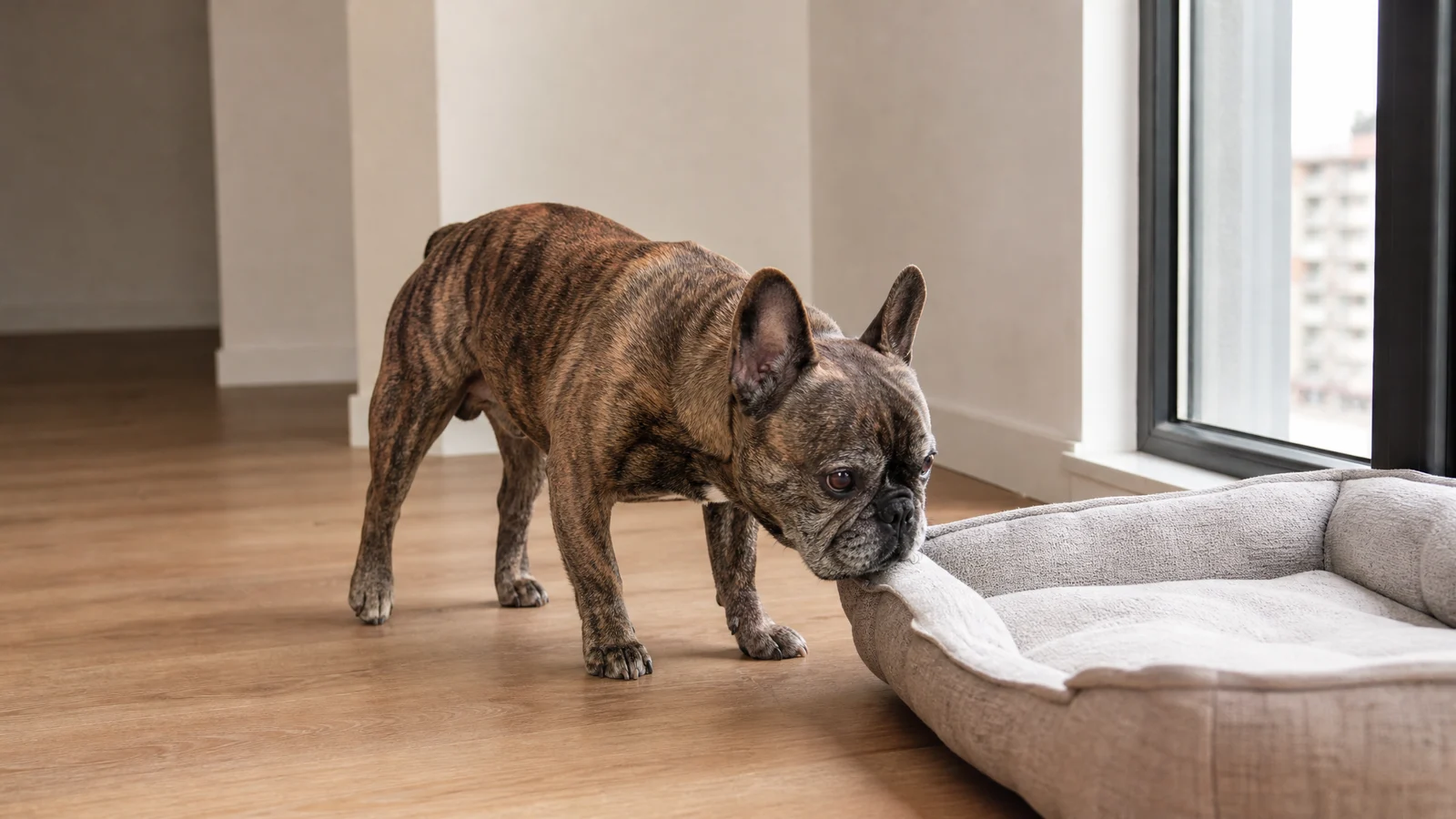
The first stretch with an adopted or older Frenchie is when the dog learns what living with you is like, and that shapes how willing they are to work with you later. This article is built around three questions: how to keep the first days easy, how to learn what the dog already offers, and how to teach a cue that fits their age.
The payoff is a dog who looks to you when something changes, which makes every later cue easier to teach. Getting there takes a few quiet decisions and one well-chosen cue, not a long program. Older dogs add their own pace and senses to that picture, so the final section covers how a cue can be adjusted as hearing and sight change.
Set Up a Predictable Home for Your New French Bulldog
Before any lesson, give the household a shape the dog can learn to read. A house with a readable pattern gives a newcomer fewer things to puzzle over, which leaves more attention for you.
Humane World for Animals says it can take days, months or longer for you and your pet to adjust to each other and for your dog to acclimate to your home, especially if your new pet has lived in multiple homes or shelters in the past. Most dogs will be overwhelmed by the transition, it adds, so it advises keeping things as quiet and consistent as possible for the first week or more, with feeding, walking and coming and going from work around the same times each day.
Turn that consistency into fixed places. Choose one spot for meals, one bed in a quiet corner and one door for leash walks, and carry a few treats in your pocket whenever you pass through those places, so calm choices get paid. Agree as a household on the dog's name and how everyone says it.
When the routine holds, widen the circle one thing at a time: one new person, one new place or one new dog, while everything else in the day stays the same. That way, if the dog struggles, you know which change caused it.
What a Newly Adopted French Bulldog Already Offers
Instead of guessing at a past, spend the early weeks on small, low-pressure observations. Treat them as notes, not a verdict, because a new home can change a dog's behavior quickly in either direction.
Start with what the dog does when they want something. A dog who stands by your chair or waits at a gate is already offering behavior you can pay for, and finding that out costs nothing. Then watch the name: a head turn, a glance or nothing at all. Each answer only tells you where the name starts.
Notice how the dog moves through the house. Some follow you from room to room, and others watch from a distance, and both tell you how much closeness to ask for early on. Last, see where the dog chooses to settle when you are in another room and how they handle your leaving it, and use our French Bulldog alone-time guide for the practice that follows.
Early Questions From New French Bulldog Adopters
Every one of these questions turns on the same unknown: how much of an adult dog's earlier life carries over into your house. In each answer, the dog's own response decides the next step, and the reward follows it.
Can an older dog still pick up cues?
The ASPCA says a key contributing factor to keeping an older dog healthy is to continue to play with, exercise and train the dog throughout life. It adds that, patiently keeping in mind a slower learning curve, you can have fun sharpening up rusty behaviors the dog once learned and teaching some new behaviors and tricks.
What if the new name gets no response?
A name that is brand new to the dog, or one the dog learned to tune out, starts with little meaning. The name steps in the French Bulldog puppy timeline are the place to start, and an adult can skip the calendar around them. Pay every glance, and never use the name right before something the dog dislikes.
Should visitors meet the new dog early?
A visitor who sits quietly and lets the dog choose whether to come over gives a new arrival the easiest start. If the dog does approach, you can pay for that choice with a treat from your own hand, and a dog who stays back can simply be left alone.
Let the dog walk away whenever they like, and count that as a success. Door manners belong to a later stage, and our French Bulldog greetings guide covers them once the dog is settled enough to practice.
Does an adult dog need a crate?
Not necessarily. A rescued adult may love a crate, tolerate it or have no use for it, so let the dog's own response decide, and see the French Bulldog crate training guide for choosing one and working on the door.
Teaching One Cue at a Time to a Rescued French Bulldog
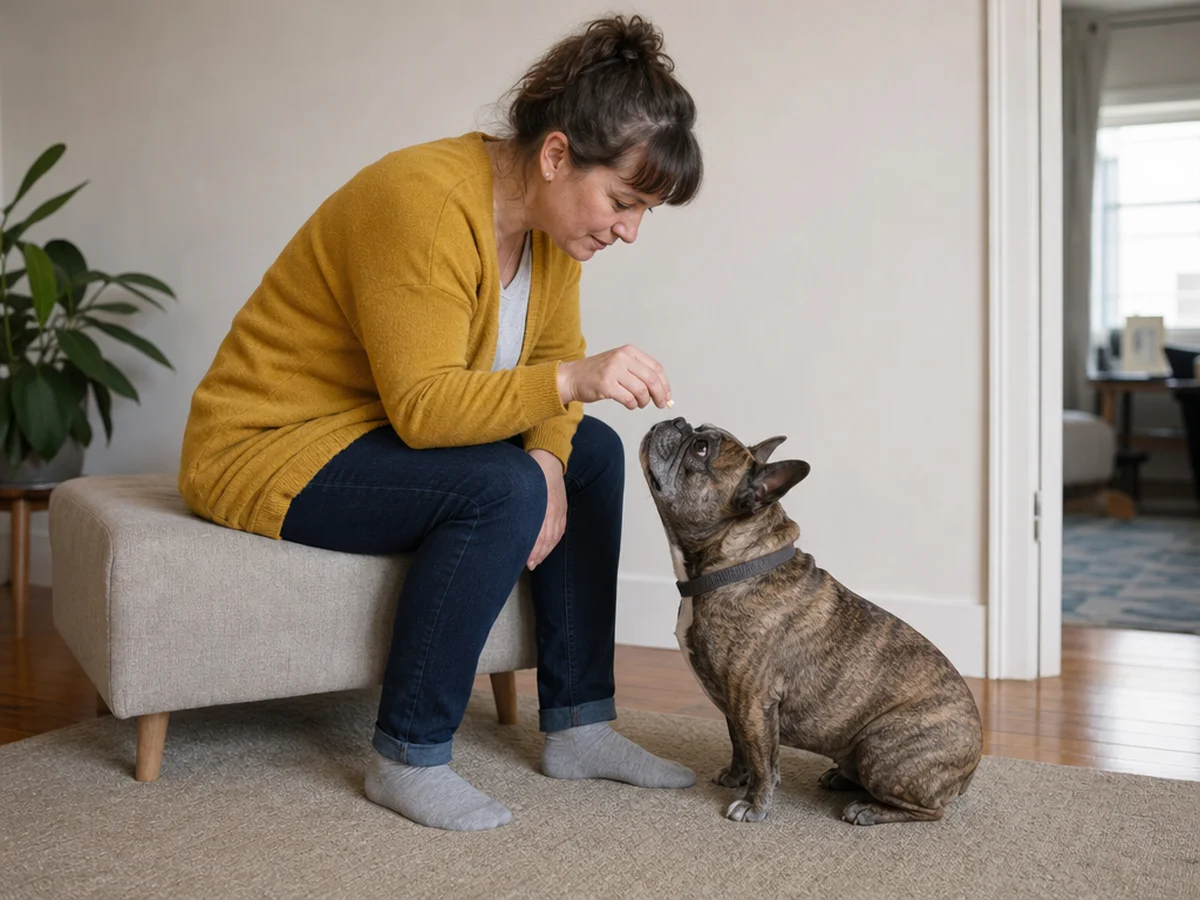
Pick the one cue your household needs most and build it from the dog's first correct move. The full cue and marker toolkit lives in our complete French Bulldog training guide, so the steps here stay short.
The American Veterinary Society of Animal Behavior says not to rely exclusively on praise in the first weeks and months of owning a new dog. It also says most dogs are motivated easily and reliably by food morsels, even early in their relationships with new people, and that for a response you are teaching you should provide a reward every time at first.
- Wait for the first correct move, or lure it once or twice, so the dog does most of the work.
- Mark the move with a short word and hand over the treat at once.
- Add the cue word only after the move shows up on its own, saying it just before the dog starts.
A rescued adult may take a cue from the old home quickly, slowly or not at all, and any of the three is fine. Use the same word and the same hand movement every day so the dog is not guessing which version you meant.
Older Senses Change How You Cue Your French Bulldog
Age can change how well a cue lands. The French Bull Dog Club of America says senior Frenchies may have diminished sensory functions (vision, hearing, taste, smell, even touch), and if this happens, they tend to react more slowly to environmental stimuli. It also says your vet will help you decide when your dog is showing signs of age.
The American Veterinary Medical Association says it is normal for pets to lose some of their sight and hearing as they age, and that senior pets might not respond as well to voice commands. It adds that training them to respond to simple gestures that indicate come or stop can allow you to safely retain control of your pet without the use of words.
Give an older dog's cue a beat longer to land before you repeat it, and use one steady signal from the same spot. A dog who looks away from a hand signal may simply not have seen it, so step into their line of sight first. Regular vet visits are the place to raise any sudden change in how the dog hears or responds. If you are choosing between a spoken cue and a gesture, pair them for a while and keep whichever one your dog answers more reliably.
 BehaviorFrench Bulldogs With Cats and Other Dogs
 Training basicsHow to Teach a French Bulldog to Come When Called
 Training basicsIs a French Bulldog the Right Dog for You? What Training Takes