 Frenchie
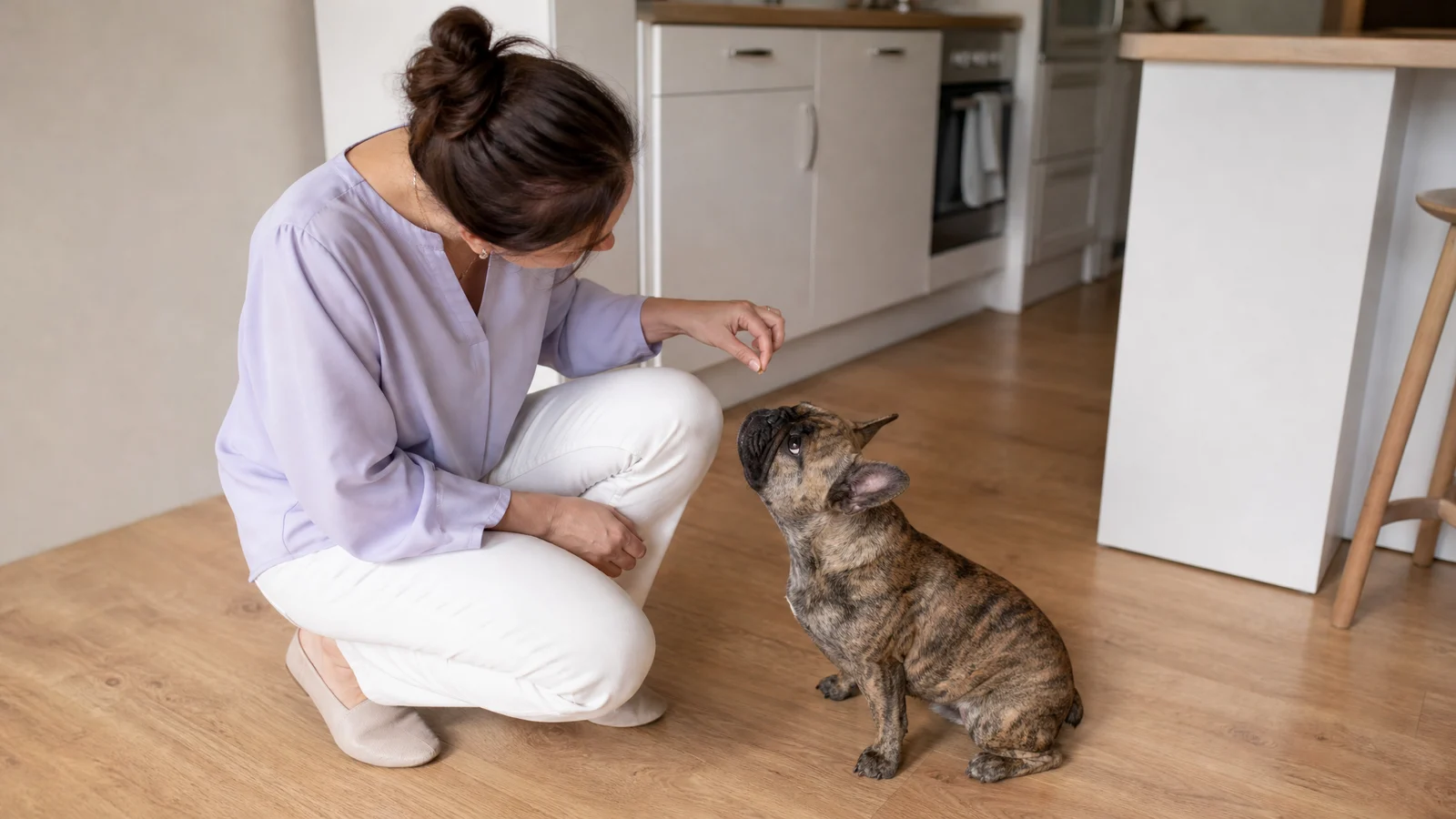
You want a Frenchie who sits when you ask, in the kitchen and out on the sidewalk, without anyone pushing them into it. That starts with the hand: when the treat rises and your dog's front paws rise with it, the hand path is the first thing to change.
A lure that travels slowly, close to the nose and back over the head, gives the rear a reason to fold and the front paws a reason to stay on the floor. A sit lesson needs very little beyond that: a quiet corner, small treats and a floor your dog is happy to park on. In this article, a lured sit turns into a word and a small hand signal that your dog answers in more than one room.
Nothing here asks you to press, pull or push a dog into position. The dog folds, you mark and pay, and the habit builds from there.
Luring the First French Bulldog Sit
Because the fold has to come from your dog, the first lesson is about making it easy to find. Face your Frenchie with a treat pinched in your fingers so the nose has something to follow, then move it slowly up and back over the head. As the chin lifts, the rear usually lowers to keep the treat in view.
The moment of the mark matters as much as the path. Say a short sound, the same one each time, the instant the rear touches the floor, and bring the treat to the mouth while the rear is still down and the head is low. That way the reward comes from inside the sit and not from a stretch or a hop.
Speed is the other half of it. Humane World for Animals notes that the reward must occur immediately (within seconds) of the desired behavior, or your pet may not associate it with the proper action: if you have your dog sit but reward them after they've stood back up, they'll think they're being rewarded for standing. With the mark and the treat doing the teaching, keep your own voice quiet, because chatter only competes with the sound your dog is listening for.
From Lured Sit to a Word Your Frenchie Answers
Once the rear lands quickly and the same way each time, the sit is ready for a name, and the name works best when it predicts something your dog already knows how to do. These five steps move the sit from your hand to the word.
- Lure until the rear lands quickly and the same way each time you ask.
- Put the word ahead of the lure: speak it one time, and start the treat moving only after it has been heard.
- Make the same arc with an empty hand and pay from your other hand or a pocket.
- Shrink the arc step by step until a flick of your fingers is enough to start the fold.
- Ask with the word alone, keep your hands still while your dog works it out, and mark and pay the instant the rear touches down.
Along the way you should see your Frenchie start to fold at the sound itself, a moment before any hand appears. If the rear hovers or the eyes go hunting for your fingers, repeat the step before it a few more times and pay generously there, because the dog is telling you the word has not yet taken the place of the hand.
Small Choices That Shape a Frenchie's Sit
Even with the steps in order, three decisions are left to you: what sound marks the sit, what your hands do when the rear hovers, and why your dog may spring back up the instant they land.
Do I need a clicker for sit?
No. A clicker is one choice, and a short sound you make the same way every time can do the same job, provided it comes the instant the rear lands. Our complete French Bulldog training guide goes through the options.
Should I ever press their rear down?
No. The lesson is the dog choosing to fold, and a hand on the rear takes that choice away. Pressing may also teach a Frenchie to pull away from your hand, which makes the next lure harder to deliver. VCA Animal Hospitals advises you to avoid confronting or forcing your dog to comply with you, and lists using force, yelling, striking, restraining or pushing a dog to the ground as all associated with increased aggression in dogs.
Why do they pop up right after sitting?
The treat has often arrived after the rise has already started, so the reward lands on the rise. Mark the instant the rear touches down, then bring the one treat to the nose while the rear is still on the floor, so the reward lands on the sit itself.
Taking the French Bulldog Sit to New Spots and New People
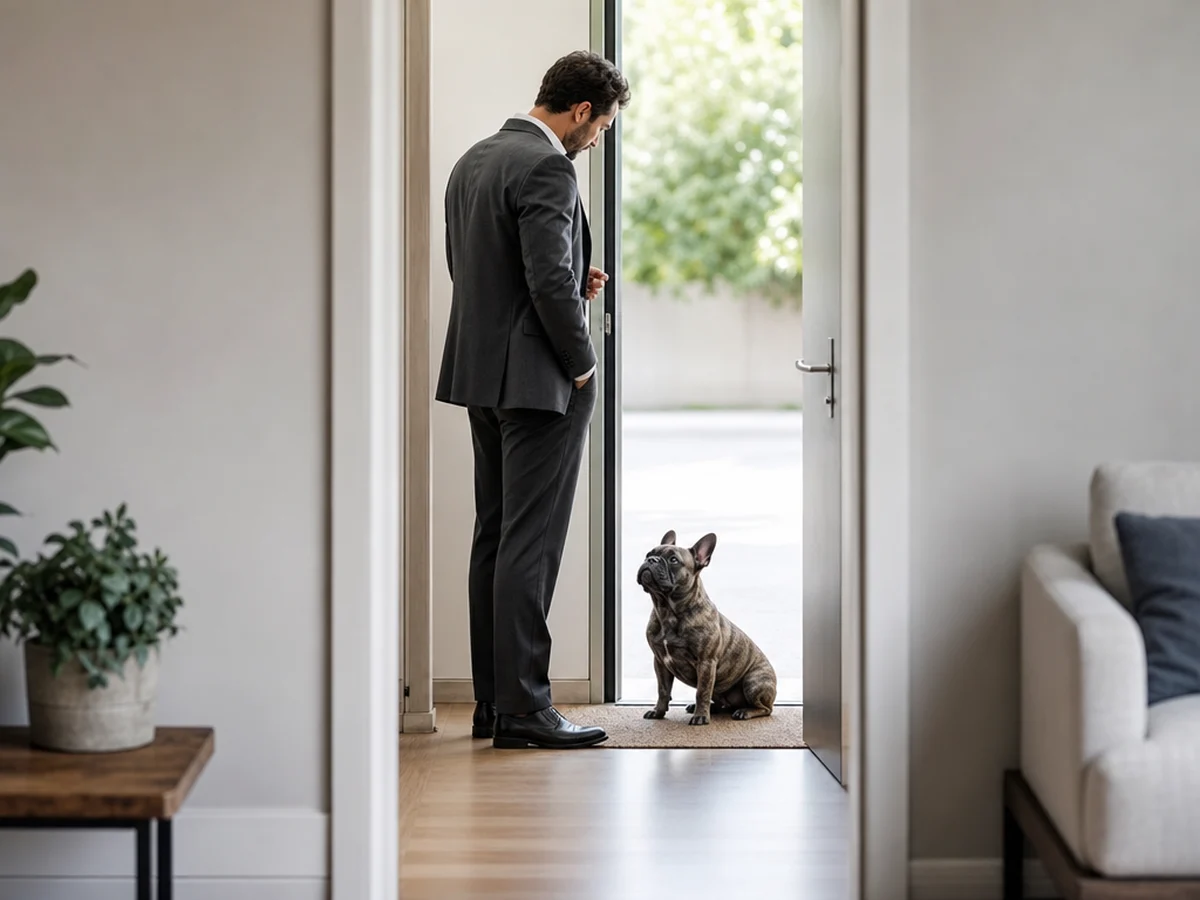
A sit that stays down long enough to be paid is ready to leave the quiet room, because a new answer falls apart when too much changes at once. Best Friends Animal Society says to only change one factor at a time, for example switching to a new handler but not to a new location yet, and for new locations to start someplace with few distractions, such as a backyard, then move to spots with steadily increasing distractions.
The table turns that order into rows, and each row changes the place and nothing else, so your Frenchie only ever has one new thing to work out. A wobble then points at the place, not the word.
| Spot | How much help to offer |
|---|---|
| The quiet room where the word already works | The word first, with the small hand signal ready if the rear hovers. |
| A new spot with few distractions, such as the backyard | The word and the small signal together, going back to a fuller lure if the rear hovers. |
| Porch or front sidewalk | The signal and the word together, with the treat delivered right at the nose. |
| A busier spot with more going on | The signal and the word together, paying at the nose and keeping the first few tries easy. |
Move down a row only when the rear lands cleanly in the row above. People follow the same logic: hand the cue to a second person in the room your dog knows best, starting at step 2 above, and only then try that person in a new spot. A visitor at the front door is a bigger change than either, and our French Bulldog greetings guide is where that lesson lives.
Two Ways to Ask for a Frenchie's Sit
By now your Frenchie may answer the word in several places, and the flick of your fingers has no reason to disappear. Keeping it gives you two ways to ask: the word when your dog is looking elsewhere, and the signal when a room is too loud for the word to carry.
A sit that used to come easily and turns slow or reluctant is worth mentioning at your dog's next regular vet visit. Meanwhile, pay either cue the same way, so neither becomes the only one your dog trusts.
What a Willing French Bulldog Sit Gives You
A sit your Frenchie chose is worth more than one you arranged. The rear only lands when your dog decides to fold, so every paid sit tells them that folding is how good things happen, and that habit is what this page was building, whatever the cue word turns out to be.
Expect uneven days, with a sniff, a shuffle or a pop-up now and then. What counts is a sit that arrives willingly in the rooms and spots you actually use, tidy or not.
Once it holds up in busier places, your dog already knows what this kind of learning feels like, which makes the sit a good base to grow other cues from. Go at the pace your Frenchie sets and let the sit stay easy to earn.
 Training basicsHow to Teach a French Bulldog to Lie Down
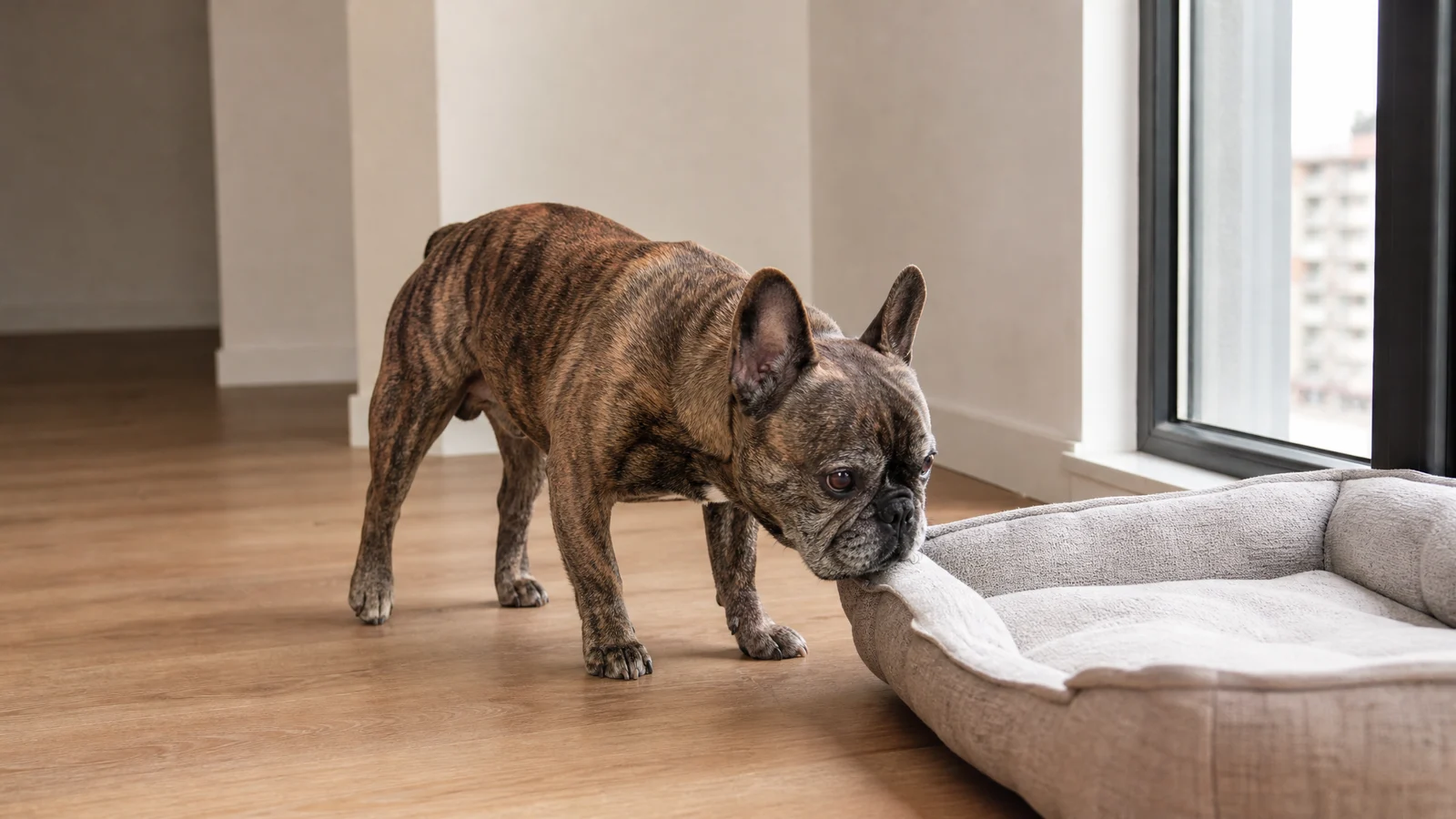 BehaviorTraining an Older or Adopted French Bulldog
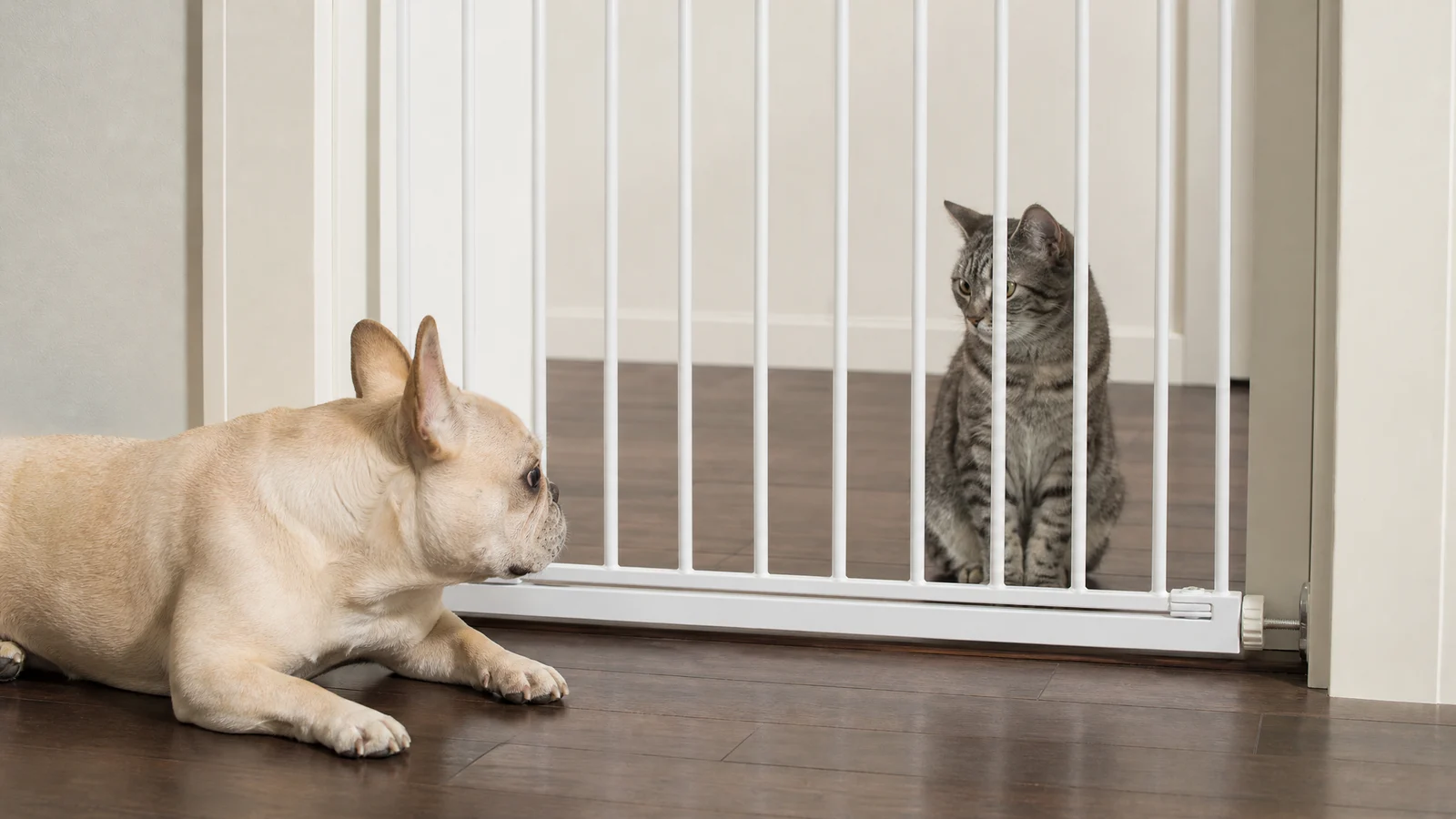 BehaviorFrench Bulldogs With Cats and Other Dogs