 Frenchie
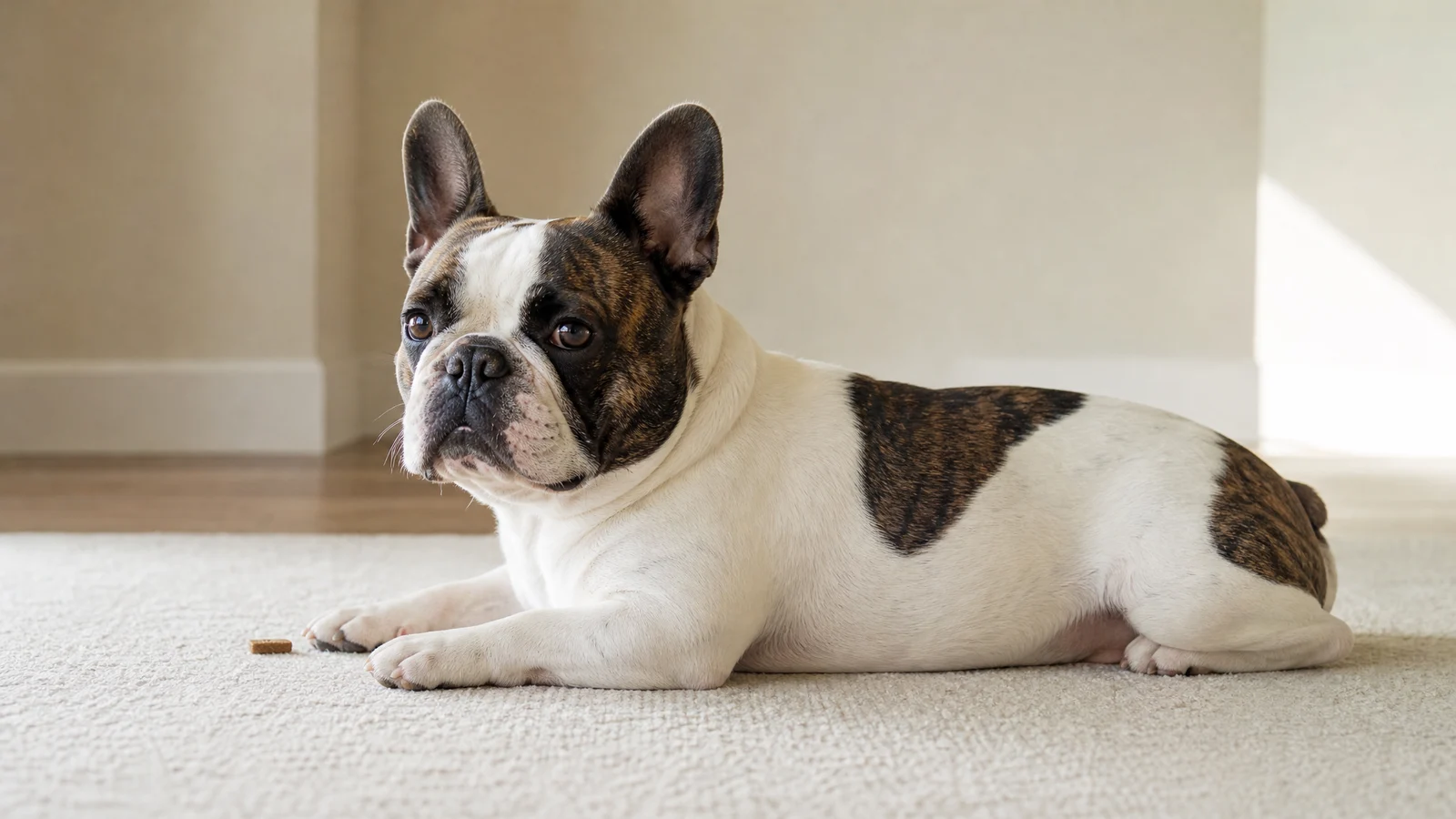
To get a French Bulldog onto the floor on cue, you lower a treat from their nose to the ground and let their body follow where their head has gone. It works from a sit your dog already knows, and all you need besides that is a handful of small, soft treats.
Expect the first tries to look partial. A French Bulldog who dips their head while the elbows stay up has done the first piece of the route, which is why a first down may be only a head dip, and why that is a perfectly fine place to start.
Most of the work is on your side: how fast the hand moves, where the treat gets paid and when the word arrives. Here you'll find what each of those looks like with a Frenchie on the floor.
Teaching a French Bulldog to Lie Down From a Sit
The hand carries this whole lesson, so start there. Ask your French Bulldog to sit in front of you, hold a small treat at their nose, and lower it straight toward the floor between their front paws. Go slowly enough that the nose never loses the treat. Nothing needs to be pressed or pulled, because the treat asks and your dog's body follows where their head leads.
If your dog stands up partway through, simply return to the sit and lower the treat again, a little slower. Our complete French Bulldog training guide covers the marker word and session setup, so this page stays with the nose.
Where that treat travels matters more than it looks, because a hand that drifts toward you draws your dog's attention up and out instead of down. That is the pattern Best Friends Animal Society cautions about, noting that "sometimes, by moving it forward instead of down, the dog will stand up to follow the treat."
Treat Placement for a Frenchie's Down
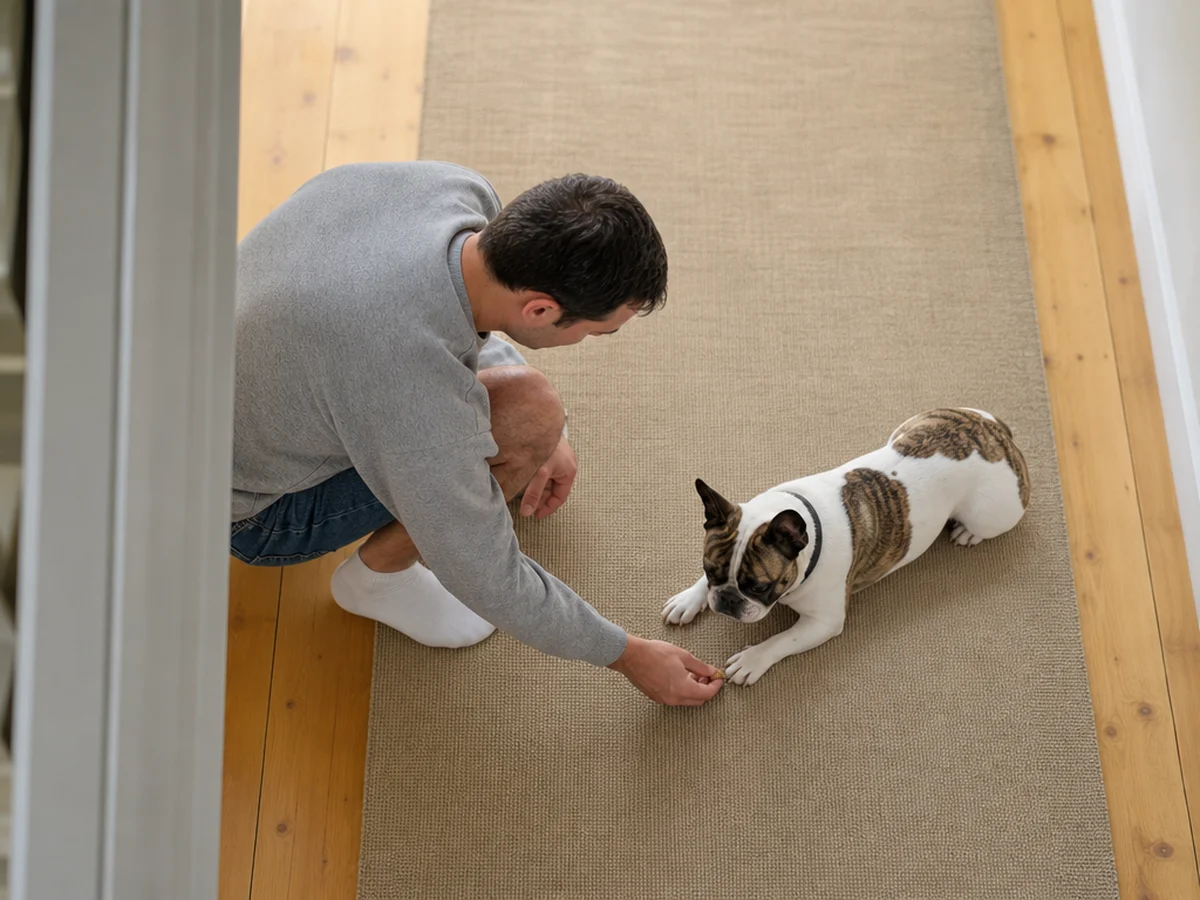
The path ends wherever you pay, and that spot teaches as much as the path itself. Hand the treat to your dog on the floor between their front paws, not up near their chest, so the nose finishes the route low and your dog stays low to eat. Lifting the treat away or paying from above can send their head back up, and then you are back at a sit with a few extra steps.
Between tries, ask for a sit again so each attempt starts from the same place, and keep the run of tries short. That gives your dog many clean starts instead of one long, blurry one, and it lets you see which part of the path your hand is rushing.
What Shapes a French Bulldog's Lie Down Beyond the Lure
Once the hand path works, the next gains come from the setting you ask in and from how you read this lesson next to the sit your dog already knows. The answers below also settle where a word fits into all of it.
Does the floor matter for a down?
Yes, because the floor is where every reward lands. Pick a spot that is uncluttered, with nothing for the treat to roll under and nothing else for your dog to investigate, and the nose stays on the route.
Why does down seem harder than sit?
A sit is a position many dogs already offer for attention, so it has often been rewarded far more times than a down has. A down also begins as a sit and asks for one more movement on top of it, which often means the steps simply need to be smaller. Pay the head dip and build from there.
A dog who used to lie down easily and now resists is a different matter. Our French Bulldog behavior problems guide explains why a sudden change deserves attention before more training. Regular vet visits are also a good time to mention anything about how your dog moves or settles.
When should the word come in?
Wait until the full down arrives the same way every time, with elbows and chest on the floor. If you say the word earlier, it attaches to whatever your dog is doing at that moment, so naming a head dip or a hover teaches "down" to mean that, and you would later have to teach the word again for the whole thing. Attach it the same way you attached the sit word.
Down also means body on the floor, so a dog who needs to come off the sofa or off a visitor needs a different word for that job. Our greetings guide covers the one for visitors.
Paying a Head Dip on the Way to a Full Down
Because the word waits for the full down, you will spend the first sessions with partial routes, and those are worth paying. A head that drops toward the floor with the elbows still up has done part of the job, so reward it, then ask for a little more on the next try.
That is the logic of shaping, which the Merck Veterinary Manual describes as a technique that "works well for dogs" who "do not know what response is desired by the trainer." In its words, shaping "works through gradual approximations and allows the dog to be rewarded initially for any behavior that resembles the desired behavior."
Troubleshooting a French Bulldog Lie Down That Stalls
Paying the pieces also shows you which piece needs work, so when a down stalls, look at what your dog did instead of lowering. Each of these four patterns points at one adjustment to the route, and none of them says anything about how willing your dog is.
- Your dog backs away as the treat lowers. The hand is probably reaching out farther than the nose can follow, so keep it closer to their chest and lower it in a smaller, slower arc.
- Your dog mouths or grabs at your fingers. Hold the treat firmly between finger and thumb and let go only once it is at the floor, so the treat arrives down there and not by snatching.
- The nose reaches the floor but the elbows stay up. Slide the treat back along the floor toward your dog's chest so their front legs have to fold to keep following, and pay the first sign of that fold.
- Your dog loses interest in the treat. Switch to something softer and smellier, and cut the pieces smaller so they are quick to swallow.
We suggest changing only one thing per try so you can tell which adjustment actually helped, then going back to the sit and running the route again from the very beginning.
Following the Nose All the Way Down
A down is a short trip your dog takes with the nose in front and the body following one piece at a time: the head dips, the elbows fold, then the chest and hips settle. Each of those pieces is something you can see and pay for, which is why a treat that travels in a small, slow arc usually beats one that swoops far and fast.
So when a down feels stuck, you rarely need a whole new plan. Find the stretch of the trip where your Frenchie's nose stopped following, make that one stretch easier to follow, and the rest of the route tends to open up behind it.
 BehaviorTraining an Older or Adopted French Bulldog
 BehaviorFrench Bulldogs With Cats and Other Dogs
 Training basicsHow to Teach a French Bulldog to Come When Called