 Frenchie
In every meeting between your French Bulldog and a cat or another dog, you are the one holding the leash, the treats and the door. That gives you more say than it feels like on the day, because so much comes down to where the animals stand, who can leave, and what gets paid when they look at each other.
You'll find the cat plan first and the plan for other dogs after it, each built from small steps you can reward. We start with what a French Bulldog brings to the room, since that shapes every choice after it.
Your tools are modest: a leash, a gate, a closed door and a pocket of treats. Used patiently, and with an honest eye on both animals, they do far more than hoping the two will simply get along.
Why a French Bulldog's Chasing Shapes Every Introduction
Those tools earn their keep because of a habit the French Bull Dog Club of America names directly: French Bulldogs love to chase and be chased, so owners should exercise caution with small pets such as hamsters, bunnies, and guinea pigs. A chase is a game only while both animals agree to play it, and a cat, a smaller dog or an older one can feel the same rush from behind as being hunted.
So every introduction in this guide starts with one question: can the other animal leave the game whenever it wants? Small pets sit outside the plan that follows, and we come back to them with the other household questions.
Which Cat Suits a French Bulldog, and Where It Will Live
If a chase needs a partner who can leave, then the cat you choose, or the one you already have, matters before any lesson does. American Humane says dogs who love to chase moving objects may not be the best match for fearful or shy cats who tend to run, and that a calm, confident cat who does not react dramatically to movement may be a better companion for an energetic dog.
If your Frenchie is the lively sort, that is a handy screen for a cat you are choosing and for one you already have. When the match is imperfect, use solid barriers and shorter, easier steps, and let the cat set the pace.
Where the Cat Will Live
When the cat is the newcomer, Animal Humane Society says it is best to confine a new cat to a single, quiet room with the cat's own litterbox, food dish, and a box or bed. That room becomes the base for the first meetings, because the cat already knows where its exits are.
When your Frenchie is the newcomer instead, the cat keeps the rooms and routine it has, and the dog's first days happen in a space of their own so that neither animal's world shrinks overnight.
Your Frenchie needs a place of their own as well, such as a crate or a gated corner (our French Bulldog crate guide shows how), so the cat's room is not the only quiet spot in the house. Regular vet visits matter for every animal sharing the home, because a pet who suddenly hides, stops eating or moves oddly may be unwell rather than difficult.
Household Questions for a Frenchie and a Cat
Where things are kept and which doors stay shut shape a mixed household every hour of the day, and these three questions are all of that kind. Each has a practical answer you can set up today.
Can They Share a Bedroom at Night?
Not at first. Nights are the hours nobody is watching, so until the pairing has proven itself in the daytime, each animal sleeps behind its own door or gate. When you do open it, let the cat's choice decide: a cat who wants a high shelf in the dog's room is fine, and a cat who skips the room is giving you an answer too.
Why Does My Frenchie Eat the Cat's Food?
Because it is right there and it pays off quickly. Start with where the bowl sits: feed the cat somewhere the dog cannot reach, such as a high surface or the cat's own room, and pick up leftovers. Then pay your Frenchie generously for walking past the spot. If they seem unwell after raiding the bowl, call your vet.
Can Hamsters or Rabbits Live With a Frenchie?
They can share a house, but not a room unless a closed door is between them. Secure housing in a space the dog cannot enter does the work, and a latch is more reliable than a promise. Training can add calm around the door, but it should never be the only thing standing between your dog and a small animal.
Cat Meetings, Starting With a Gate Between Them
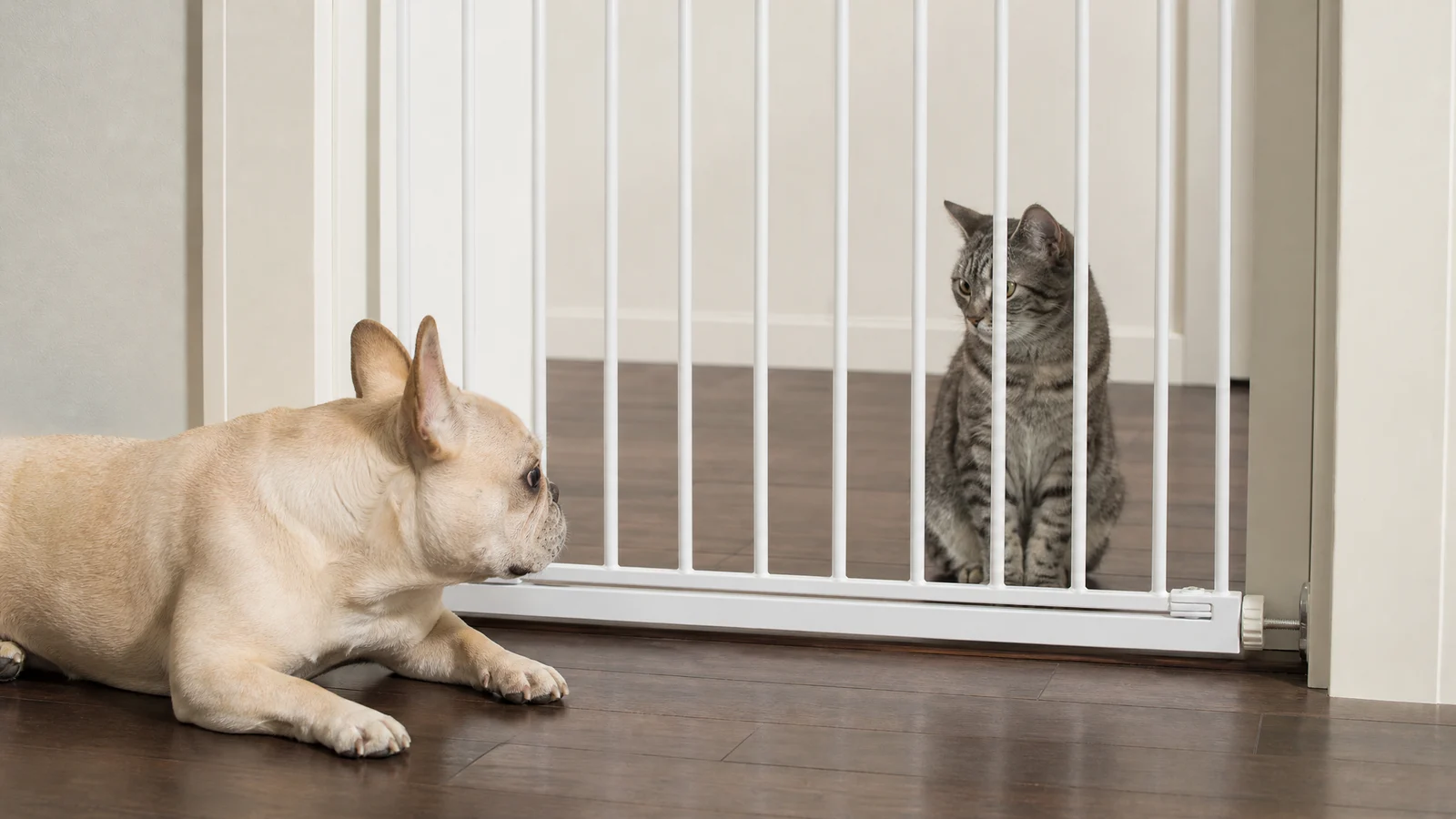
With the rooms and bowls sorted, the first look at each other can be small and paid. Begin with a barrier both animals can see through, such as a tall gate, with your Frenchie on a leash on one side and the cat free to leave on the other. Pay your dog for any calm moment, including simply standing there, and let the cat decide whether to come closer. Short and uneventful is the goal, and if either animal seems keen to end the visit, you end it first.
Repeat the gate visits until your Frenchie can look at the cat, turn to you and take a treat, and the cat can leave without being followed by a stare. Only then share one room with the dog on a leash and the cat's exit open, and later let the dog drag the leash while you stay close. Each step should feel almost too easy to the animals, which is how you know it will hold.
Turning Toward You Pays
The habit that carries every cat meeting is a dog who looks at the cat and then chooses you. Mark and treat the moment your Frenchie glances away, and do it often at first so that looking at the cat becomes the signal to check with you. A reliable come-when-called cue helps if you ever need to pull them off a chase, so teach it well before the cat is in the room.
If Your Frenchie Cannot Settle
Whining, scratching at the gate or a hard fixed stare means the step was too big. End the visit calmly, go back to the barrier and pay for easier moments before trying again. A cat who hides or bolts is telling you the same thing from the other side, so give the cat the room and keep the next meeting brief.
A First Meeting Between Your French Bulldog and Another Dog
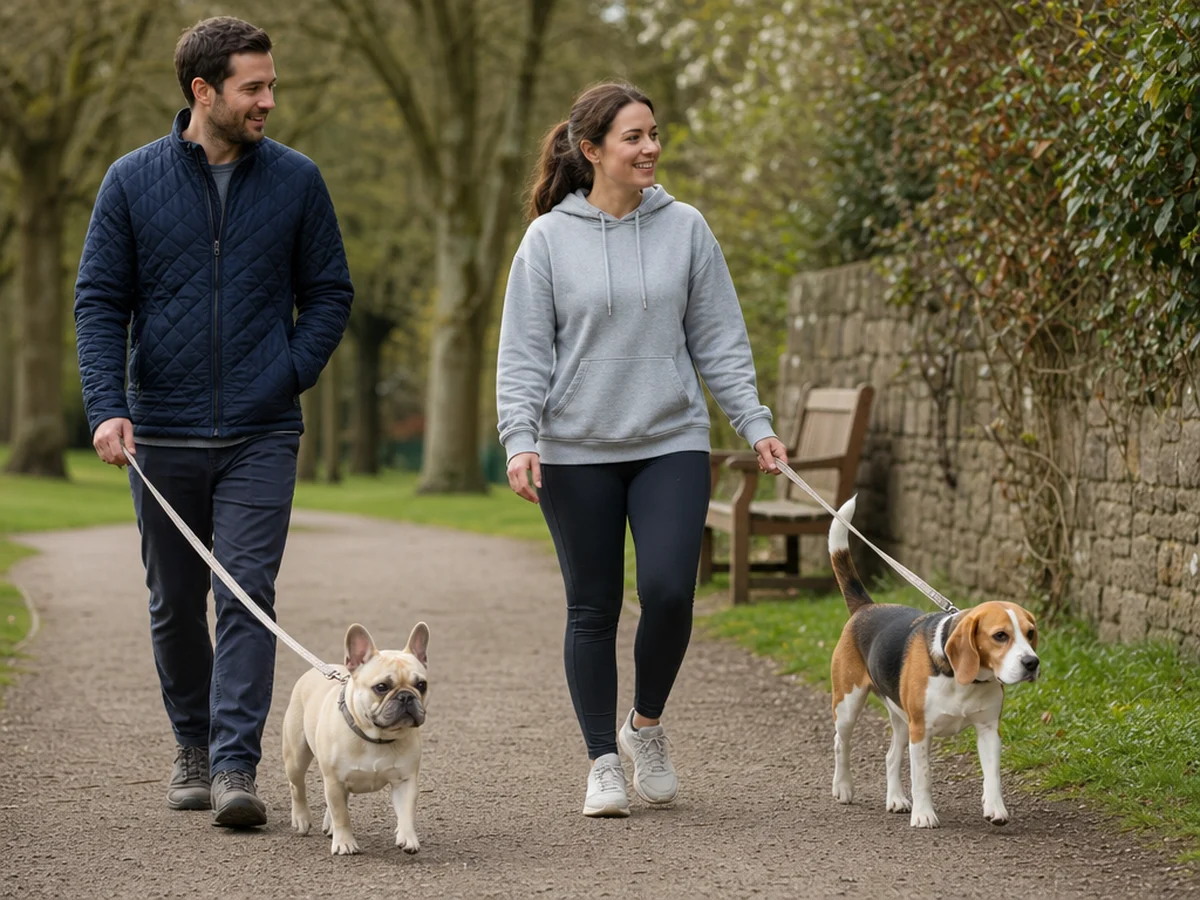
Two dogs both want to engage, so unlike the cat the other dog adds a second keen body to manage. Plan the first meeting between your Frenchie and one chosen dog, each with their own handler, somewhere new to both. Walk side by side rather than face to face, with loose leashes, and let them sniff briefly before you move on. Pay both dogs for calm behavior along the way, and end the outing while both still look relaxed.
If either dog stiffens, stares or refuses a treat, end the outing there and keep the next meeting brief. If the first meeting went well, repeat it before either dog visits the other's home. Early puppy exposure is a separate subject on this site, so this section is for a dog who is already part of your plans.
If more than one dog already lives in the other home, meet them one at a time so your Frenchie never faces a group, and let the calmest dog go first. Tight leashes tell dogs something is wrong, so keep your hands relaxed and your voice cheerful. Once the dogs live together, growling over toys or beds is covered in our French Bulldog aggression guide.
Keeping Play Friendly Between a French Bulldog and Another Dog
Once the dogs share a space, trouble stops being about meeting and starts being about play. Because a Frenchie's favorite game involves chasing, the dog who is chased needs a say, so watch each session as a referee would and look for the moment play stops being fun for one dog.
You do not need to read every signal perfectly to referee well, because a few plain situations are enough reason to pause the game. These are the ones to stop for straight away:
- One dog keeps leaving. If the other follows every time, the first dog is not choosing to play, so call the follower away and let the leaver rest.
- One dog is cornered or pinned. A dog who cannot get away is no longer playing, however the other dog feels about it.
- The play goes quiet and stiff. When bouncy chases give way to staring and rigid bodies, or you simply cannot tell what you are seeing, interrupt calmly.
- One dog is much smaller or older. They may need breaks the livelier dog does not, so build rests into the game before they have to ask.
After each stop, pay both dogs for coming to you and restart only if both want to, because a game that needs you to hold one dog back is over. For heat during play, see our French Bulldog behavior problems guide and heat-stroke guide.
When It Stops Being Play
If one dog keeps going for the other, or either dog goes for the cat, stop the contact and keep the animals apart. The ASPCA lists aggression toward people or other animals among the problems that need "individual attention from a qualified behaviorist," so look for a qualified behaviorist rather than trying to fix it with more meetings.
A Toy Chase Game for Your French Bulldog
With the trouble spots covered, the last piece gives your Frenchie something to do, not only something to hold back from. Play a chase game with a toy you drag across the floor or toss in a room where the cat is not, and play it before the cat's door opens.
The rule that keeps it safe is simple: the game ends the moment the cat wanders in, because a dog mid-chase can switch targets. Stop playing, close the door or gate, and start again later, so your Frenchie learns that this game is played with you and only when the cat is elsewhere.
 Training basicsHow to Teach a French Bulldog to Come When Called
 Training basicsIs a French Bulldog the Right Dog for You? What Training Takes
 Training basicsHow to Teach a French Bulldog to Focus on You