 Frenchie

A puppy's teeth cannot be hurried, but what the mouth finds to do while they change is up to you. For a French Bulldog puppy at around three to four months, that means having an answer ready for the moments when teeth meet skin, furniture or shoes.
Everyone who lives with the puppy has a part in this stretch, from the person holding the treats to a resident dog with limited patience. Their reactions matter as much as the puppy's teeth do, because a puppy keeps doing whatever gets a result.
None of it needs special equipment or a long training session. In this guide, the focus is what the mouth is doing and what to hand it. A calm, steady response each time does more than a big push on any one day.
What French Bulldog Puppy Teething Changes
Teeth do not change all at once. The shift from baby teeth to adult teeth runs over several months and differs from puppy to puppy, so this page covers just the early part of that change.
The American Kennel Club lists weeks 12 to 16 in its general puppy timeline as around the time you may start to find little crumb- to rice-sized teeth around your home, as baby teeth start to shed and permanent adult teeth emerge. It says to ask your vet to check the mouth, and that this is a good time to start touching a puppy's mouth, outside and in, carefully because the remaining puppy teeth are razor sharp.
What to Ask the Vet About French Bulldog Puppy Teething
A training page cannot judge a mouth, and regular vet visits are where a loosening tooth actually gets looked at. Bring questions to those visits, such as these:
- Do the baby teeth that are loosening and the adult teeth coming in look as they should for this puppy?
- Is there anything about the bite or the jaw worth keeping an eye on while the adult teeth arrive?
- Which changes in the mouth would you want a call about rather than waiting for the next visit?
- When should the mouth be looked at again?
This is general information, not veterinary advice. Your veterinarian is the right person for any question about your puppy's teeth, gums or health.
Boundary Testing From a French Bulldog Puppy
Texas A&M School of Veterinary Medicine describes the juvenile stage as running between 3 and 6 months of age, and says puppies begin to test boundaries and learn to push limitations. Veterinary technician Harmony Diers says owners can manage these changes with training, and that adult dogs living with puppies may also correct the boundary-pushing behavior by growling or barking.
We suggest deciding each house rule once, telling everyone who lives there, and paying the choice you want, such as four paws on the floor or a chew in the mouth, with a treat or a quick game. Pay right away, while the choice is still fresh, and use the same words and the same reward each time so the puppy can tell what earned it.
Never meet the pushing with force of your own, because a puppy gains nothing from a fight and you lose the chance to pay the choice you were hoping for. When the pushing lands on hands or sleeves, the French Bulldog puppy biting guide has the swaps and the rough-play rules in full, so this page leaves them there and stays with the household side of the stage.
Household Questions While a French Bulldog Puppy Teethes
Sharp new teeth matter to everyone near the puppy, and that includes a dog who never asked for a housemate. These answers cover how to protect that dog's patience, what to do about the tiny teeth that may turn up around the home, and how visitors and outside help fit in.
What if an older dog corrects the puppy?
Call the puppy away before the older dog has to say anything, pay the puppy for coming, and reward the older dog for staying relaxed with the puppy in view from a distance. Give the older dog a spot the puppy cannot reach, so they can leave the game whenever they like, and never punish either dog for how they react.
If the older dog ever seems stressed by the puppy, keep the two apart and ask a qualified reward-based trainer or your vet for help. Our guide to socializing your French Bulldog covers dog-to-dog meetings.
What happens to a tiny tooth?
There is no need to go looking for it. If you spot one, pick it up, offer a chew and carry on with the day. If you have questions about the teeth, mention the tooth at your next vet visit.
Do visitors need to follow the rules?
Yes, and it helps to tell them before they come in. Ask visitors to greet the puppy calmly, keep a chew in hand and pay the choice you want, exactly as the household does. A puppy gets confused when one person plays rough and everyone else asks for gentle.
When is a trainer worth calling in?
Call one if the mouthing is not easing, if you feel unsure what to do or if anyone in the home is getting hurt or worried. Look for a qualified reward-based trainer, and ask your vet about anything that seems to be about pain or health.
French Bulldog Puppy Teething Is a Chance to Teach Chewing
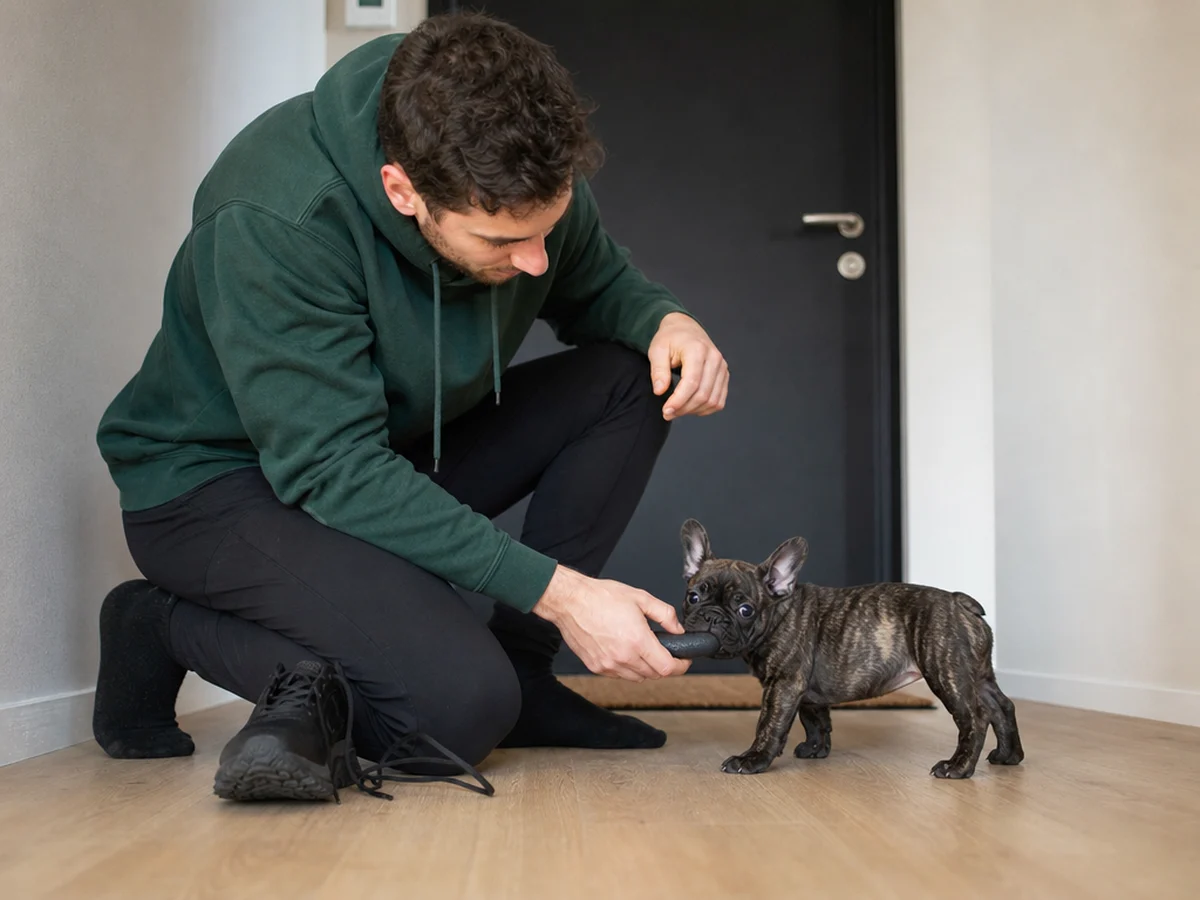
PDSA says chewing is a natural part of being a dog. It adds that puppies learn really quickly, so when they are still young is the easiest time to teach them to chew pet-safe toys and not furniture or shoes, and that if a dog's chewing habits change, a visit to the vet can rule out medical conditions.
Teaching it means catching the right choice. When the puppy picks up a toy instead of the table leg, pay with a game or a bit of attention while the toy is still in their mouth. Keep a suitable chew within reach in every room the puppy uses, so there is something to hand over before the wrong object gets chosen. The French Bulldog chewing guide covers which chews to offer, how hard they should be and how closely to watch.
Gentle Puppy Mouths Come Before Quiet Ones
Gentle asks something different from quiet. A quiet puppy has simply stopped playing, while a gentle one is still in the game with their teeth under control.
The ASPCA notes that mouthing which may seem cute when a puppy is seven weeks old is not nearly so endearing at three or four months, when a puppy is getting bigger by the day. Its first and most important objective is to teach puppies that people have very sensitive skin, so they must be very gentle when using their mouths, and it says not to discourage a puppy from playing with you in general, because the aim is to teach gentle play rather than no play.
That is why we keep play going at this age. A puppy who is still playing can learn how much mouth is too much, and the game is how the puppy learns what the teeth are for.
 Training basicsClicker Training a French Bulldog
 Puppy trainingFrench Bulldog Puppy at 8 to 12 Weeks: The First Month Home
 BehaviorFrench Bulldog Leash Reactivity: What Helps