 Frenchie
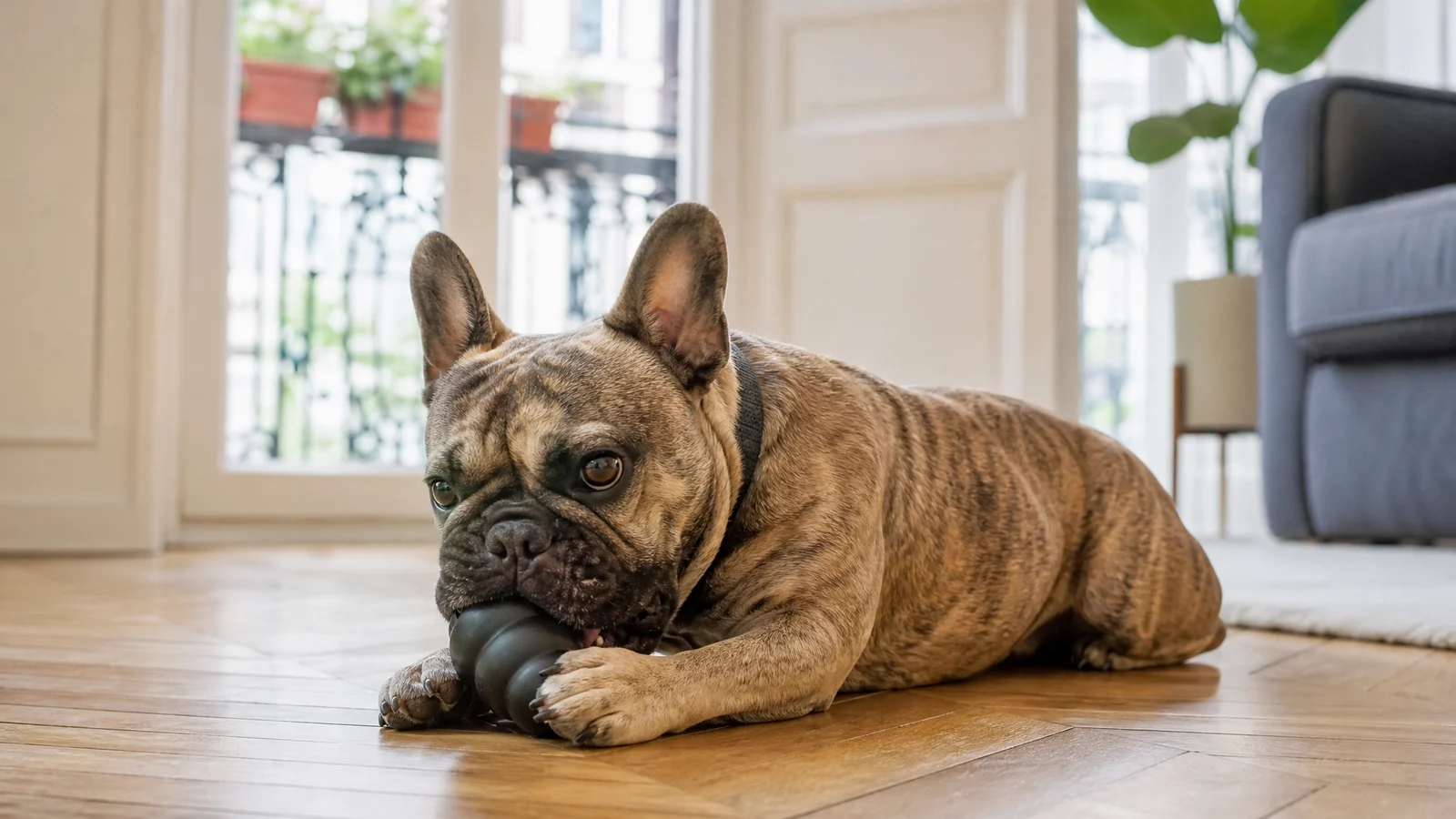
An untouched chew beside a French Bulldog carrying a shoe does not necessarily mean the chew needs to be harder. Carrying, pulling, investigating and settling down to gnaw are different activities. A dog looking for a shared game may have little interest in working quietly on an object, however durable it appears. Understanding that difference helps you offer something useful without turning every household possession into a contested prize.
Below, we will separate those activities, choose outlets that fit them and decide what can remain available under different levels of supervision. Then we will rehearse a comfortable chewing session, including its ending, before considering damaged or swallowed objects. The aim is to meet the dog's need for suitable mouth activity while keeping your Frenchie, the people nearby and the contents of the room safe.
What French Bulldog Chewing Actually Involves
Watch the action before choosing the replacement. A dog carrying a slipper toward a person may be seeking interaction, while one lying down to work on a chair leg is using the mouth differently. These observations suggest possibilities rather than proving a motive, so compare several ordinary moments.
| Mouth activity | A useful question |
|---|---|
| Settled gnawing | Is there a suitable supervised outlet in a comfortable place? |
| Carrying an object toward people | Would a safe carrying game meet the interest? |
| Pulling material apart | Can fragments separate or be swallowed? |
| Repeatedly swallowing nonfood material | What veterinary assessment and access changes are needed? |
Chewing can be ordinary behavior without every object being appropriate. The Merck behavior reference supports preventing destructive access while supplying suitable alternatives. That does not mean all mouth activity should be redirected toward one supposedly indestructible product.
Repeated eating of nonfood material, a sudden change in chewing or difficulty using the mouth deserves veterinary advice. Arrange regular veterinary visits, and report these changes without waiting for the next routine appointment. Do not assume a new pattern is simply a stronger set of jaws or a training phase that must be endured.
Chewing Outlets Matched to Your French Bulldog
Start with the activity you can supervise now. Choose an object of suitable size and condition, then watch how your dog uses it. No material or marketing label removes the need to observe, and a toy appropriate for shared play may be unsuitable for prolonged independent gnawing.
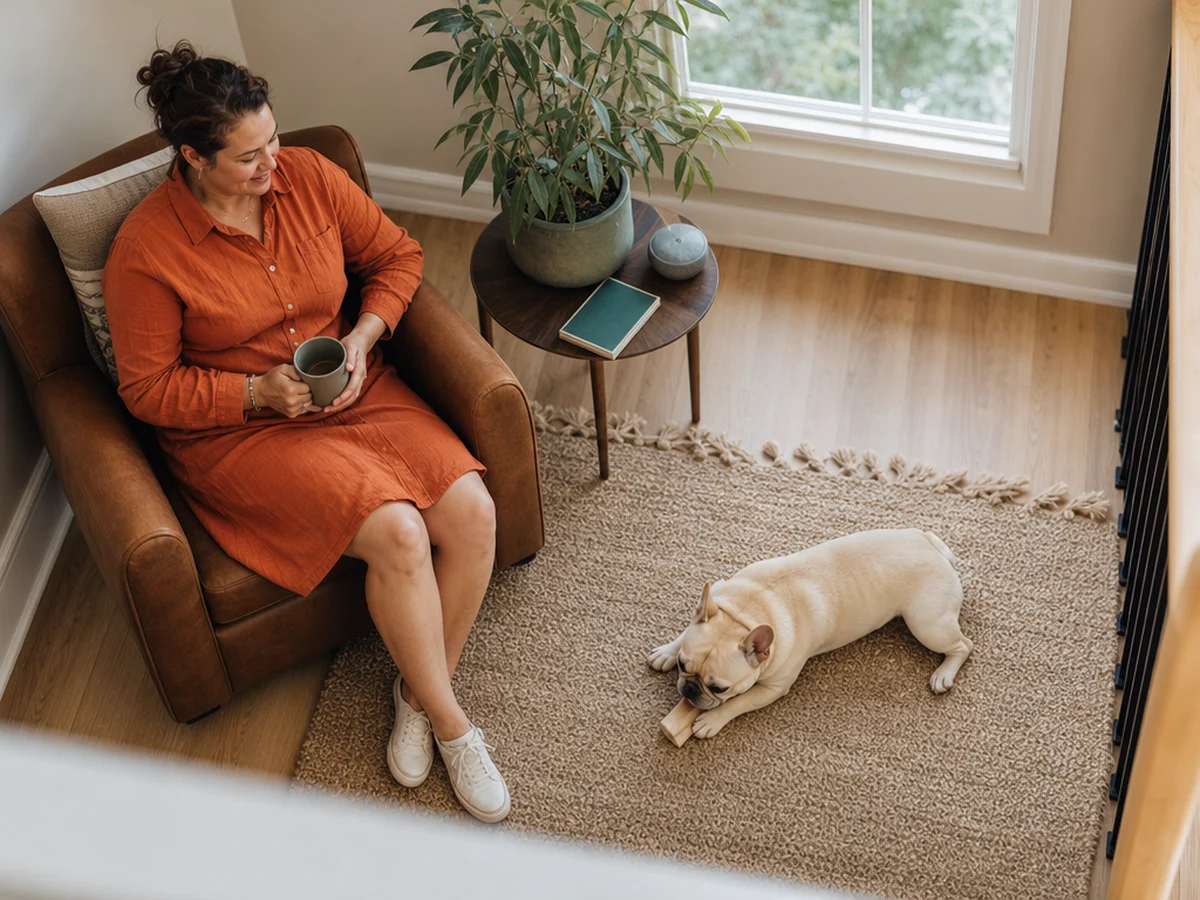
A Quiet Gnawing Opportunity
Offer an item that cannot be swallowed whole and does not readily shed pieces under this dog's use. Ask your veterinarian about appropriate hardness and edible options if you are unsure. Avoid choosing only by size category, because two similarly sized Frenchies may handle the same object very differently.
Give the dog stable footing and enough room to hold the item naturally. Keep children and other animals away so the dog can use it without competition. If it continually slides under furniture or requires awkward reaching, change the location or item rather than repeatedly retrieving it during the session.
Watch the object as well as the dog. Cracks, loose pieces and substantial wear can change the decision about continued use. An item that was appropriate when offered may need removal later in the same session, so inspection is an ongoing part of supervision.
A Carrying Game With a Person
For a dog who brings objects over, a suitable toy and a calm shared game may fit better than another solitary chew. Invite carrying across a clear, level space, then reward arrival without grabbing. Keep the toy low and the movement manageable instead of encouraging leaps to reach your hands.
End with an exchange the dog understands, and put away any item that is suitable only while you are watching. A successful carrying game does not prove the same object can survive unattended chewing. Treat the activity and the later storage decision as separate responsibilities.
If teeth keep reaching for skin or sleeves, reduce the excitement before trying again. Our French Bulldog biting guide addresses those interactions. The dog may need a calmer game or a rest, rather than a succession of more exciting objects waved near the mouth.
Pulling and Dismantling Need Closer Limits
A dog who tears pieces from an item needs direct observation and a prompt change when fragments become available. Do not leave shreddable material merely because the activity looks absorbing. Enjoyment does not establish that swallowing a piece would be harmless.
Redirect toward an activity you can keep manageable, such as a simple supervised search using suitable food in a clear area. Avoid hiding it in packaging the dog is likely to eat. If dismantling repeatedly defeats your available options, discuss alternatives with a qualified professional instead of testing increasingly hard objects.
Supervision Changes the Chewing Plan
An appropriate outlet depends partly on what the adult can notice and do. Being in the same house is different from watching the dog use an unfamiliar object. Decide which arrangement you can genuinely provide before setting out the activity.
When an Adult Can Watch
Use supervised periods to learn what works. Keep the activity within view, with a reward ready for a comfortable exchange if the item deteriorates. An adult absorbed in cooking or a call may need a simpler arrangement rather than assuming they will notice the first loose fragment.
Humane World's chewing guidance combines suitable outlets with protecting belongings. Store shoes, laundry and children's toys before the dog begins exploring. Secure cables and small objects, and close access to areas you cannot keep safe while attention is divided.
- Give the supervising adult responsibility for the current item.
- Explain which changes mean the session should end.
- Keep an exchange reward available without leaving food within reach.
- Store shared-play equipment when direct supervision stops.
When the Dog Will Be Alone
Do not leave a new object as an experiment during a departure. Review both the environment and the item's suitability for unattended use. A safe, comfortable area with practical needs met matters more than finding something that keeps the mouth occupied for the entire absence.
Damage while alone can have several explanations. A camera may show relaxed investigation or a dog repeatedly trying to reach the exit. Our guide to French Bulldog apartment alone time explains how to assess departures, because a chew is not a complete answer to separation-related distress.
Arrange company or other appropriate care when the dog cannot currently manage the planned absence. Increasing confinement without checking the response may add another difficulty. Select the arrangement that keeps the individual dog comfortable, and seek support when ordinary management is not enough.
A Comfortable French Bulldog Chewing Session
Practice the whole experience during a settled part of the day, including the point when access ends. This gives you a chance to reward useful choices before a household object is involved. It also lets the dog learn that a person's approach does not always predict a struggle.
An Invitation Before Furniture Becomes Interesting
Place the suitable outlet in the prepared area and acknowledge the dog's interest quietly. Reward choosing it without immediately taking it back to demonstrate control. The RSPCA training approach emphasizes making wanted behavior worthwhile, which works best when you notice that choice as it happens.
If the dog walks away, consider whether the offered activity fits the moment. They may need a bathroom break, company or sleep instead. Repeatedly pressing the object toward the mouth is unlikely to make quiet chewing more appealing, and a dog does not have to use every outlet you offer.
Time to Use the Item Peacefully
Supervise without leaning over the resting place. Leave comfortable space around your Frenchie and allow ordinary pauses. Occasionally approaching to add a pleasant reward, then leaving the item in place, can help your presence predict something other than removal.
Keep the household from testing the dog's tolerance. Nobody should repeatedly lift the chew, put hands into the mouth or crowd the resting place. If another person needs to pass close by, make room first rather than expecting the dog to accept sudden handling while occupied.
An Ending Through a Practiced Exchange
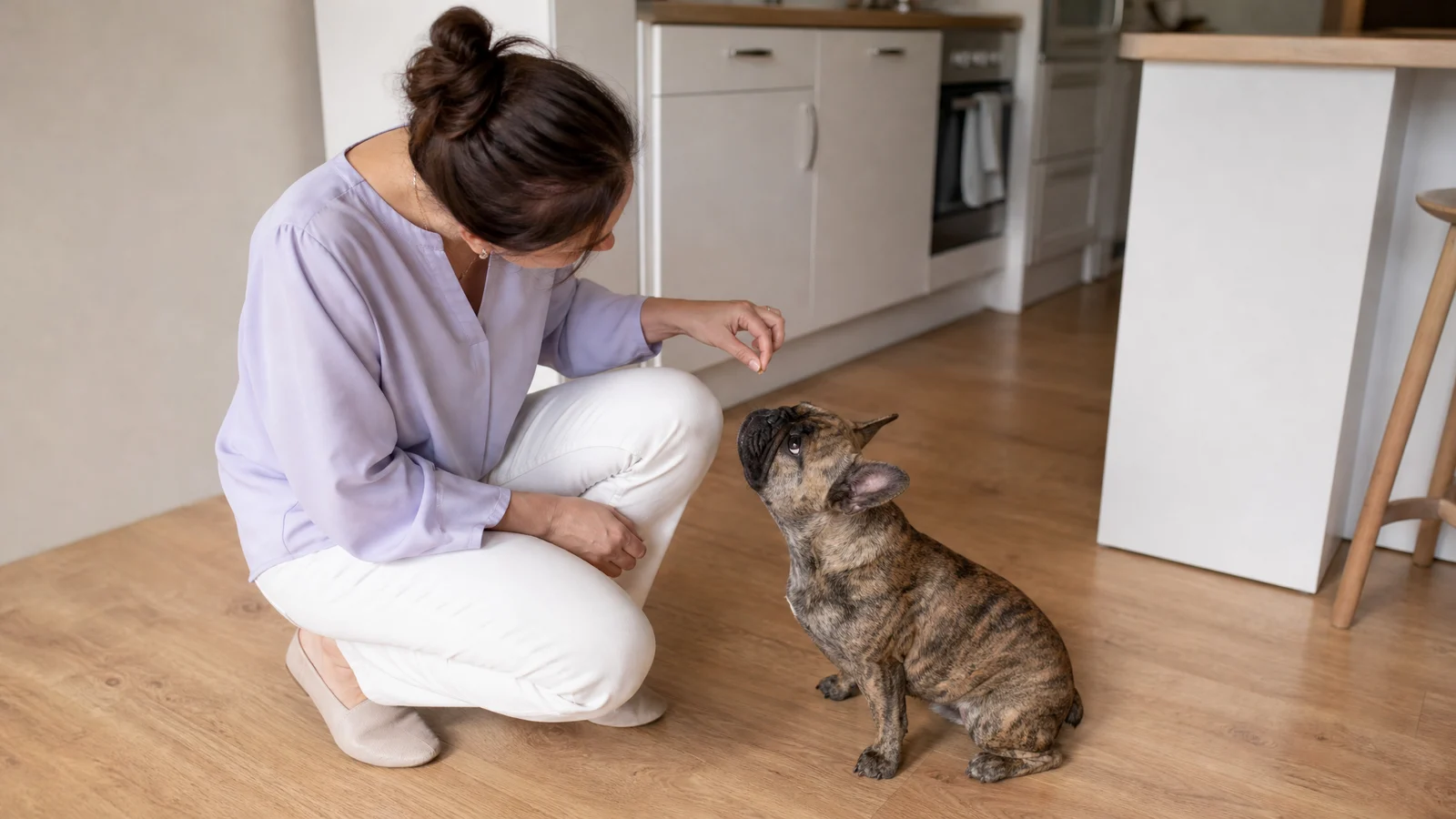
Begin exchange practice with an easy item the dog can release willingly. Offer a valued reward, mark the release and deliver the reward where you can recover the object safely. Return it when appropriate so giving something up does not always mean losing the activity altogether.
Introduce a release word once that sequence is predictable. Use it before the familiar exchange, then reward promptly. Save difficult possessions for a better-developed skill rather than testing the cue for the first time while the dog holds something highly valued.
Stop if the dog freezes, stiffens, growls or guards the object. Create safe space and seek qualified reward-based help. Those signs call for a tailored plan, and forcing a removal or punishing the warning can make future approaches harder.
Unsafe Objects and Chewing Damage
Finding a damaged object calls for a safety check before another training lesson. Keep the dog away from remaining pieces and determine whether anything may be missing. Contact a veterinarian promptly if swallowing or injury is possible, even when you did not see the event.
- Identify the object or material and save relevant packaging.
- Estimate what may be missing without delaying veterinary contact.
- Tell the veterinarian when the event may have happened.
- Follow their instructions about examination and immediate care.
PDSA harmful-ingestion advice warns against making a dog vomit without specific veterinary direction. Do not try a home remedy while waiting to see what happens. If the dog still holds the item, use a safe exchange when possible and avoid a chase that may prompt hurried swallowing.
Once immediate safety is addressed, change access to the damaged area. Punishment beside old damage cannot show the dog what to select next. Record the practical gap, such as an open storage door or a handover without supervision, so the household can prevent a repeat.
Veterinary note: Suspected ingestion, choking and mouth injuries need individual veterinary advice. A training article cannot establish that a swallowed object is harmless or determine the care a particular dog requires.
Reviewing French Bulldog Chewing Choices
Review the activity and the supervision together. A short note about how the dog used an item is more useful than a general rating of whether it lasted. Keep decisions specific enough that another adult can follow them.
| What the household learned | What changes next |
|---|---|
| An item works during gentle carrying | Keep it for that supervised game |
| Gnawing creates loose pieces | Remove the item and choose a different option |
| The dog ignores chews but seeks company | Offer appropriate interaction and reassess the timing |
| Damage appears around departures | Observe absence comfort and review care arrangements |
Retain options that fit your dog's behavior and your ability to supervise. Recheck them as the dog grows or the routine changes. An appropriate collection can stay small when each item has a clear, useful role.
Chewing becomes easier to support when the household distinguishes a quiet outlet, a shared game and a situation needing help. Make those choices before the next shoe disappears. Your Frenchie then has activities that make sense, while adults have a practical plan for offering, watching and ending them safely.
 Training basicsAre French Bulldogs Good With Kids?
 Training basicsHow to Teach a French Bulldog to Sit
 Training basicsHow to Teach a French Bulldog to Lie Down