 Frenchie
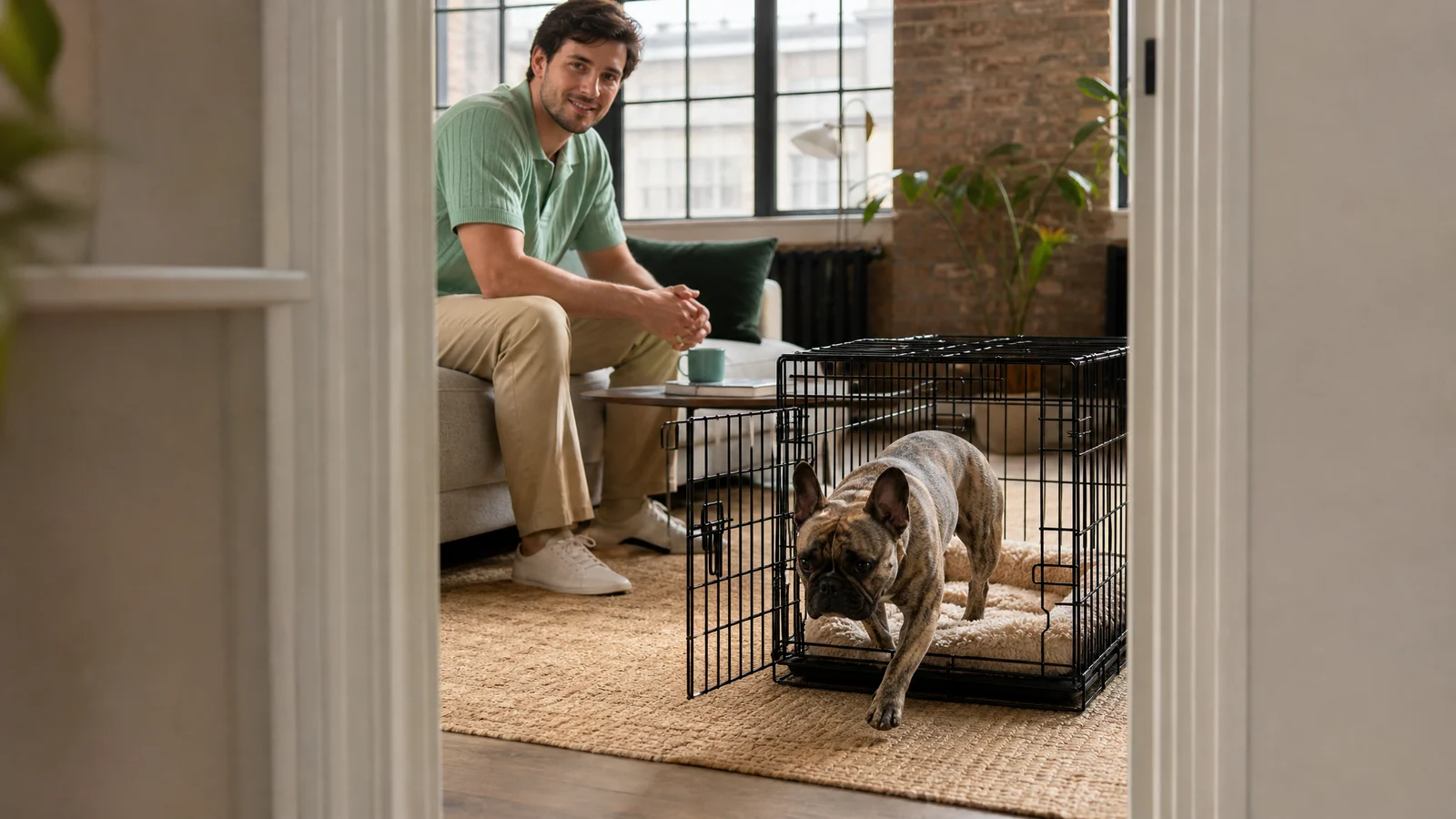
A crate is easier to use when it is already familiar before a journey or veterinary visit makes confinement necessary. For a French Bulldog, that preparation begins with a space that fits the actual dog and stays comfortable. A label on the packaging cannot tell you whether your Frenchie can turn easily, stretch out or rest without feeling crowded.
The guide below treats the crate as a portable rest skill with several possible uses. You will choose the setup, make entry worthwhile and introduce the door before considering travel or prescribed rest. Each use needs its own preparation, and comfort inside a crate does not automatically mean comfort when people leave the home.
A Crate That Fits Your French Bulldog
Look at your dog standing and resting before comparing crate dimensions. The usable interior matters more than the advertised size category. Check the doorway and any divider as well, because the dog needs room to enter without squeezing or twisting awkwardly.
Room for Natural Postures
Your Frenchie should be able to stand upright, turn around and lie comfortably inside. Consider the posture they actually choose when relaxed, including stretching out on their side. For a growing puppy, review the fit regularly rather than assuming the first arrangement will remain suitable.
A divider can adjust a larger crate, but it must be secure and leave enough usable space. House-training decisions should still include frequent bathroom opportunities. Our French Bulldog potty training guide explains how to build that routine without expecting confinement to replace supervision and timely trips outside.
Airflow and a Comfortable Location
Choose a quiet position with good ventilation, away from direct sunlight and household traffic. Do not cover the crate in a way that restricts airflow or traps heat. Bedding should suit the dog and remain intact, with anything torn or swallowed removed from use.
Inspect the door, latches and interior for catching points. Keep dangling leads and other items that could snag out of the setup. The PDSA crate guidance frames the goal as a comfortable place to relax, which is a useful standard for every equipment decision.
An Open Crate Worth Entering
Secure the door open and let your dog investigate without being pushed inside. Reward a comfortable approach, then small movements toward entry. Food should support willing exploration, rather than lure a worried dog deep into a space before the exit unexpectedly closes.
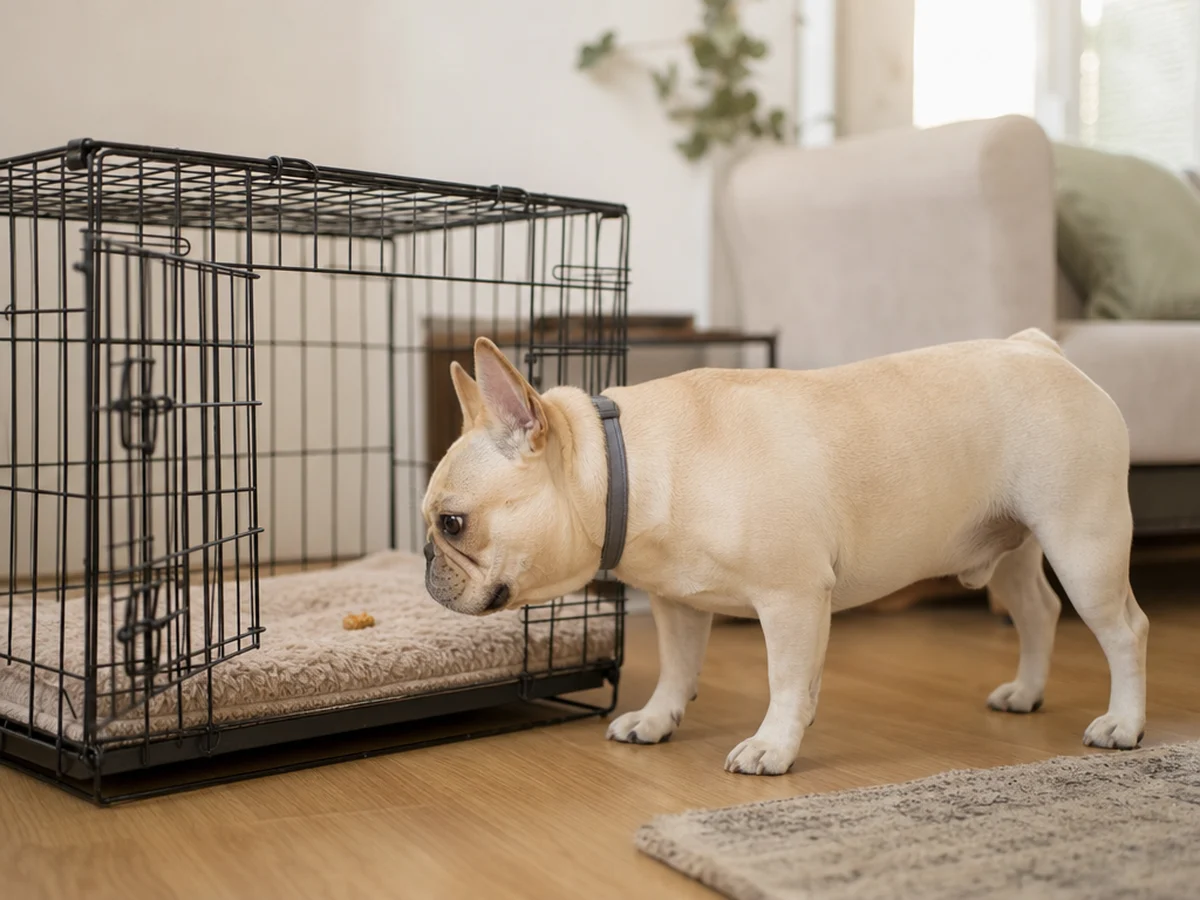
- Mark a glance or step toward the crate and offer a reward.
- Reward investigation at the entrance without blocking the way out.
- Build toward voluntary whole-body entry in manageable pieces.
- Let the dog leave, then notice whether they choose to return.
The Best Friends crate lesson uses rewards for progress toward entry. Keep your own position relaxed and predictable. Leaning over the doorway or reaching in repeatedly can make a small space feel less inviting even when the food is appealing.
Offer a familiar meal inside once entry is comfortable, with the door still open. Place it where the dog can eat without hesitation and move it farther in only as confidence allows. Stay nearby initially so the new resting place does not also predict sudden isolation.
Notice whether your dog chooses the crate when no food is visible. Voluntary resting offers useful information about the space itself. If entry depends on a trail of treats every time, continue with the open door and investigate anything that makes staying uncomfortable before adding confinement.
Comfort Behind the Crate Door
Introduce door movement separately from longer stays. Touch the door, reward comfortable behavior and stop. Gradually include a small movement, then a brief closure when the earlier steps are ordinary. Remain beside the crate while that new part is being learned.
Keep sessions short enough that you can open the door while your Frenchie is still relaxed. A dog who becomes rigid, paws at the exit or escalates vocally needs an easier arrangement. Do not wait through increasing distress in the hope that exhaustion will teach the missing comfort.
- Change door movement before adding much time.
- Practice duration before increasing your distance.
- Watch posture and breathing as well as noise.
- Return to an easier step after an unsettled attempt.
The RSPCA crate advice treats the space as a refuge, never punishment. Keep that meaning consistent when daily life gets busy. Normal exercise, water, social contact, rest and bathroom needs still require a plan outside the crate.
Teach actual departures separately. A Frenchie who rests behind a closed door while you sit nearby may still struggle when the home becomes empty. Our guide to French Bulldog apartment alone time helps distinguish those experiences and recognize when more support is needed.
French Bulldog Crate Skills for Specific Uses
A familiar enclosure can make an unfamiliar situation easier to manage, but its purpose changes the requirements. Ordinary home practice provides a foundation. Travel arrangements and veterinary restrictions still need decisions suited to the particular journey or care plan.
Preparation for Travel
Introduce any travel enclosure at home before expecting rest in a moving vehicle. Different surfaces, sounds and locations can change the dog's response. Practice calm entry and brief comfortable stays in the new setup while the vehicle is stationary and the environment remains safe and cool.
Choose and secure a travel restraint according to its intended use and instructions. Familiarity alone does not establish crash protection. Plan temperature control, water and breaks around your dog's needs, and never leave your Frenchie waiting in a parked car while you complete an errand.
Preparation for Veterinary Care
At regular veterinary visits, discuss how your dog handles confinement and ask how to prepare for any planned procedure. If restricted activity becomes necessary, the veterinarian should specify the suitable space, permitted movement and daily care. Do not borrow a recovery schedule from a general crate lesson.
Tell the veterinary team if your dog panics behind a closed door. They may need to adapt the arrangement or provide additional support rather than rely on a skill the dog has not learned. Familiar bedding or a learned settling cue may help only when compatible with the team's instructions.
Veterinary note: This guide covers preparation and training, not an individual recovery plan. Follow your veterinarian's directions for prescribed confinement, and contact them if your dog cannot rest comfortably within those restrictions.
Keeping French Bulldog Crate Comfort Available
Continue offering easy, ordinary opportunities to rest in the crate after the initial lessons. Check fit, airflow and the dog's response as circumstances change, and keep the open space available when practical. A Frenchie who can enter, relax and leave comfortably has a useful skill that can be maintained without making confinement the answer to every household challenge.
 BehaviorCalm Greetings for a French Bulldog Who Leaps at Visitors
 BehaviorFrench Bulldog Chewing: Safe Outlets for Those Strong Jaws
 Training basicsAre French Bulldogs Good With Kids?